Armada Way: The Plymouth street that tells the story of England’s greatest naval victory
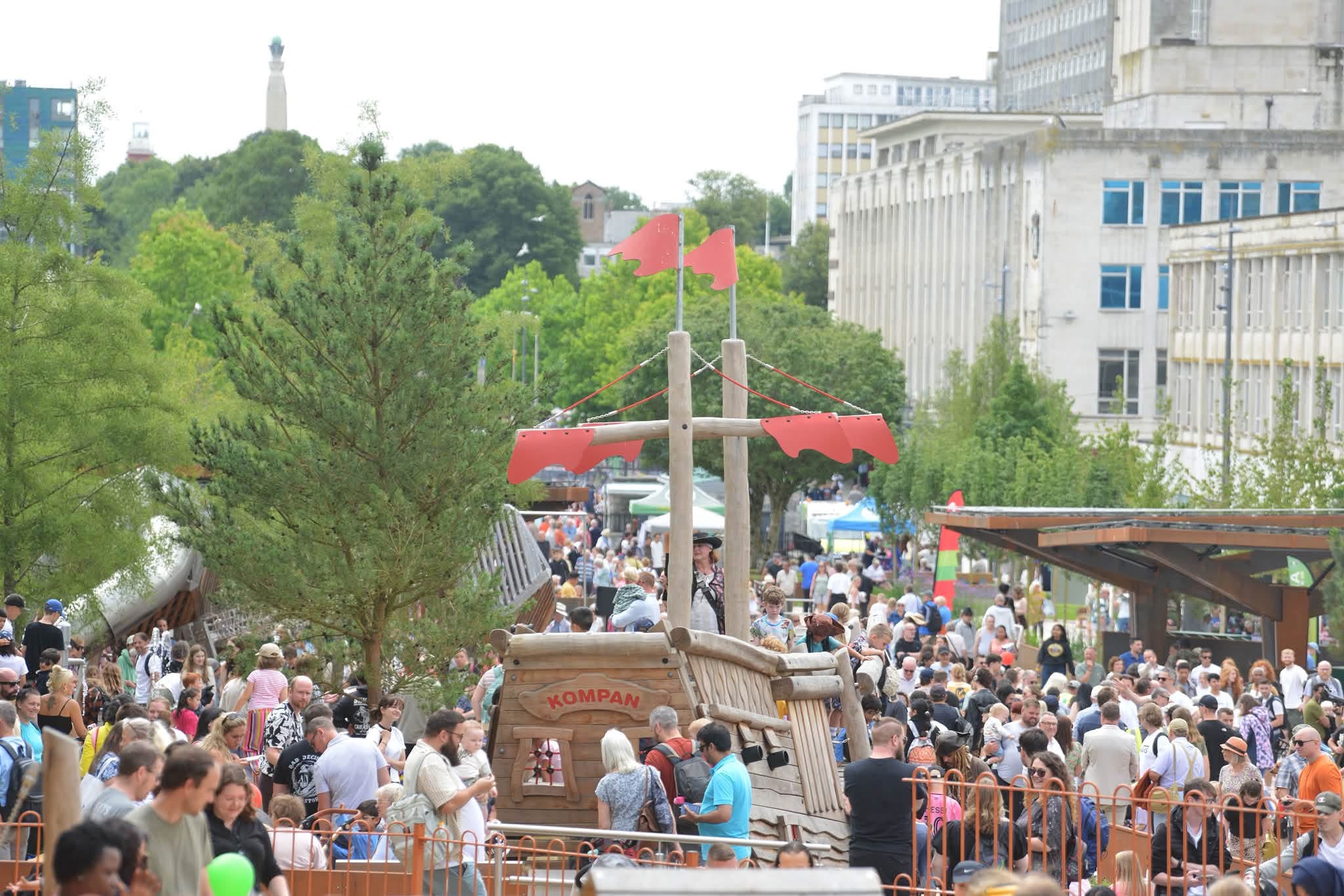
Armada Way has reopened with new landscaping, fresh public spaces and a striking galleon-themed play area. For many, it is simply a route through the heart of Plymouth. But its name commemorates one of the defining moments in British history.
Every day, thousands of people walk along Armada Way without realising they are following a route dedicated to the defeat of the Spanish Armada in 1588.
That victory has shaped Plymouth’s identity for more than four centuries.
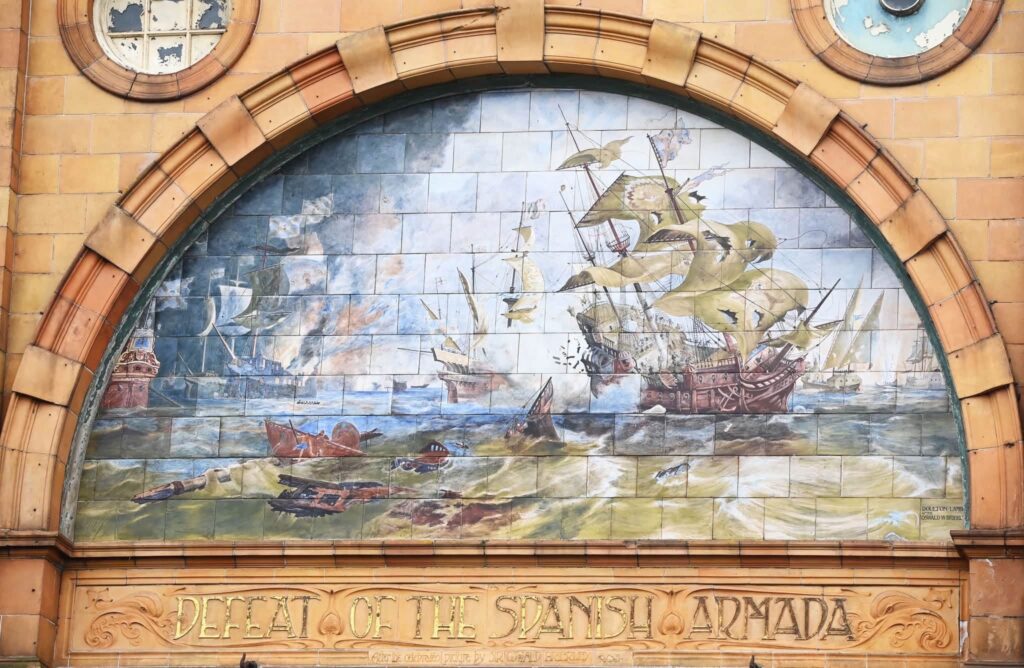
The city’s connection to the Armada can still be seen today. It’s there in the tiled panels depicting Armada scenes on the New Palace Theatre in Union Street, in the name Armada Way itself, and in countless reminders of Plymouth’s long maritime heritage. For generations, the Armada has represented courage, determination and the successful defence of England against one of the greatest invasion threats the country has ever faced.
In July 1588, that threat arrived on Plymouth’s doorstep.
As the vast Spanish fleet approached the English Channel, Plymouth became one of the most important naval ports in the country. The English fleet sailed from these waters to confront the invading force, beginning a campaign that would eventually prevent Spain from landing an army on English soil.
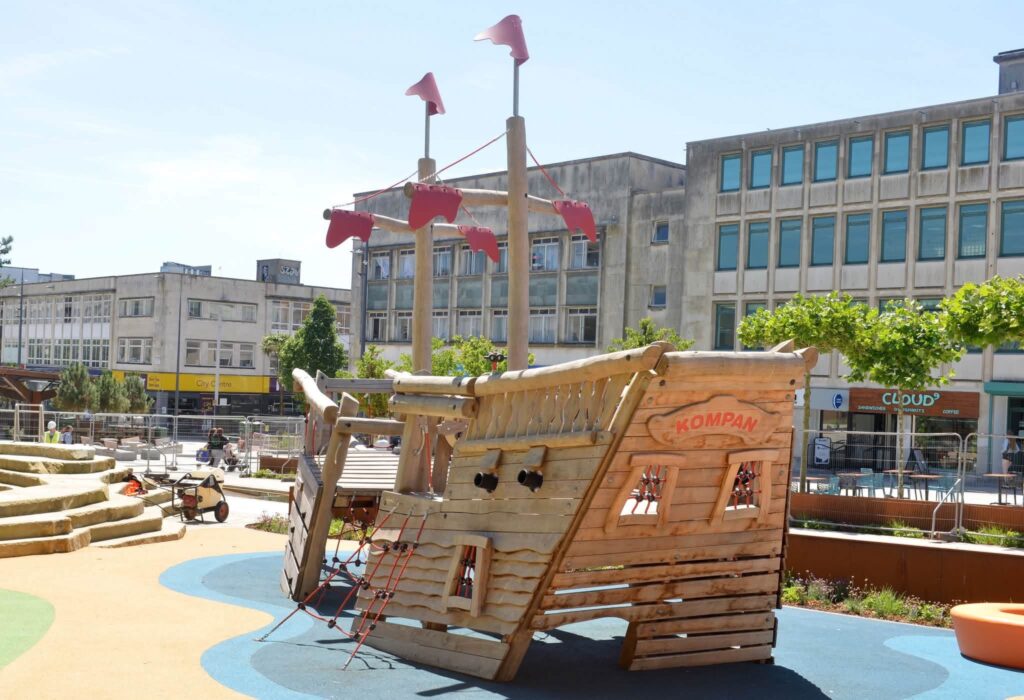
Walking along Armada Way today, the story begins with the new galleon-themed play area. Although designed for children, the wooden ships are inspired by the great sailing vessels that dominated naval warfare during the late sixteenth century. They provide a reminder that the battle for England was fought not by modern warships, but by wooden sailing ships powered by wind, courage and skilled seamanship.
A short distance away stands the anchor from HMS Ark Royal. While this anchor belongs to a much later Royal Navy vessel, it recalls the original Ark Royal, the flagship of Lord Howard of Effingham during the Armada campaign. From this ship, Howard commanded the English fleet as it harried the Spanish through the English Channel.
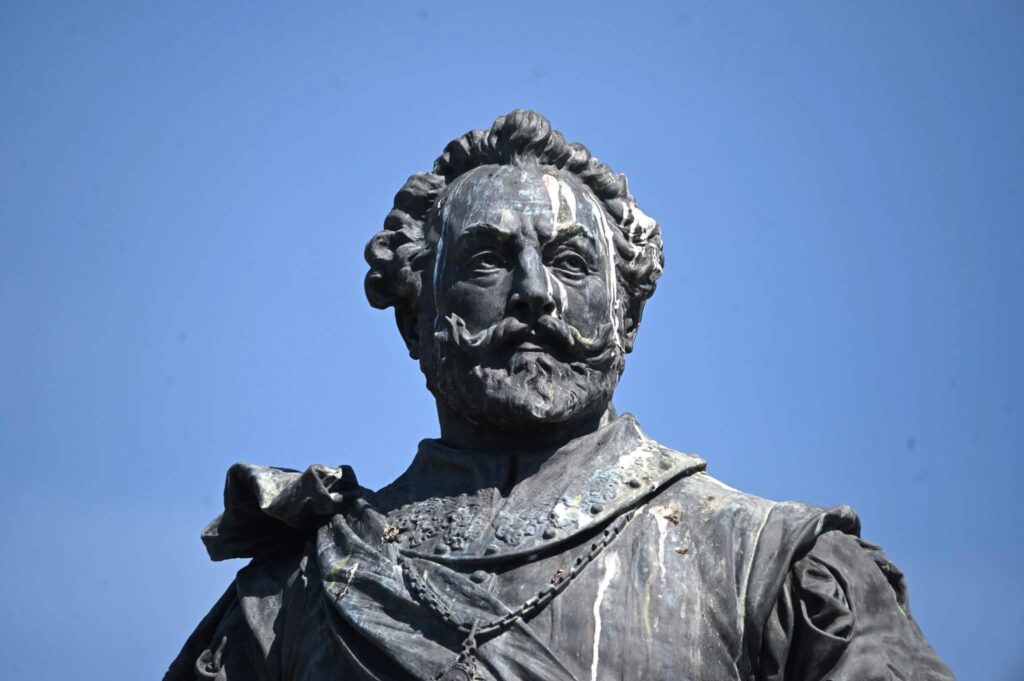
Serving alongside him was Plymouth’s most famous sailor, Sir Francis Drake. Around 48 years old at the time, Drake was second-in-command of the English fleet. His bold tactics, combined with the determination of English crews and worsening weather for the Spanish, helped turn the campaign into one of England’s greatest military successes.
Yet the Armada story is not only about famous names.
Captain William Cocke, of 51 Southside Street, is one of Plymouth’s unsung Armada heroes. A skilled mariner, merchant and shipowner, he fitted out his own ship and joined the fleet that sailed from Plymouth to confront the Spanish Armada in 1588. He was killed fighting alongside his crew during one of the engagements remembered as the only English captain of note to lose his life in the campaign. Sir Richard Hawkins later paid tribute, writing that Cocke “died with honour amidst his company.” His sacrifice was honoured with an augmentation to the Cocke family coat of arms.
His story deserves to be remembered.
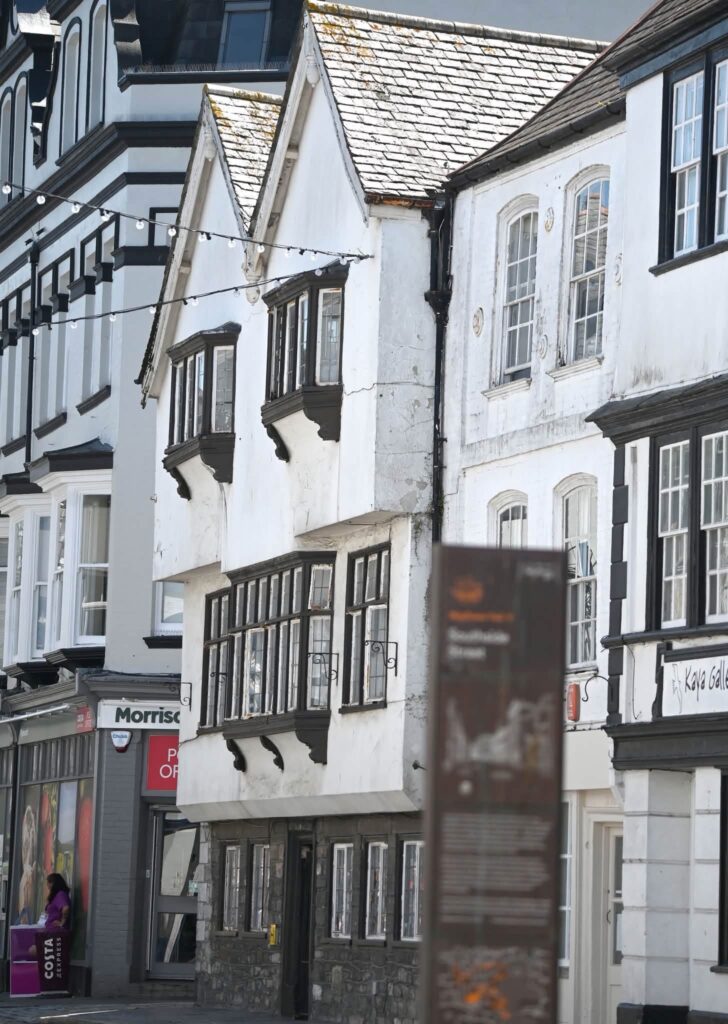
While Sir Francis Drake became one of history’s most celebrated seamen, Captain William Cocke gradually disappeared from public memory. His sacrifice, however, forms part of the same remarkable story. Every great victory carries a cost, and Plymouth’s forgotten captain paid the highest price.
The journey continues to Plymouth Hoe, where one of Britain’s best-known historical legends has been told for centuries.
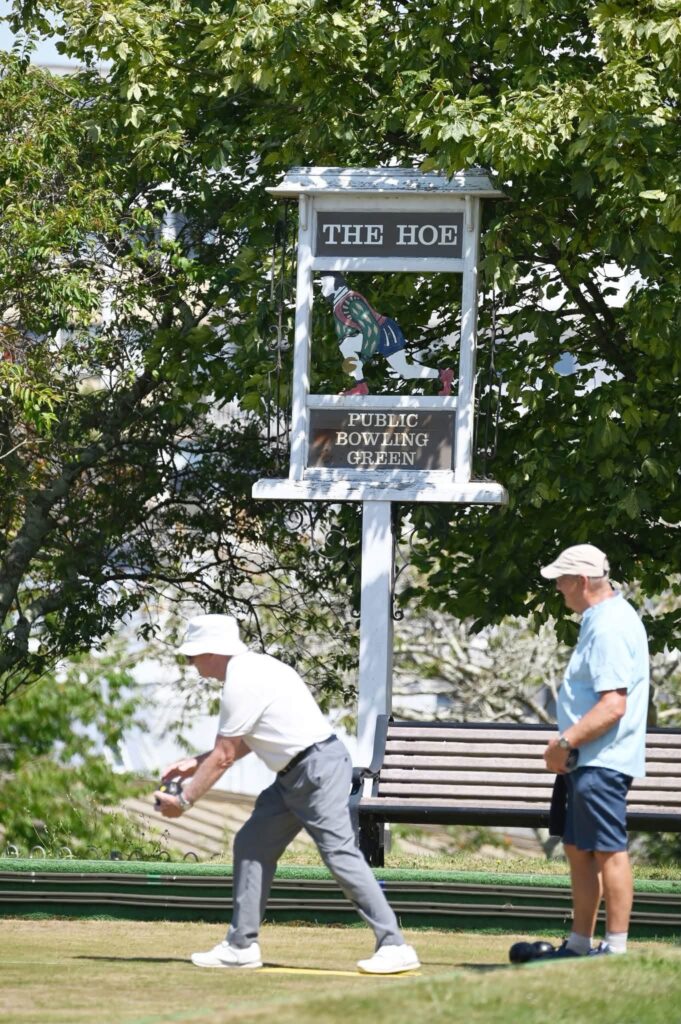
According to tradition, Sir Francis Drake was playing bowls when news arrived that the Spanish Armada had been sighted. Rather than rushing immediately to sea, he is said to have calmly finished his game before joining the fleet. Historians continue to debate exactly how the story unfolded, but the legend has become inseparable from Plymouth’s identity.
Today, the Plymouth Hoe Bowling Club still occupies this famous location, allowing visitors to look across the same waters where English ships once sailed to defend the country.
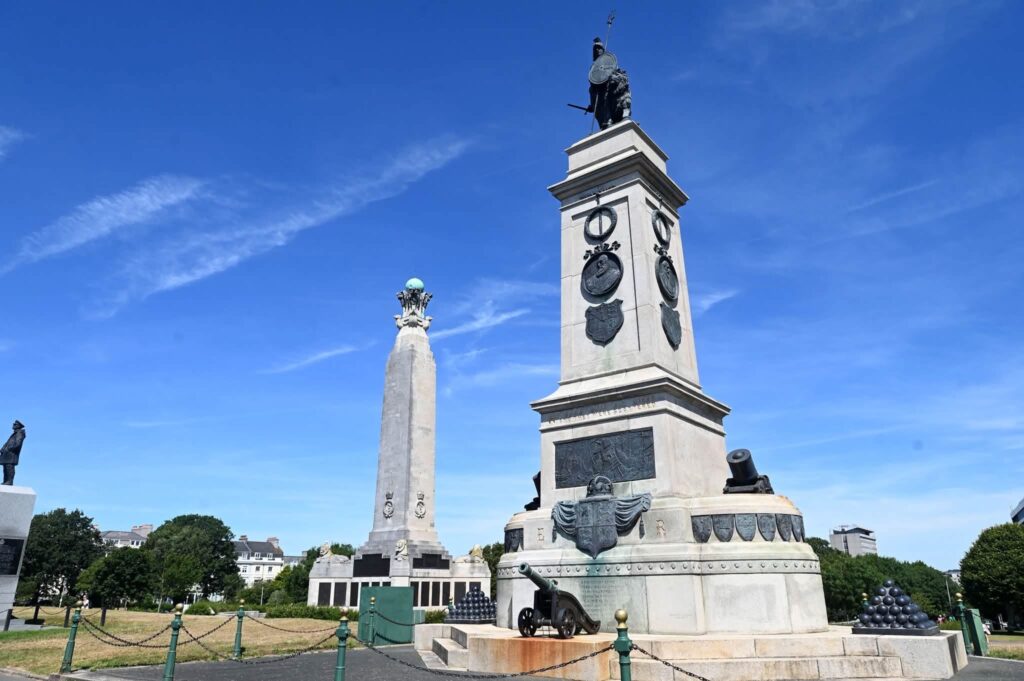
The walk ends at the Armada Memorial, which stands proudly overlooking Plymouth Sound. It commemorates the defeat of the Spanish Armada and the courage of the sailors who faced what was then the most powerful naval force in Europe.
Standing beside the memorial, it is easy to imagine local families gathering on the Hoe in the summer of 1588, watching as the English fleet disappeared over the horizon. Those ships carried men from Plymouth whose actions would help shape the future of England.
Armada Way itself is a much more recent creation. It was established during Plymouth’s post-war reconstruction following the devastation of the Blitz. The name was chosen to honour the city’s role in the events of 1588 and to ensure that one of Plymouth’s greatest chapters would remain visible in the heart of the rebuilt city.
Today, Armada Way is far more than a pedestrian boulevard.
It is a timeline of Plymouth’s history. From the galleons that introduce the story, to the reminder of Ark Royal, the memory of Captain William Cocke, the legend of Drake on the Hoe and the Armada Memorial itself, every step connects modern Plymouth with one of the most important events in the nation’s past.
As people once again enjoy the newly reopened Armada Way, they are also walking through a story that began more than 430 years ago a story of courage, sacrifice and a city that helped defend a kingdom.
Photographs © Wayne Perry / Plymouth Post