
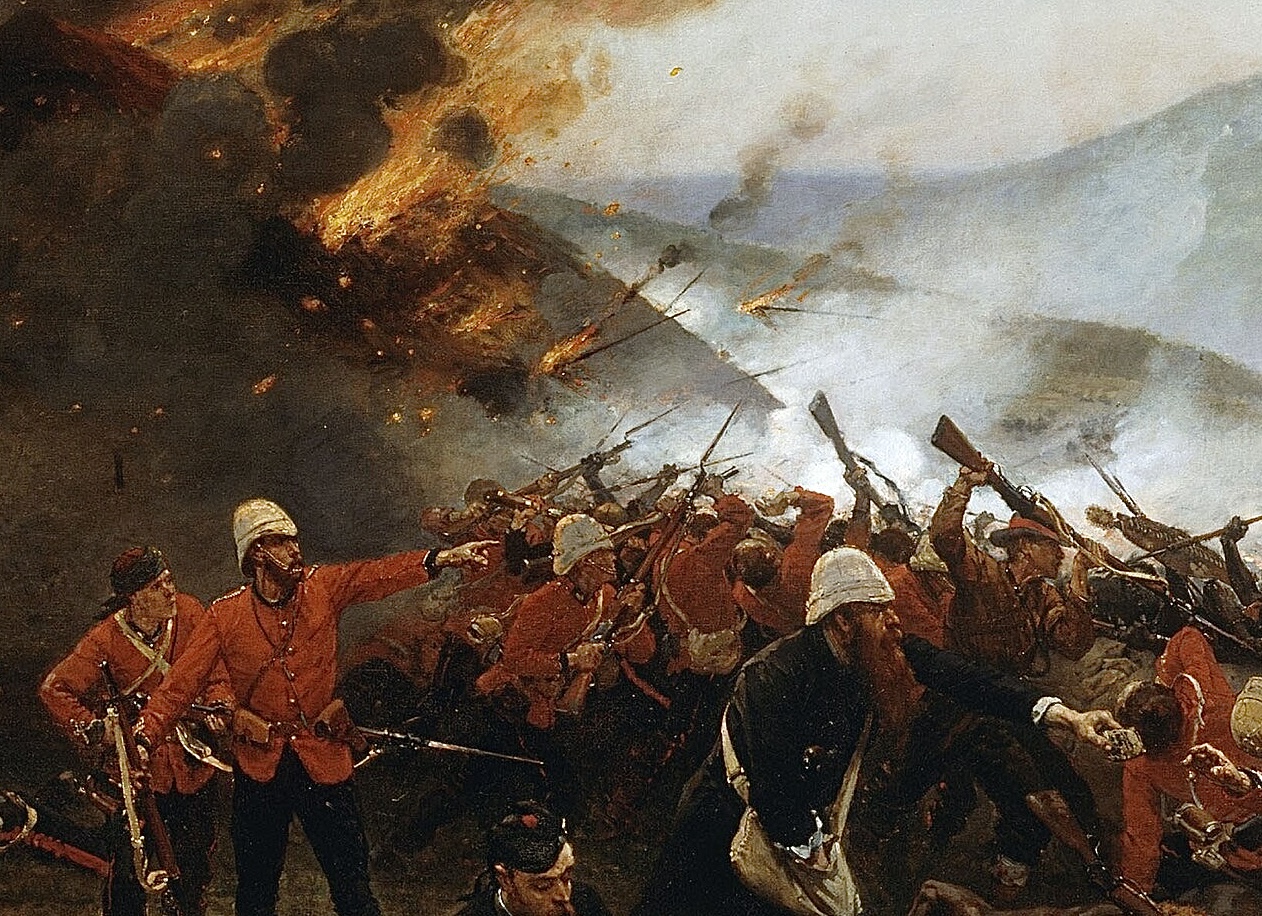
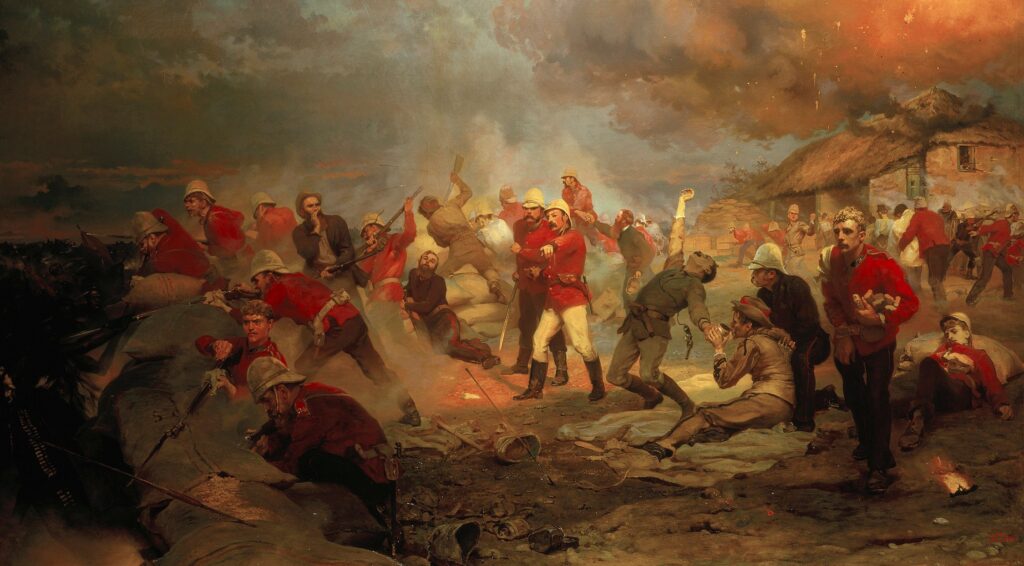
On the evening of 22 January 1879, a small British garrison at Rorke’s Drift faced a Zulu force numbering several thousand. The post was a mission station beside the Buffalo River in what is now South Africa. Its church had been turned into a store and a nearby house into a hospital.
Earlier that day, the British had suffered a devastating defeat at Isandlwana. Part of the victorious Zulu army then moved on to Rorke’s Drift. The men there had little time to prepare. They piled mealie bags, biscuit boxes and other stores into makeshift barricades around the buildings.
The attack lasted more than 12 hours. Fighting moved around the station and into the hospital, where defenders tried to get the wounded out as the building caught fire. In the darkness, with the buildings burning and ammunition running short, the defenders pulled back to a smaller position and held on until the Zulus withdrew.
The British garrison numbered about 150, including sick and wounded men. The National Army Museum estimates the attacking force at about 4,000. The defenders were soldiers and support staff from several units, and the exact roll of those present has been debated.
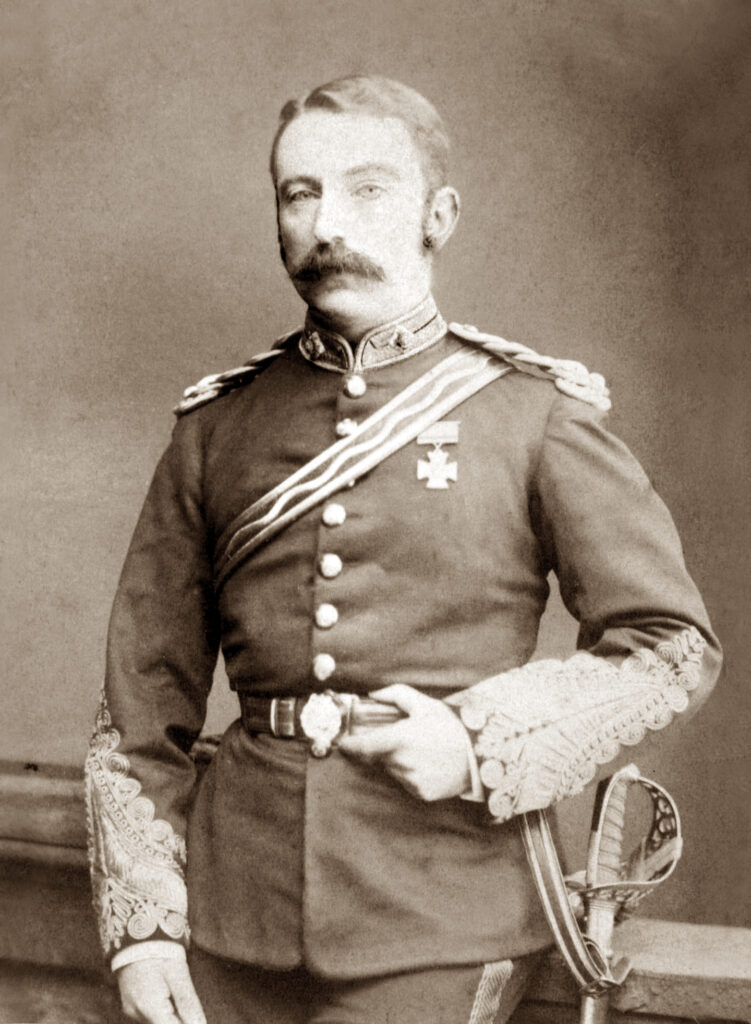
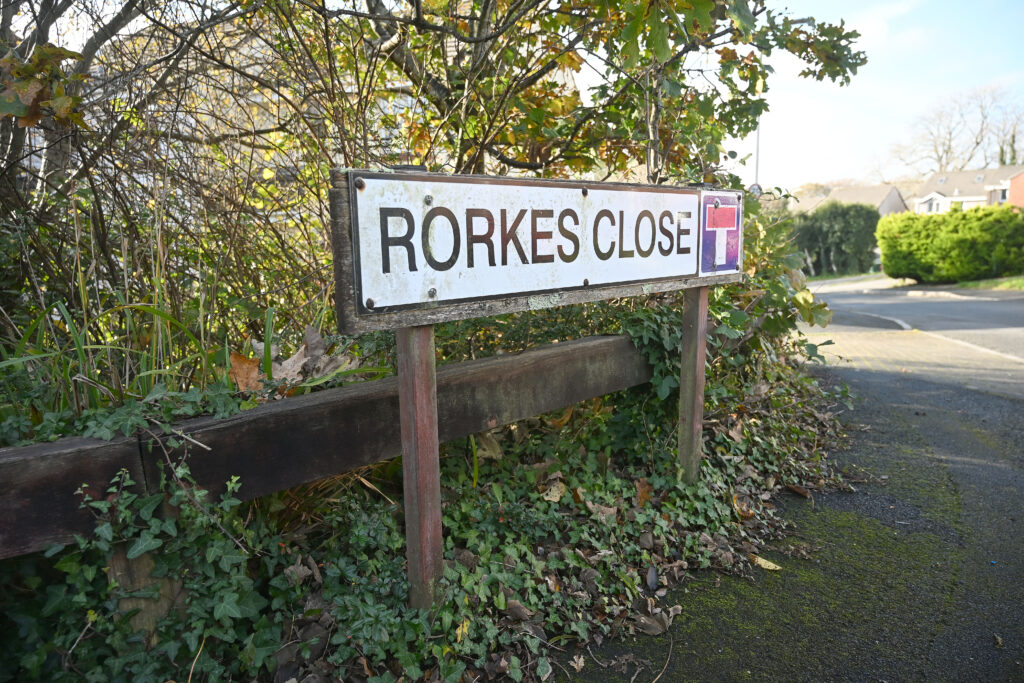
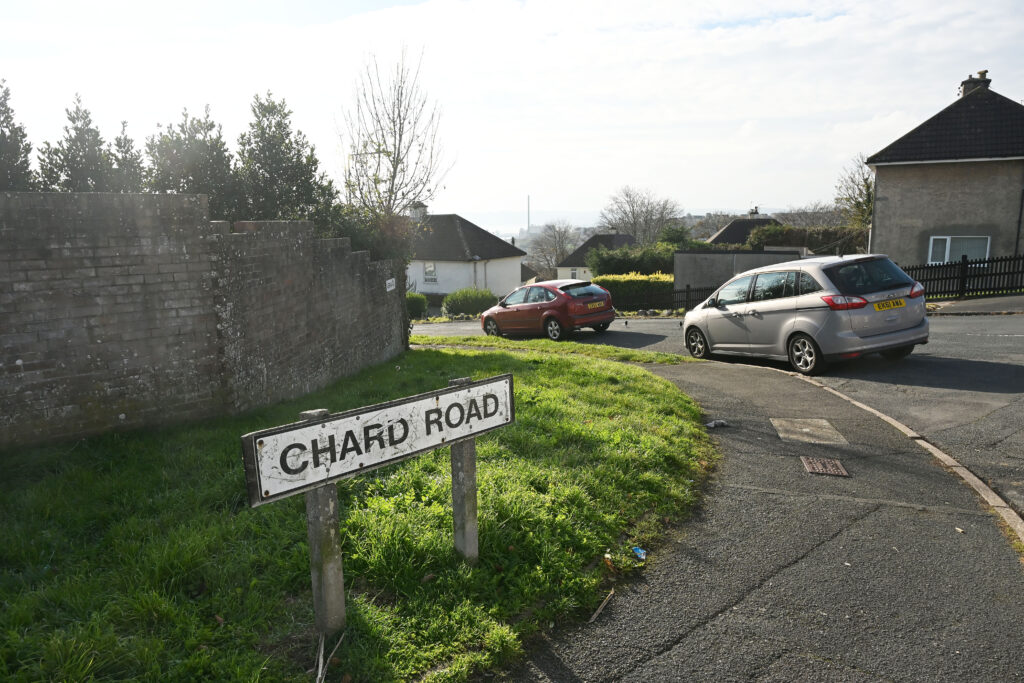
One of the men who helped direct the defence was Lieutenant John Chard of the Royal Engineers. When he returned from the river crossing and learned of the disaster at Isandlwana, he took command alongside Lieutenant Gonville Bromhead. Chard was later awarded the Victoria Cross for his part in the defence. Plymouth remembers the story in two street names: Chard Road and Rorkes Close, near the Mount Tamar area where Chard grew up.
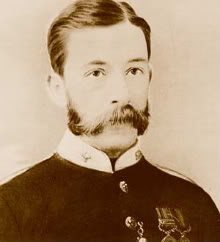
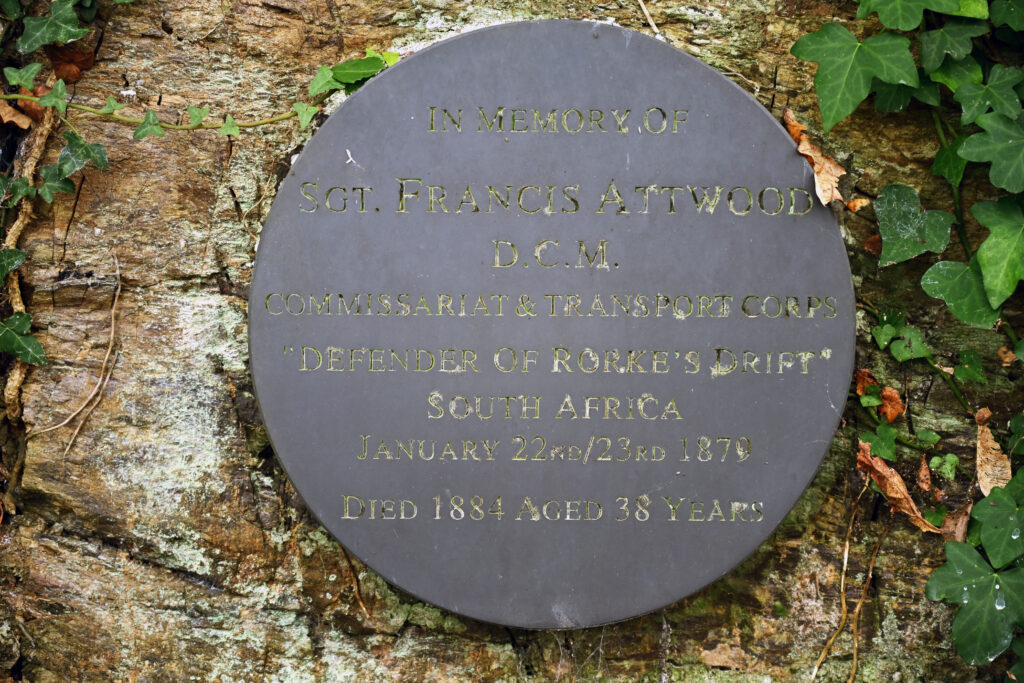
Among the defenders was Corporal Francis Attwood of the Army Service Corps. His work was connected with supply, but when the station came under attack he was one of the men in the defensive line. Attwood received the Distinguished Conduct Medal and was promoted to sergeant. A memorial at Efford Cemetery marks his Plymouth connection.
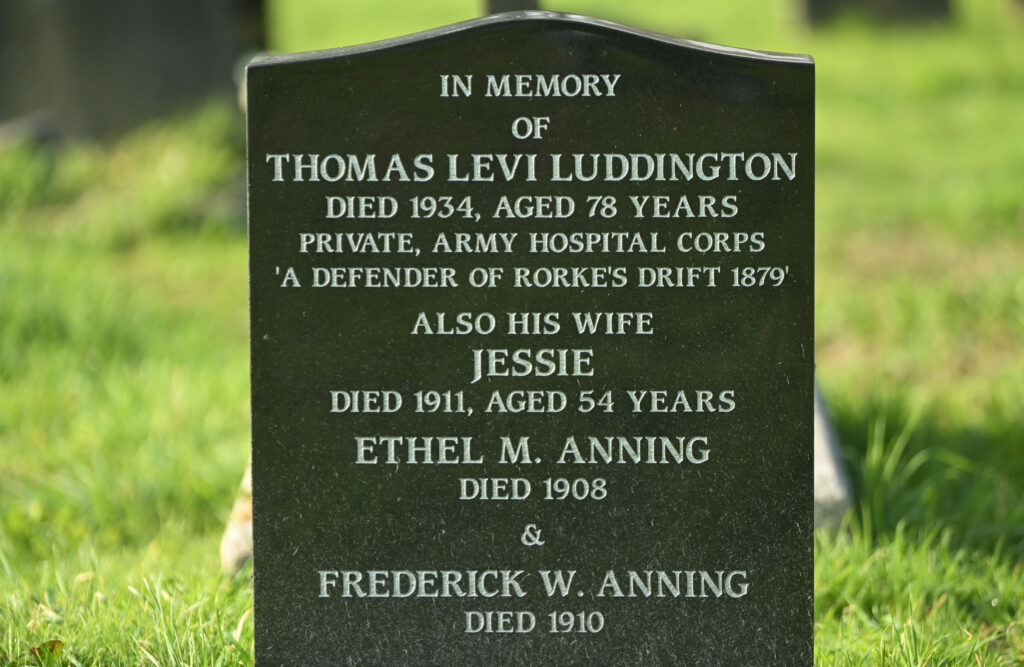
Private Thomas Levi Luddington served with the Army Hospital Corps. The medical staff faced the danger of attack while trying to care for the wounded. Luddington survived the battle and later settled in Plymouth. His grave is at Weston Mill Cemetery, where a headstone was dedicated in 2010.
Rorke’s Drift was only one part of the wider Zulu War, and two other Plymouth graves tell stories from elsewhere in the campaign.
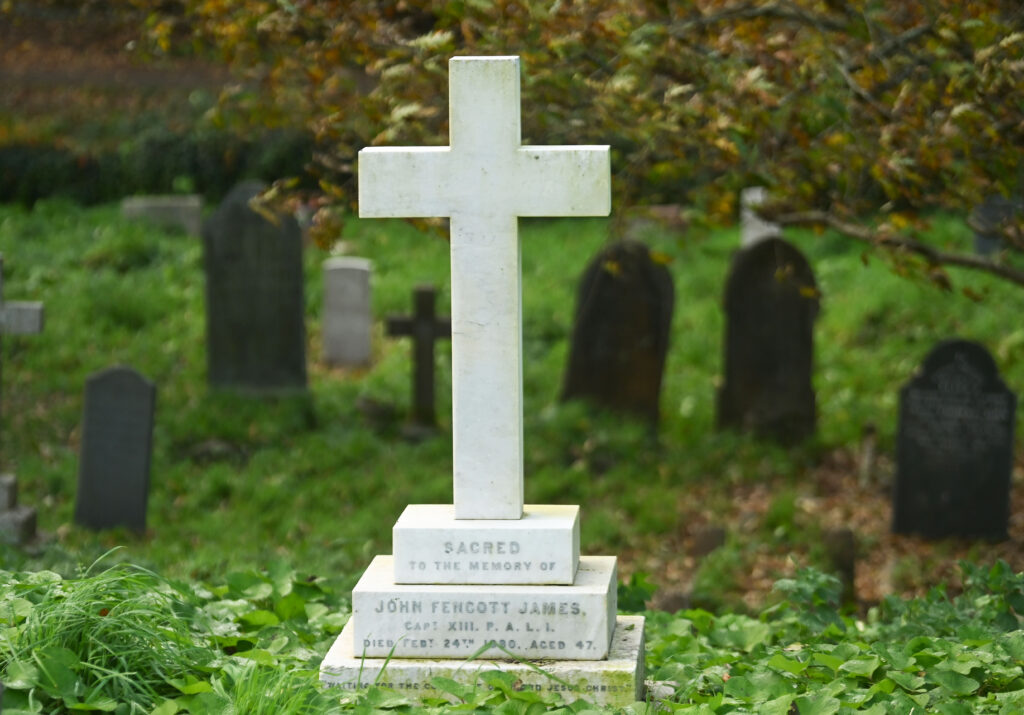
Captain John Fencott James served with the 13th Light Infantry throughout the war. He was the second senior officer at the Battle of Ulundi, the decisive British victory on 4 July 1879. James died at Raglan Barracks in Devonport on 24 February 1880. A campaign history records that the strain of the fighting had affected his health. He was buried at Ford Park Cemetery, where his grave can be visited today.
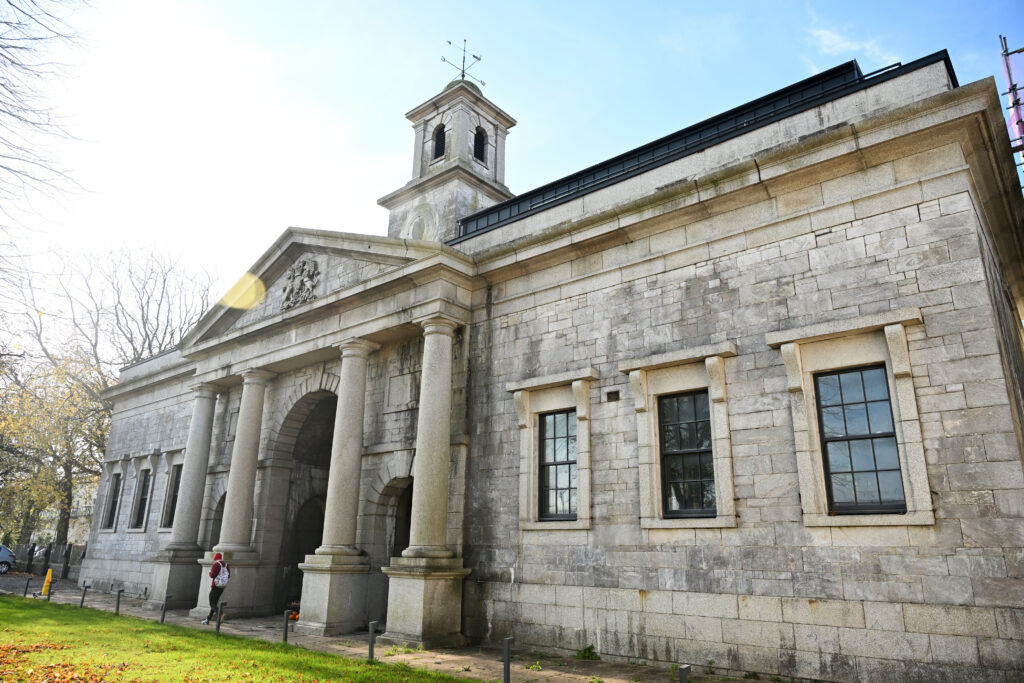
William Henry Bevis was a Royal Navy medic who served in both the Zulu War and the First Boer War. During the fighting at Laing’s Nek and Majuba Hill in 1881, he went out with stretcher parties to bring wounded men to safety. At Majuba, the account of his life says, every man in his stretcher party was shot, while a bullet passed through Bevis’s hat. He escaped injury.
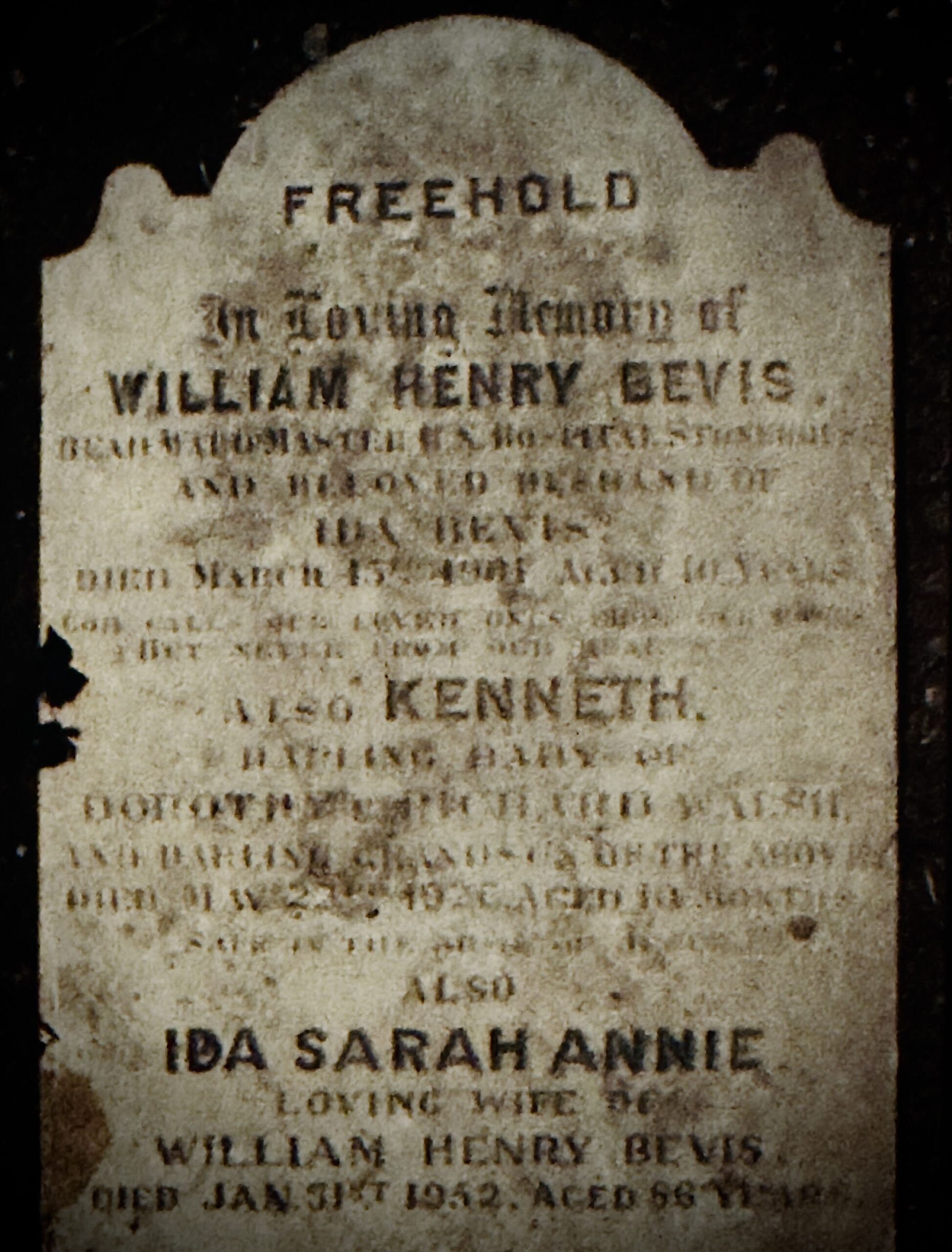
Bevis was captured after the British defeat at Majuba. While a prisoner, he recorded conversations with former South African president Paul Kruger and General Piet Joubert. He was recommended for the Victoria Cross twice, but did not receive it. Instead, he was awarded the Conspicuous Gallantry Medal and a life pension.
His bravery continued after his return to Plymouth. Bevis became head wardmaster at the Royal Naval Hospital and was awarded the Albert Medal for rescuing a patient when a fire broke out there. He died of influenza in March 1901, aged 40, leaving a widow and six children, all under 12. He was buried at Ford Park Cemetery.
Between them, these men tie Plymouth to different chapters of the conflicts in southern Africa, and the street names, memorial and graves can still be found across the city.
Photographs ©/ Plymouth Post