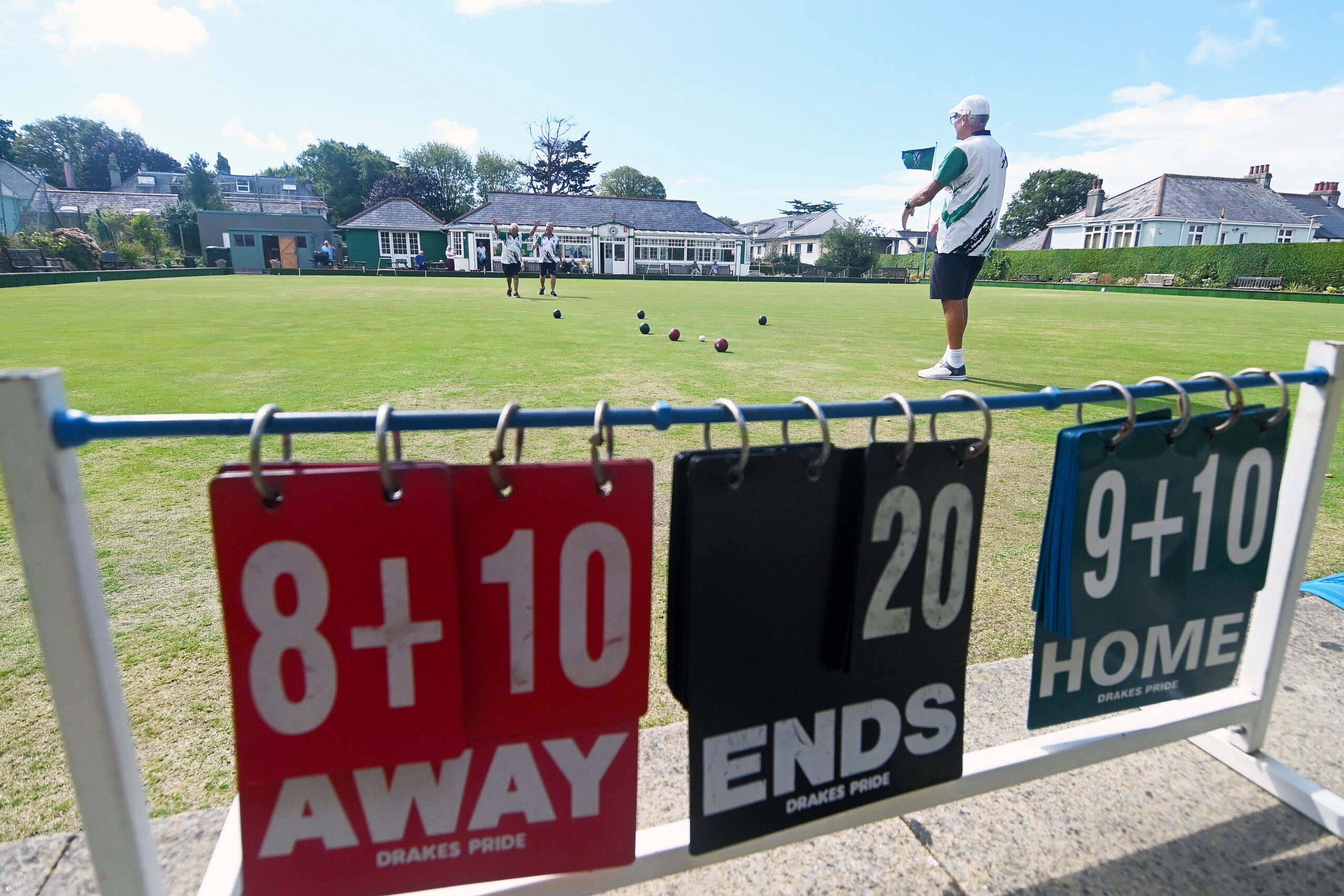
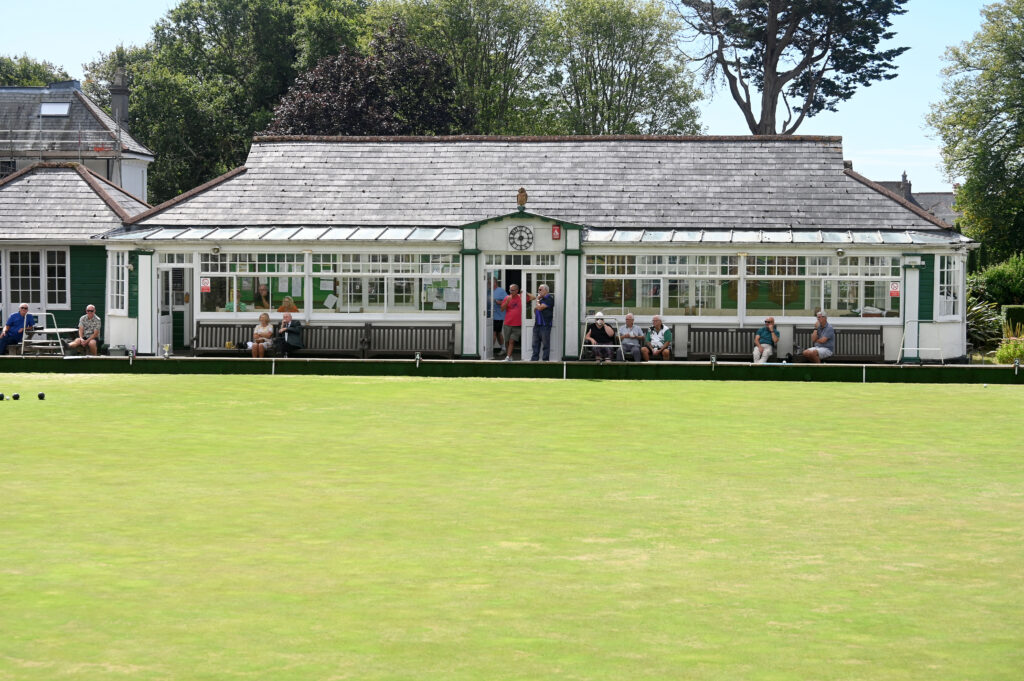
For more than a century, the Plymouth Sir Francis Drake Bowling Club has been part of the city’s story. It began on Plymouth Hoe in 1907, when a handful of local men set out to do something remarkable for a city its size, give it a bowling green of its own, in a city that had none. What followed was over a hundred years of changing locations, financial struggle, two world wars, changing membership, fire and rebuilding, all while keeping its connection to one of Plymouth’s most famous names. Today the club is still playing, at its long time home in Whiteford Road, Mannamead.
It started with a letter. In January 1907, a writer using the name “Erimus” wrote to the Western Daily Mercury arguing that Plymouth was the town which ought to have a bowling green and didn’t. The idea caught on fast. Within weeks, a local figure named B Priestley Shires had written back offering to help get a club off the ground, and by March an inaugural committee was meeting at the Borough Arms, agreeing to approach Plymouth Corporation about securing a site on the Hoe. Permission was granted.
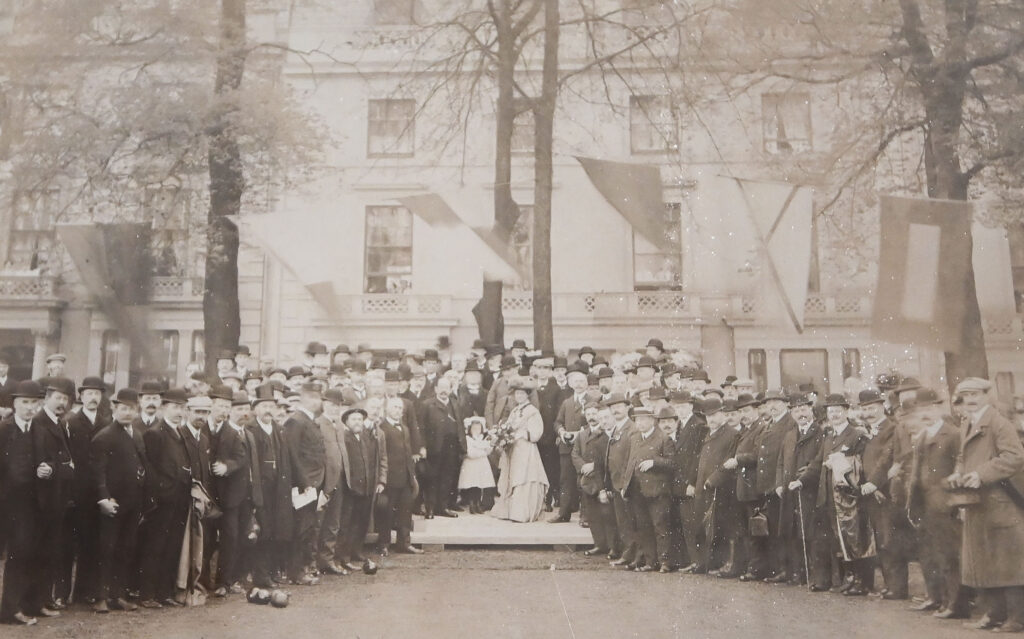
The club was formally born at a meeting in the Barristers’ Room at Plymouth Guildhall, with around two dozen founding members in attendance. They named it the Plymouth (Sir Francis Drake) Bowling Club the Mayor took on the role of first president, and Shires became chairman. The choice of name practically made itself, the legend of Drake finishing his game of bowls on the Hoe as the Spanish Armada approached was already woven into the city’s identity, whether or not it ever really happened. For a new club forming almost within sight of Drake’s statue, there was no other name to consider.
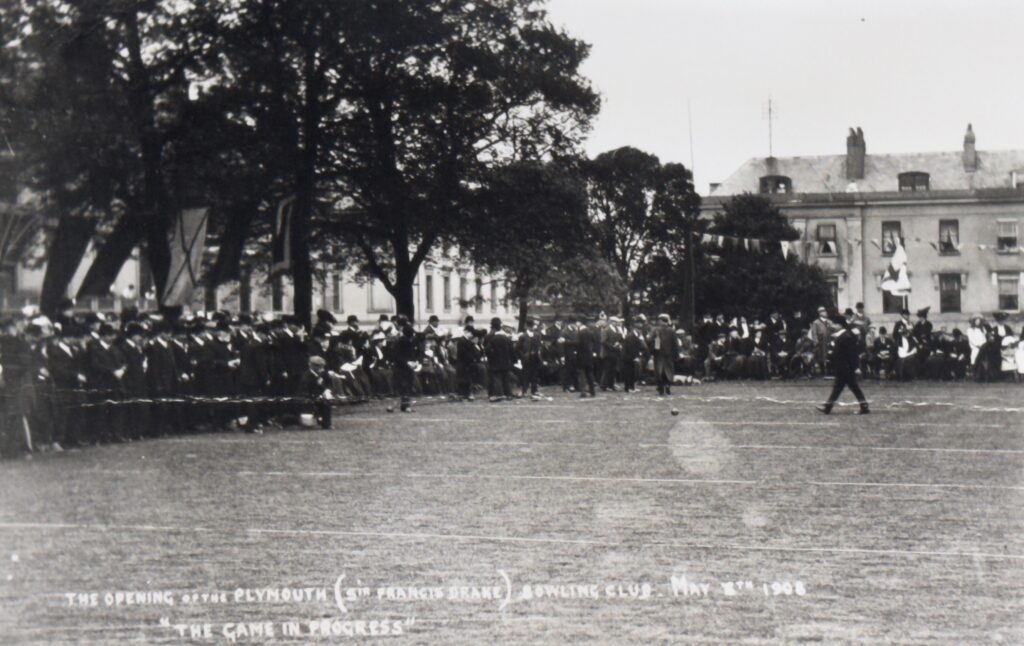
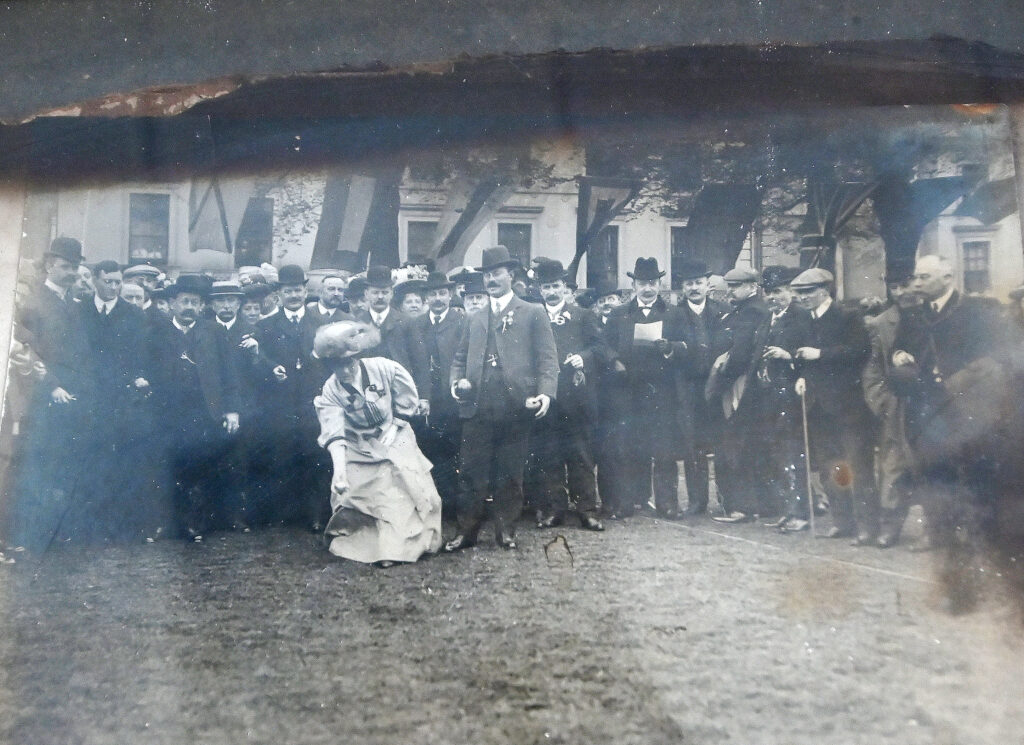
The Hoe green was levelled that autumn and opened the following spring by the Mayor, drawing bowlers from clubs across Devon and Cornwall. Membership had already grown to well over a hundred and fifty, fast enough that a second green was opened at Thornhill Road in Mannamead, on the old Victoria Tennis Club site. That second green didn’t last poor use and persistent drainage problems saw it close within the year.
The club’s early history is really a story of restless searching for a permanent home. In 1909 it took a lease on land at Ford Park in Mutley, opening a new green there that summer, with a pavilion following the next year and the club taking its first steps into competitive league bowls. Ford Park lasted the best part of a decade before closing, sending the club back to the Hoe once again. Running any club with grounds, a pavilion and a growing membership took money the young organisation didn’t always have, and its own historical account records real financial difficulties in these years periods when its future was genuinely in doubt. What kept it alive, again and again, was members simply refusing to let it fold.

The permanent move came after the First World War. At its Annual General Meeting in December 1921, the membership voted to buy land at Whiteford Road and lay a new green using Cumberland turf. It opened in the spring of 1922, and with that the club’s long association with the Hoe green came to an end. More than a century later, the club has never moved again.
The Second World War brought the war home to the clubhouse itself. According to the club’s own account, the building was handed over to the ladies’ war effort for the duration, and an opening was knocked through the rear wall so members could reach a public air raid shelter next door. It’s a small, human detail from a city that would go on to suffer some of the worst bombing of the Blitz and a reminder that even a bowls clubhouse wasn’t untouched by it. The club came through the war, as it had come through everything else.
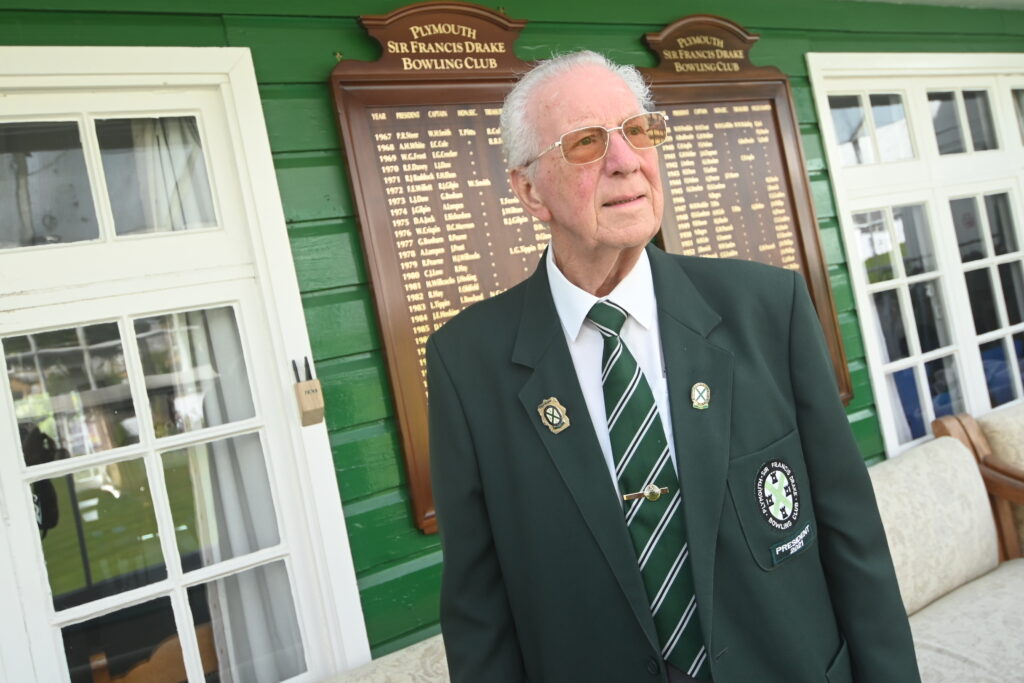
For most of the twentieth century, the Sir Francis Drake Bowling Club was a men’s club, its traditions passed down through generations of Plymouth bowlers. That changed at the turn of the millennium, when members voted at a special meeting to admit a Ladies section opening the club’s playing membership to women for the first time in nearly a hundred years.
The same year brought a very different kind of upheaval. Fire tore through a large part of the clubhouse, forcing the cancellation of matches and pushing the club to use rival greens for its own fixtures, including Finals Day. It could easily have been the end. Instead, members threw themselves into repairing and refurbishing the building, and within months the clubhouse reopened, it was opened by the president of the Devon County Bowling Association. The fire had taken the club’s home. It hadn’t taken the club.
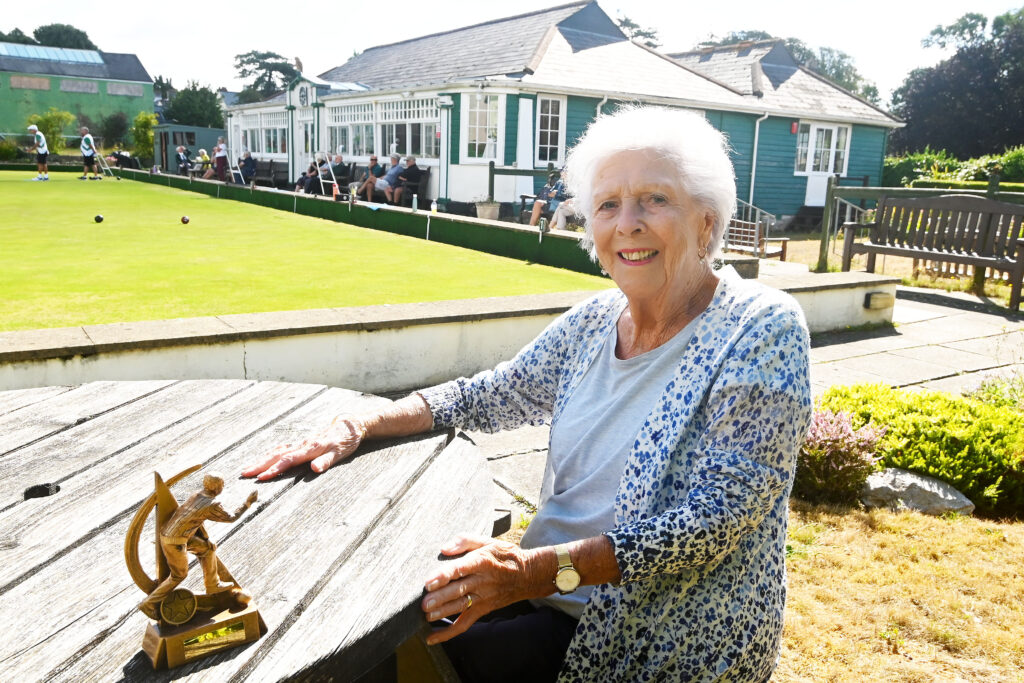
A handful of years later, in 2007, the club marked its centenary a hundred years on from those first letters and meetings in 1907, having travelled from the Hoe to Ford Park, back to the Hoe again, and finally to the permanent home it had built for itself at Whiteford Road.
Today the Sir Francis Drake Bowling Club still calls Whiteford Road home. It has one green, usually run as six rinks but able to stretch to eight for friendly matches, and is affiliated to Bowls England, Bowls Devon and the Plymouth & District Bowling Association. It hosts league, cup and friendly fixtures throughout the season, welcomes touring sides, and puts on its own social events. Its membership today looks very different from 1907 men and women play alongside each other, junior and non playing members are welcomed too, and coaching is on offer for anyone taking up the game for the first time.
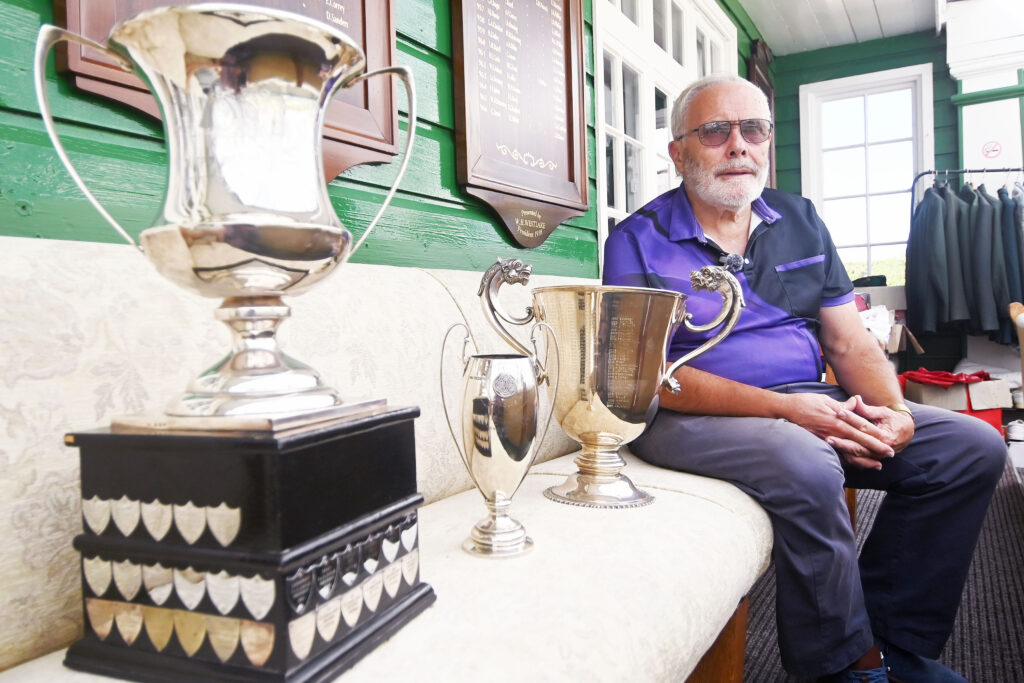
The story of the club is, in the end, a story about Plymouth itself an Edwardian city that decided it needed a bowling green, named after a legend that was already part of its identity, and kept going through financial hardship, wartime disruption, a changing membership and a fire that could have finished it. The faces have changed. The city around it has changed almost beyond recognition. But more than a century after those first 28 people gathered at Plymouth Guildhall, the Sir Francis Drake Bowling Club is still here.
Still playing.
Still welcoming new generations.
And still part of Plymouth’s history.
Photographs © Wayne Perry / Plymouth Post