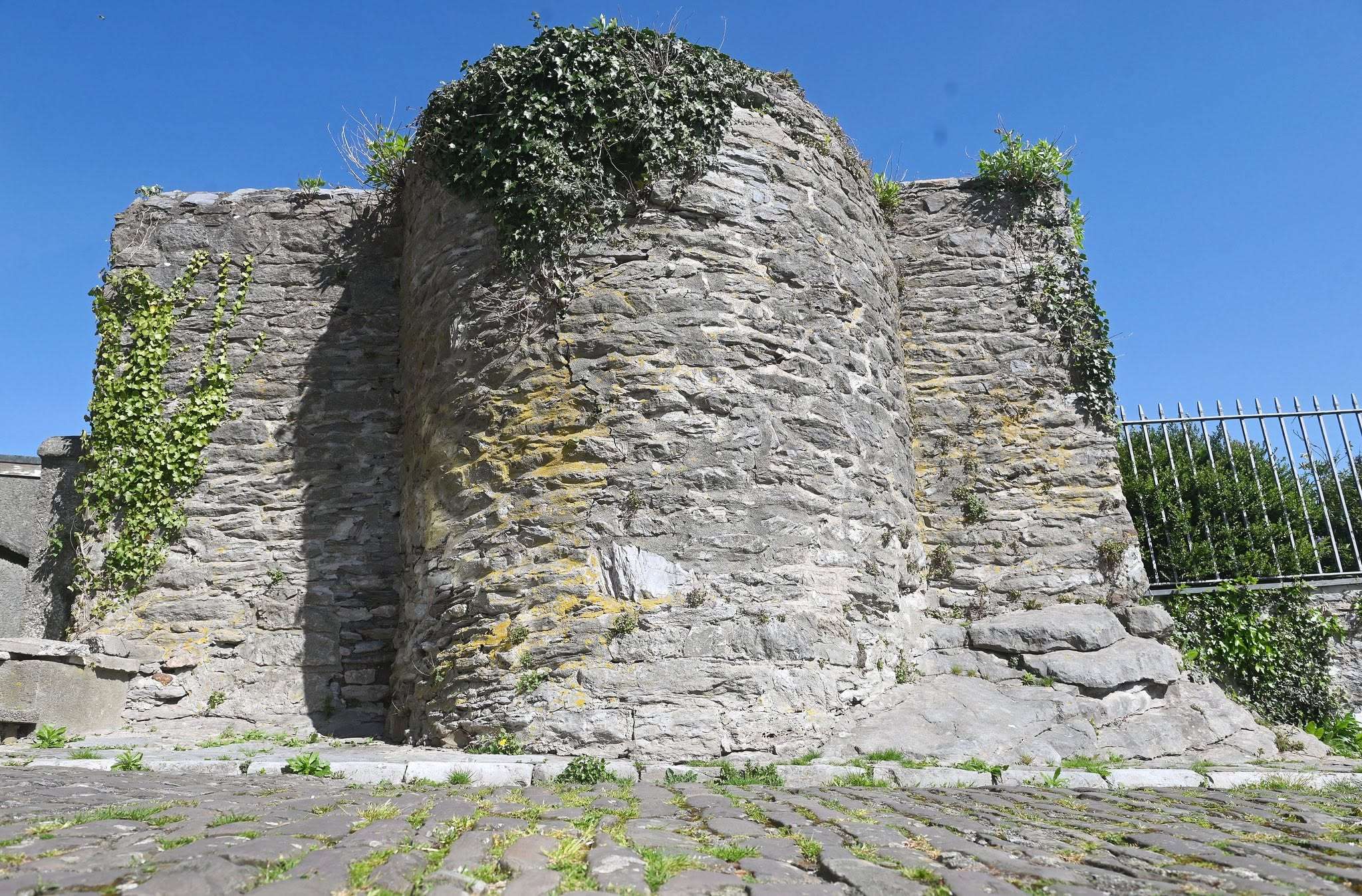
For many people walking along Plymouth’s historic waterfront, the city’s medieval castle is something they’ve never seen, or at least, never realised they’ve seen.
Today, only fragments remain. But these surviving sections of masonry offer a direct and tangible link to a time when Plymouth was a fortified coastal town, facing constant threat from the sea.
A Castle Built for Defence. Plymouth Castle was constructed in the late 14th century, during a period when coastal communities were increasingly vulnerable to attack. The town had already experienced raids, and fortifying its shoreline became a necessity rather than a choice.
Rather than a grand, standalone stone castle of the kind seen inland, Plymouth’s in structure formed part of a wider defensive system. It was built close to the waterfront in what is now the Barbican area, positioned to guard Sutton Harbour and the approaches from Plymouth Sound.
Historical records suggest the castle featured multiple towers and defensive walls, forming a compact but strategic stronghold designed to deter and respond to attacks arriving by sea.
Decline and Disappearance. By the 16th and 17th centuries, Plymouth’s military priorities had shifted. Newer defensive structures were developed elsewhere, and the medieval castle gradually fell into disuse.
Over time, much of the structure was dismantled, with stone likely reused in other buildings, a common practice in growing towns. What had once been a key defensive site slowly disappeared from the landscape.
What Survives Today
Despite this loss, parts of the original structure still exist.
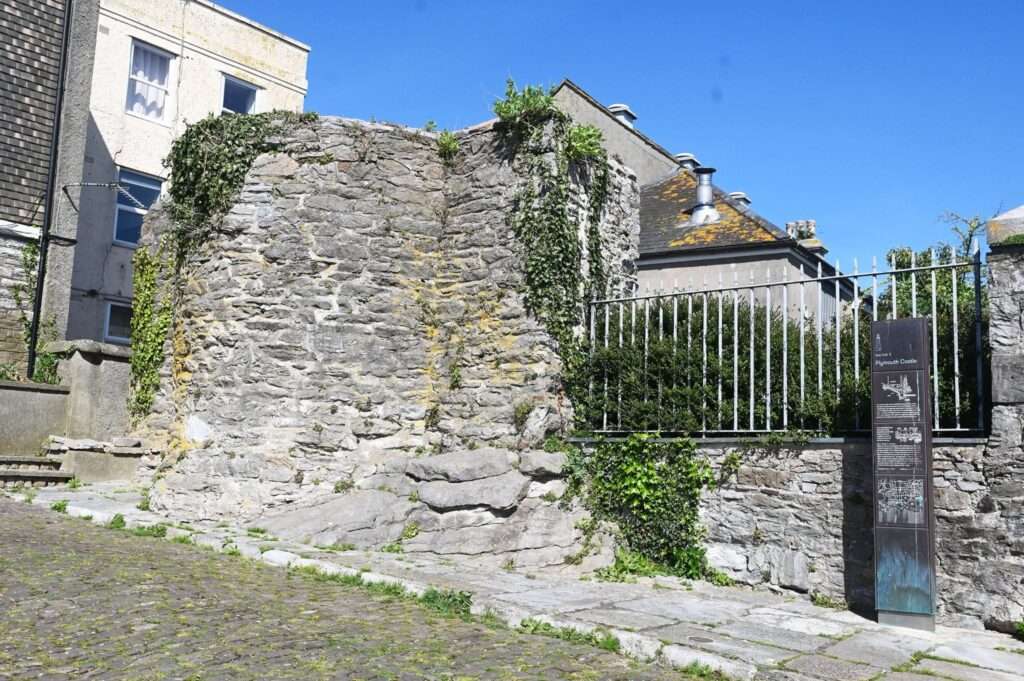
Sections of walling and a surviving turret can still be found in the Barbican area, standing quietly among later buildings. These remains are widely understood to be connected to the medieval castle and form one of the few visible traces of Plymouth’s early defences.
However, the exact origin of the surviving turret is not definitively established. While it is often associated with the castle, some interpretations suggest it may have formed part of a gateway or another element of the wider defensive complex, rather than one of the main corner towers.
The Four Towers and Plymouth’s Identity. Although much of the castle has gone, its legacy continues in a different form.
Plymouth’s coat of arms famously features four towers, a symbol long associated with the town’s historic defences and its fortified past.
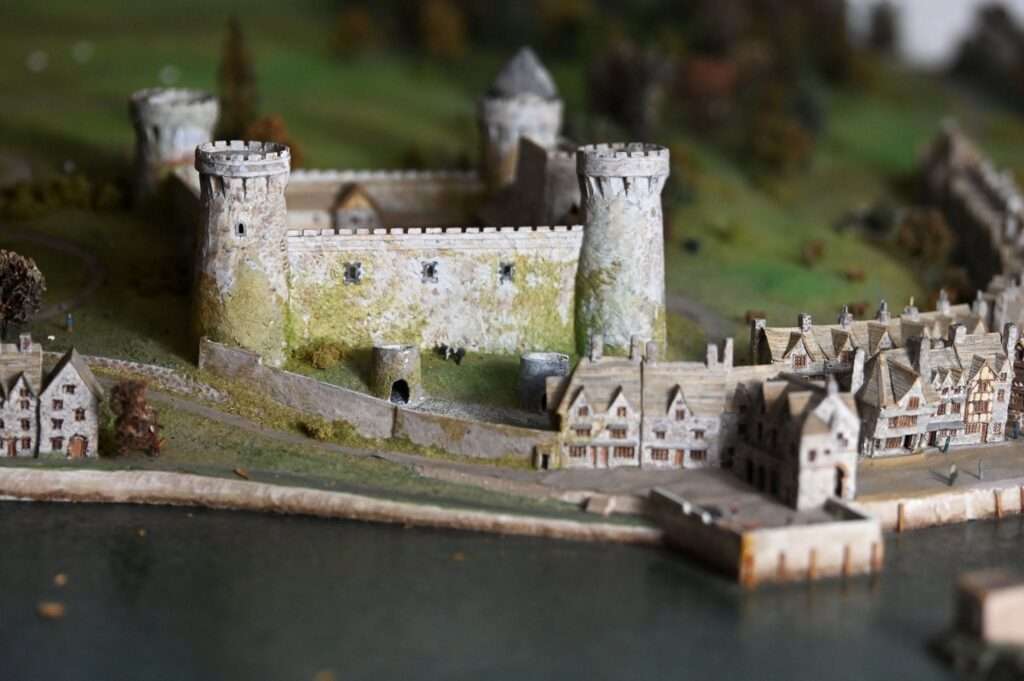
A Glimpse into 1620. One of the most revealing ways to understand how the castle once looked is through a detailed model of Plymouth depicting the town around 1620.
The model itself was created much later, based on historical research, and was originally housed at Prysten House before being relocated to the Council House, where it remains today. Within it, the castle is shown still standing, offering valuable context for how the defences fitted into the wider layout of Plymouth at the time.
Seen alongside the surviving remains, the model helps bridge the gap between past and present, allowing viewers to visualise a structure that has largely been lost.
A Hidden Piece of Plymouth’s Past
Today, Plymouth Castle is no longer a dominant landmark. There are no towering walls or gates to announce its presence.
Instead, what remains is subtle, fragments of stone, a surviving turret, and echoes preserved in the city’s symbols and historical reconstructions.
Yet these remnants are significant. They tell the story of a town shaped by the need to defend itself, and of how that past still exists, quietly, in the streets of the Barbican.
For those who know where to look, Plymouth’s medieval castle hasn’t disappeared, it has simply become part of the fabric of the city.
Photographs & Video © Wayne Perry / Plymouth Post