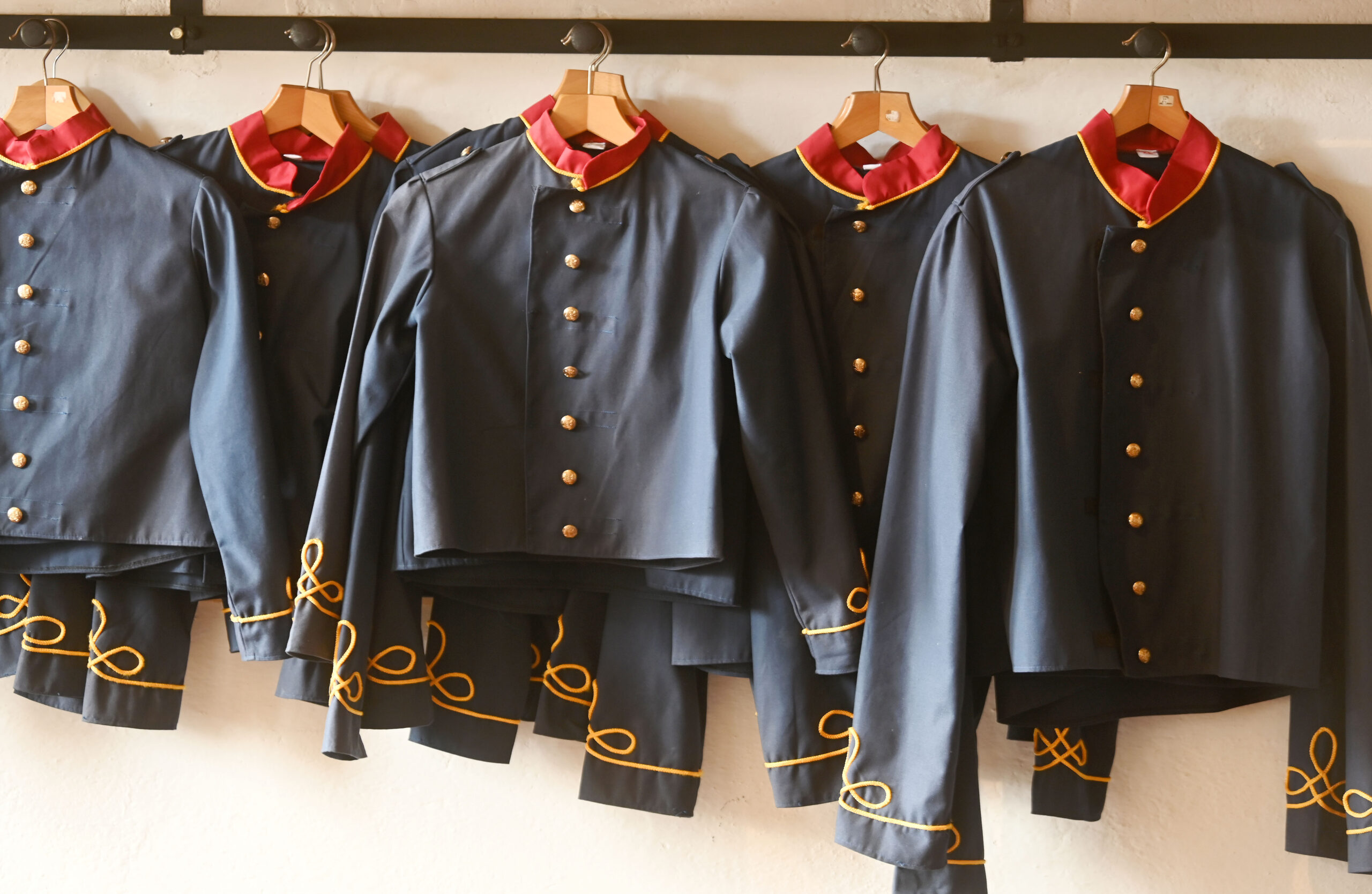
There are places in Plymouth that many of us drive past countless times without ever really stopping to wonder what is behind the walls. Crownhill Fort is certainly one of them.
Standing above the city, the imposing Victorian fort is a familiar sight to anyone travelling through Crownhill. But behind its historic entrance is a fascinating world of military history, recreated rooms, underground spaces, historic buildings and stories stretching across more than 150 years. And inside is something many people may not even realise is there. It’s a small museum bringing the site’s history to life, where the building itself is part of the experience rather than everything sitting behind glass.
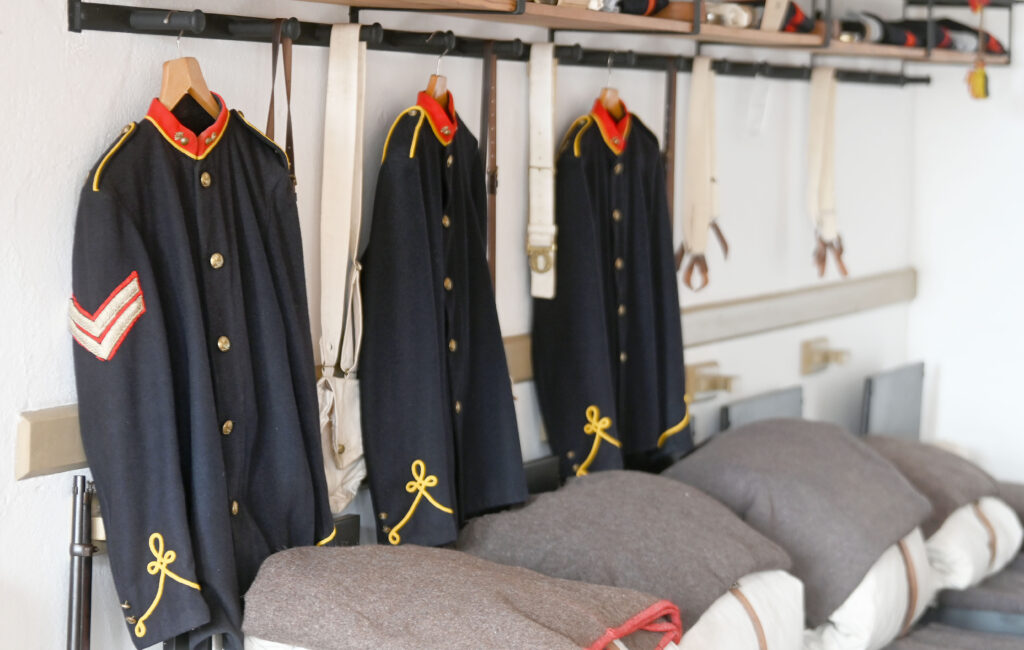
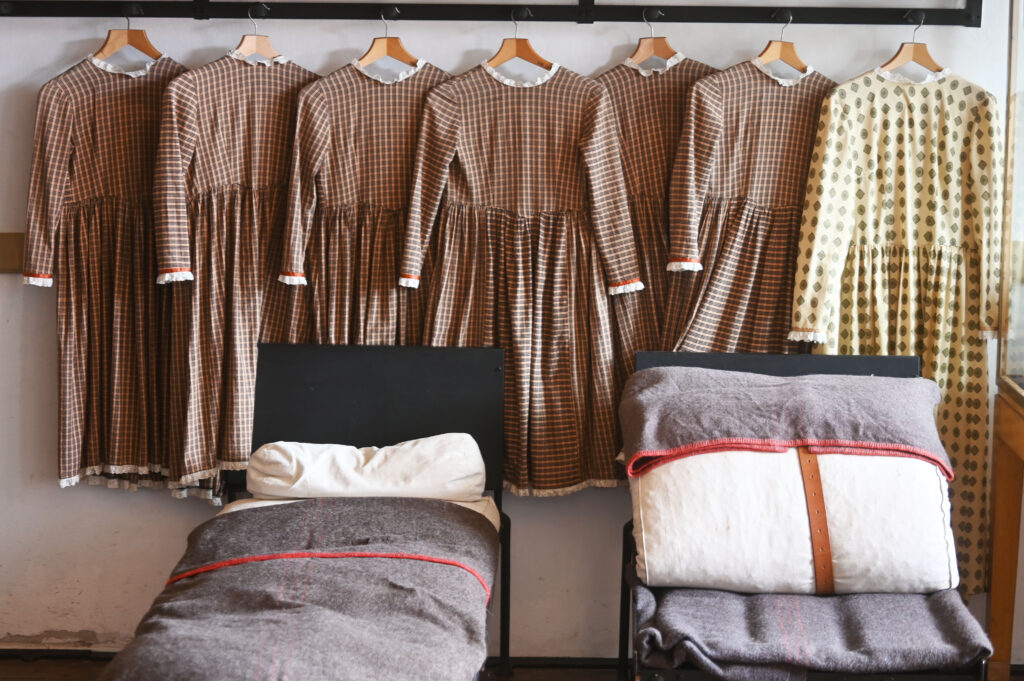
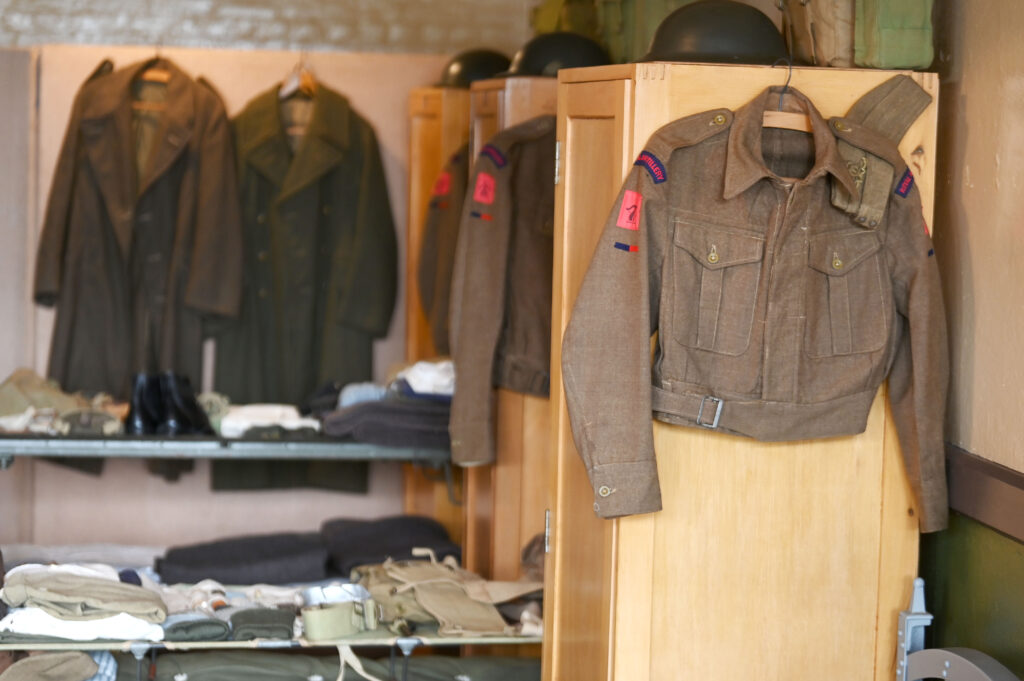
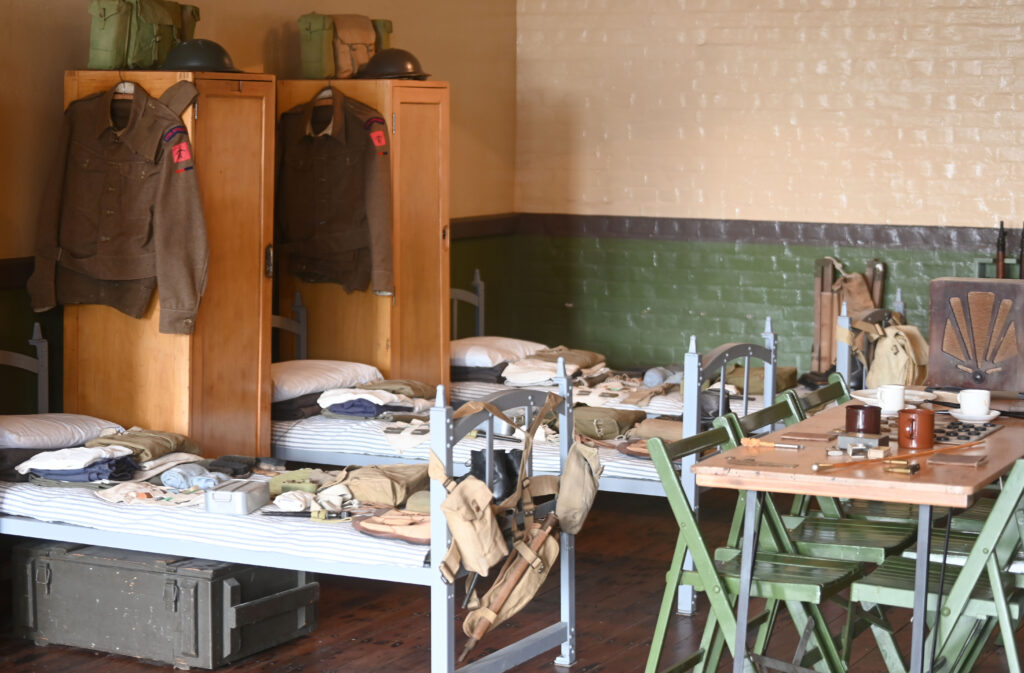
Visitors can walk through recreated rooms including a Victorian barrack room, complete with beds, uniforms, equipment and personal possessions, giving a remarkably atmospheric impression of the men who once lived inside the fort. It is one thing to read about Victorian soldiers. It is quite another to stand inside a recreated barrack room and imagine what everyday life might have been like.
Crownhill Fort was built between 1863 and 1872 as part of the great Victorian defensive system created to protect Plymouth and its important naval dockyard. While the fort’s huge ramparts, ditches and gun positions tell the story of military defence, the museum offers something much more personal: the perspective of the people who lived and worked there. It was a workplace, a home and a community for the soldiers stationed there, and not simply a collection of defensive structures.
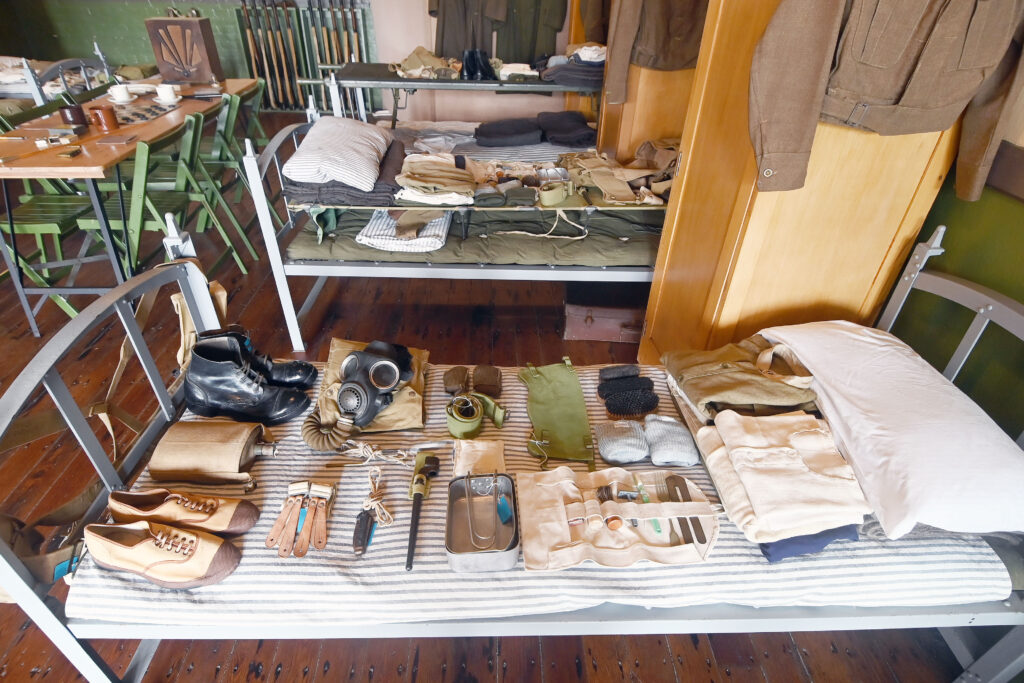
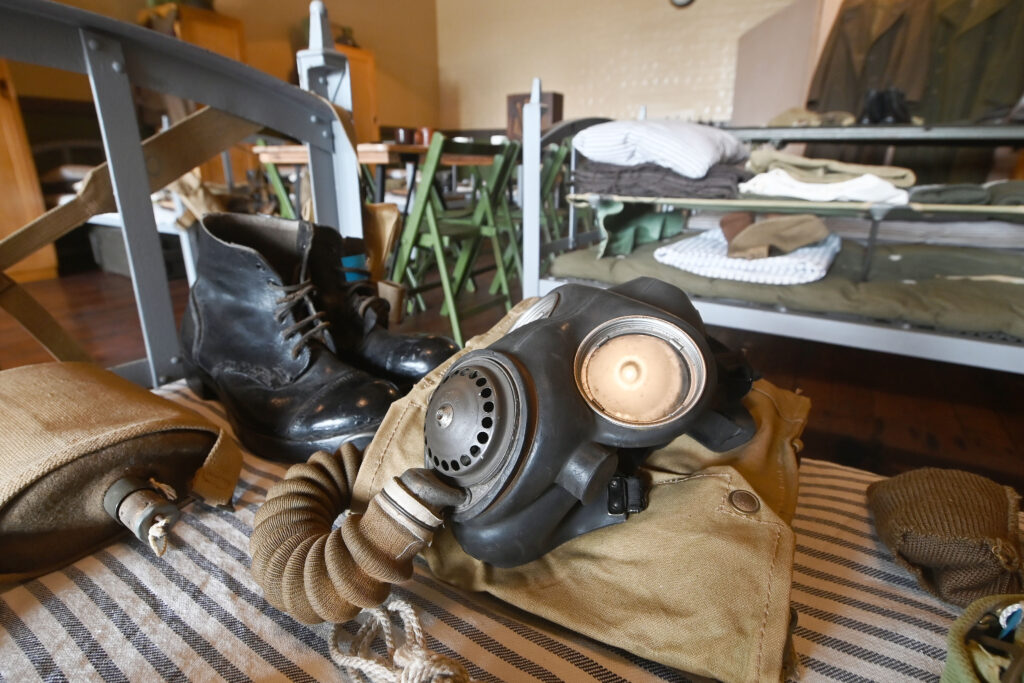
The museum also takes visitors into the twentieth century with a recreated Second World War room, complete with wartime uniforms, equipment, beds and rifles. The contrast between the Victorian and wartime displays is particularly effective, showing just how much military life and technology changed during the decades Crownhill remained in service.
A fort that has found a new purpose
The story of Crownhill Fort didn’t end when its military role came to an end. The Landmark Trust acquired the fort in 1987, after the site was declared surplus to military requirements and faced an uncertain future. The charity was founded in 1965 by the late Sir John Smith with the aim of rescuing historic buildings at risk and giving them a sustainable future. Today it cares for more than 200 historic buildings across the country.
At Crownhill, that philosophy has meant finding new uses for the historic site while preserving its character. The fort now combines heritage, business, accommodation and public access. There is holiday accommodation sleeping eight people, available throughout the year, along with a number of commercial premises let mostly to local businesses using the historic site as offices and workshops.
So this isn’t a fort that has simply been preserved as a museum. It is still a working site, where people work, businesses operate, visitors come, and people can even stay overnight within the historic surroundings.
Behind the visitor experience is a small team, supported by volunteers who help with everything from object conservation and cataloguing to acting as stewards and tour guides, and preserving the fort’s written history through appraising, digitising and protecting old paper records and journals. Preserving somewhere like Crownhill Fort isn’t simply about maintaining the buildings. There is an enormous amount of historical material and knowledge that needs looking after too.
Crownhill Fort is more than a museum
For visitors, the museum is only one part of the experience. Public events take place throughout the year, from open ground days where visitors can explore at their own pace, to guided tours looking at particular periods of the fort’s history, and ticketed events including historic gun firing, wildlife walks and volunteer work parties. Schools, groups and societies can also visit through prebooked private tours.
For families, it provides an opportunity to turn history into something physical and memorable. Instead of simply telling children about Victorian soldiers or the Second World War, you can take them into the environment itself. According to The Landmark Trust, all income generated at Crownhill Fort is used to help maintain the historic site, so simply visiting, taking part in an event, booking a tour or volunteering all help contribute to its continued preservation.
Perhaps the biggest surprise about Crownhill Fort is that it has been there all along. Thousands of people have driven past it, yet many may never have realised that behind the walls is a place where you can explore historic military buildings, visit a recreated museum, join guided tours and even stay overnight.
Part museum. Part historic monument. Part working community. Part visitor attraction. Most importantly, it is a piece of Plymouth’s history that hasn’t simply been locked away. It has been given a new purpose. Because this is history you don’t simply look at. It’s history you can walk through.
Photographs © Wayne Perry / Plymouth Post