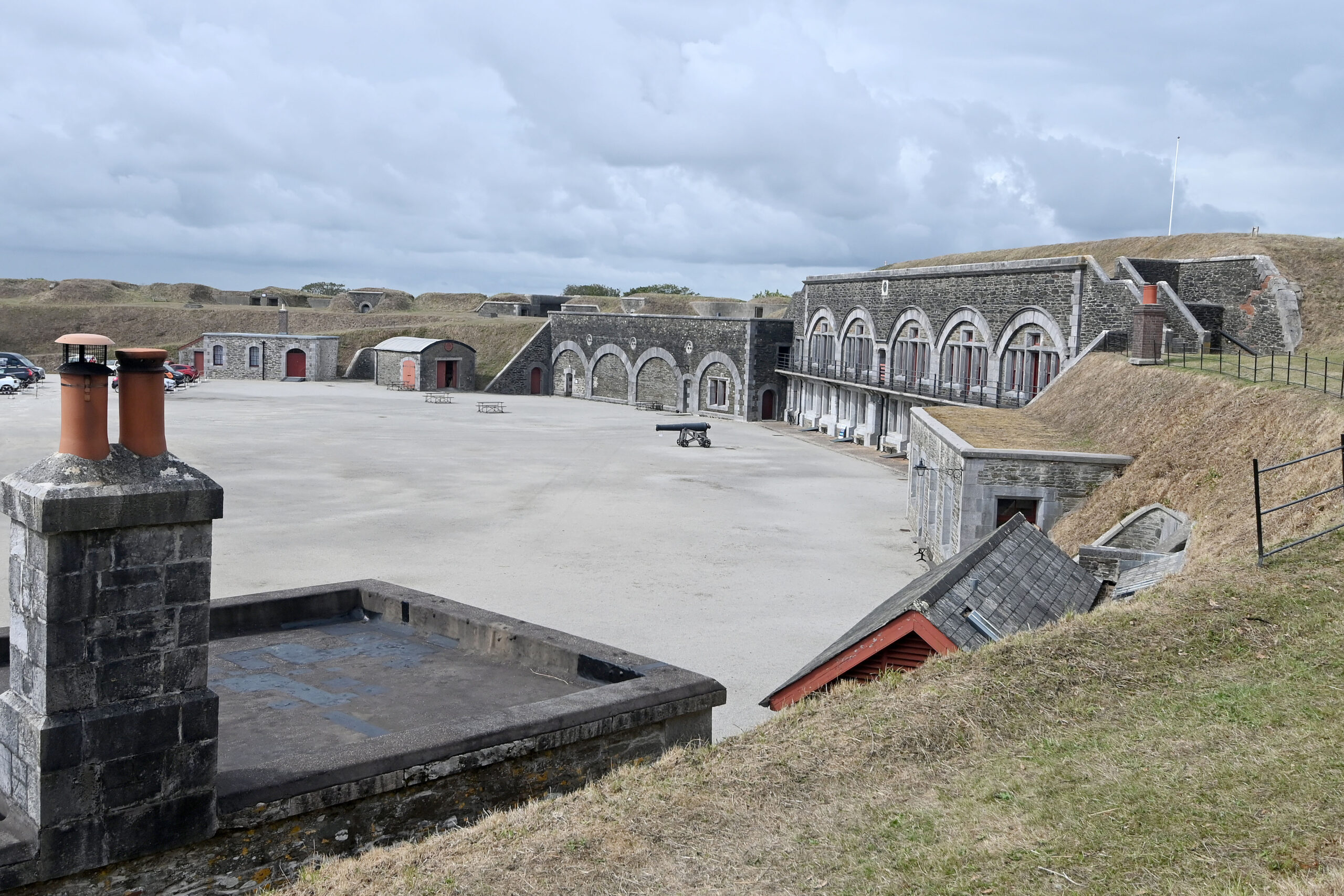
Hidden behind its huge earth ramparts, Crownhill Fort is one of Plymouth’s most remarkable military landmarks.
Today it can seem almost lost among the trees and surrounding streets, but when it was built in the 1860s, this was a crucial part of a vast defensive system designed to protect Plymouth and the Royal Dockyard at Devonport from a feared French invasion.
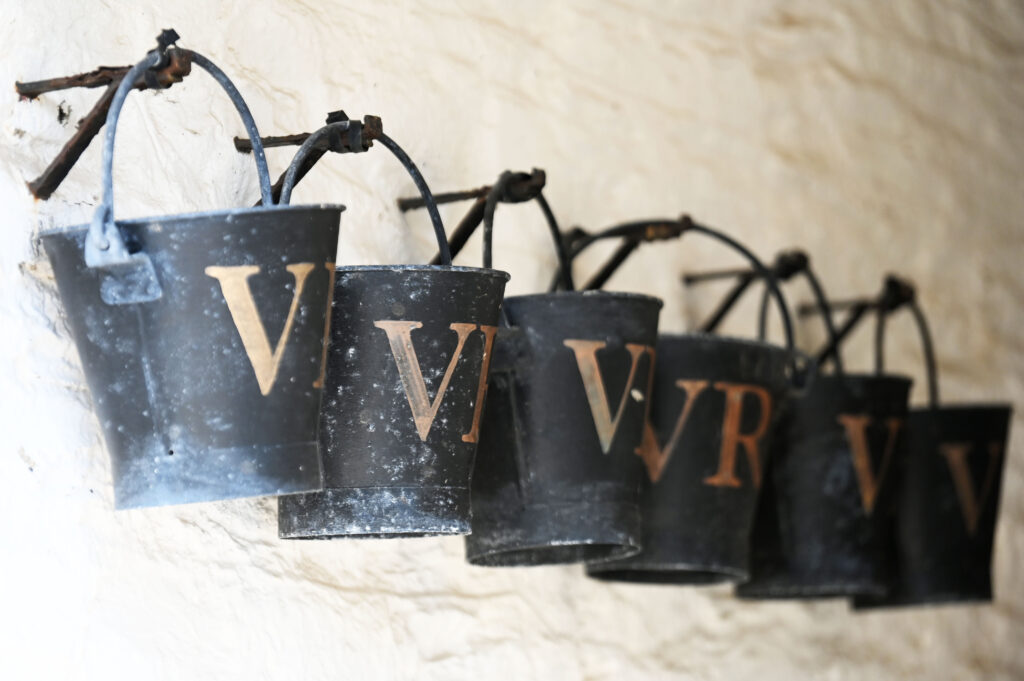
More than 160 years later, the fort is still standing and its history stretches from Victorian Britain through two world wars and into the Falklands era.
During the 1850s, Britain became increasingly concerned about the growing military strength of France.
New technology was changing warfare rapidly. Steam powered warships, ironclad vessels and increasingly powerful artillery meant that Britain’s traditional coastal defences could no longer necessarily be relied upon.
In 1859, the Government established the Royal Commission on the Defence of the United Kingdom to examine Britain’s military preparations.
Its recommendations resulted in an enormous programme of fortress construction around Britain’s most important naval bases.
Plymouth was considered particularly important because of the Royal Dockyard at Devonport.
The plan was not simply to defend the harbour from enemy ships. A landward attack was also considered a serious possibility, so a ring of forts and batteries was constructed around Plymouth.
Crownhill was to become the largest and most important fort in the north eastern section of those defences.
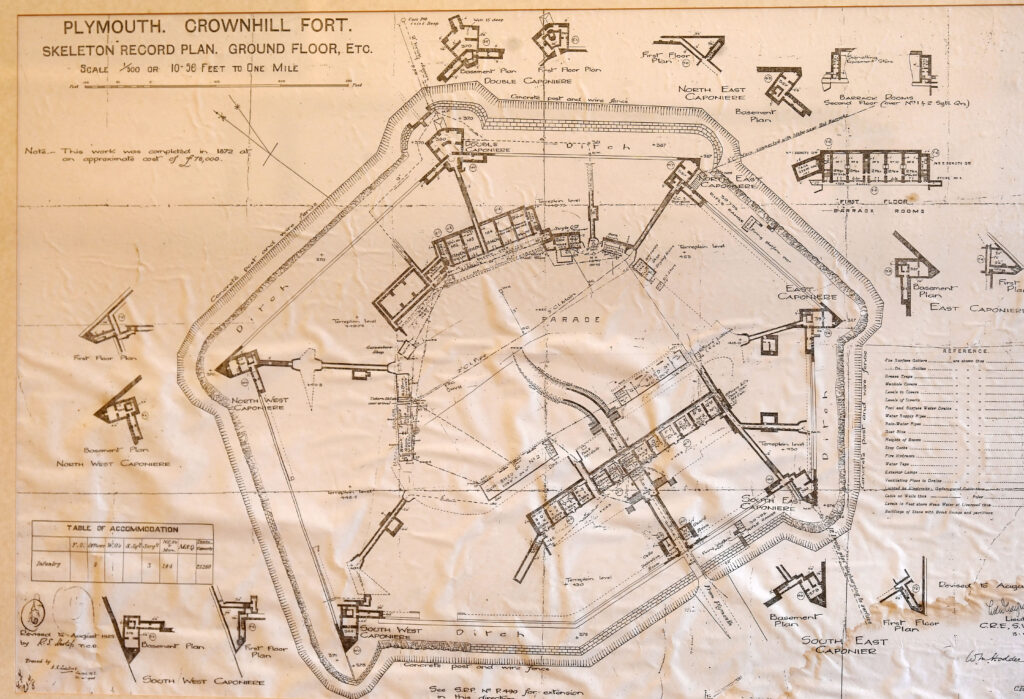
Crownhill Fort was designed by Captain Edmund Du Cane of the Royal Engineers.
Construction began in 1863 and was completed in 1872.
The work was enormous. Thousands of men were employed during the construction of the fort’s massive earthworks, with around 2,000 workers involved during the early stages.
Rather than creating a fortress dominated by tall stone walls, the designers used the landscape itself as protection.
Huge earth ramparts were built around the fort, while a deep ditch was cut into the ground outside them.
From a distance, the fort could therefore appear to be little more than a hill.
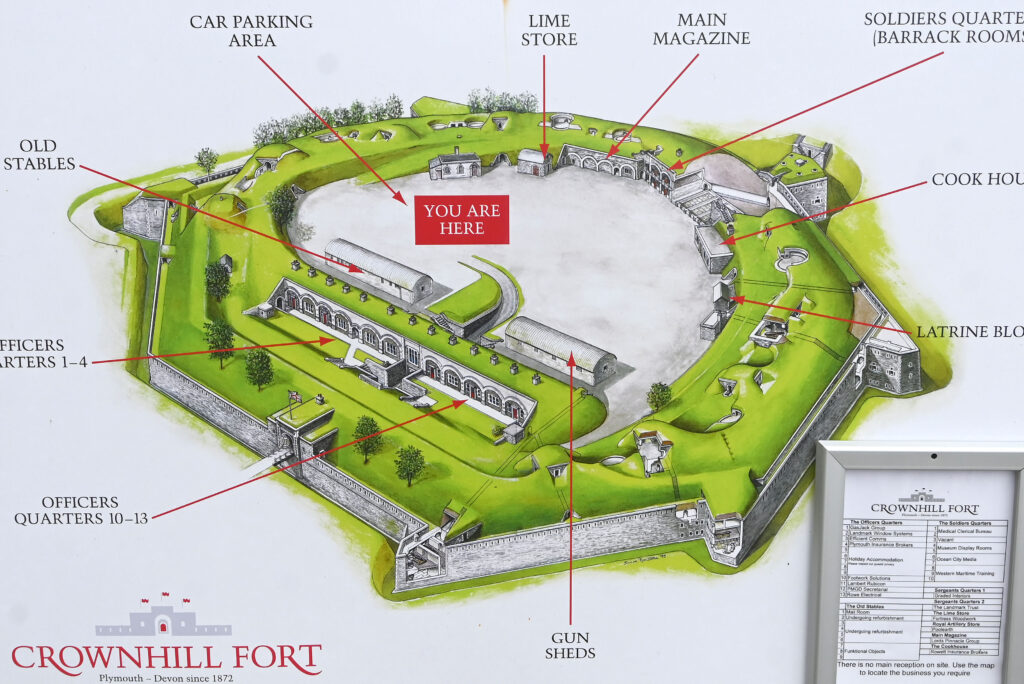
Inside those earthworks was a complete military establishment, including barracks, officers’ quarters, a cookhouse, ammunition magazines and other buildings.
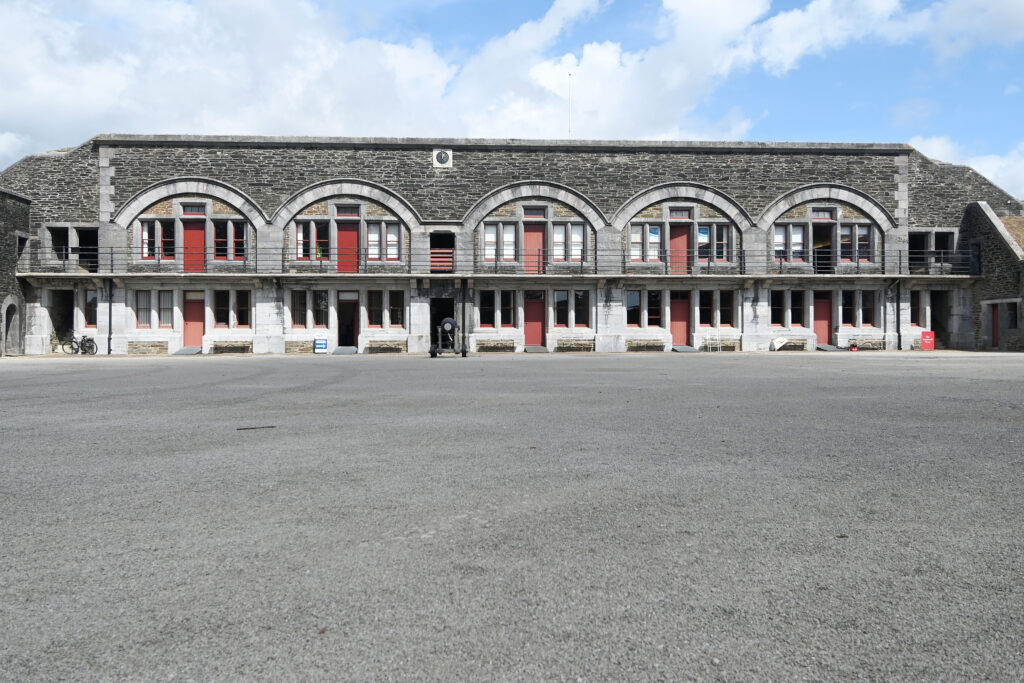
The fort was originally designed to accommodate around 300 men and officers.
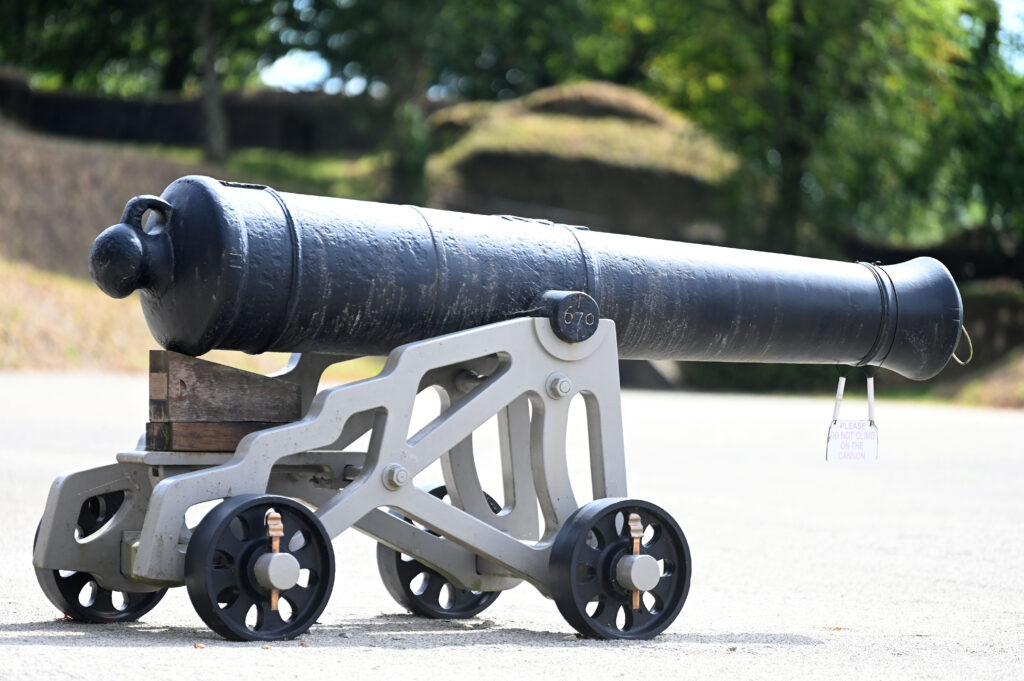
It was also intended to carry a formidable array of artillery.
The threat that had inspired the fortifications gradually faded.
Napoleon III, the French emperor whose regime had been viewed with suspicion in Britain, was overthrown in 1870.
By the time Crownhill was completed in 1872, the feared French invasion had never happened.
But that did not make the fort redundant.
Military technology continued to develop, and Crownhill’s guns and defensive arrangements were modified over the years.
The original design allowed the fort to be adapted as weapons changed.
Its position was also extremely important. Crownhill stood on high ground north of Plymouth and commanded the main route into the city.
It was deliberately positioned ahead of the main defensive line, meaning that an attacking force approaching from the north would encounter Crownhill before reaching the principal defences.
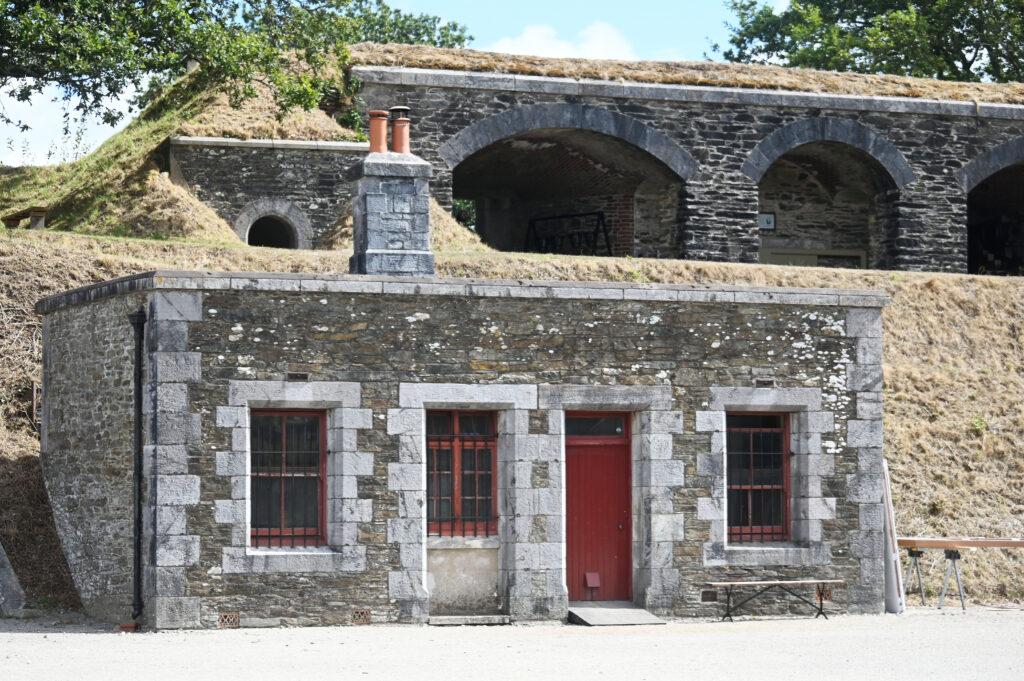
For the soldiers stationed there, Crownhill was effectively a small military community.
The parade ground would have been at the centre of daily life, while soldiers lived in the barracks and officers had separate accommodation.
Training, maintenance, cleaning, weapons practice and military exercises would have occupied much of their time.
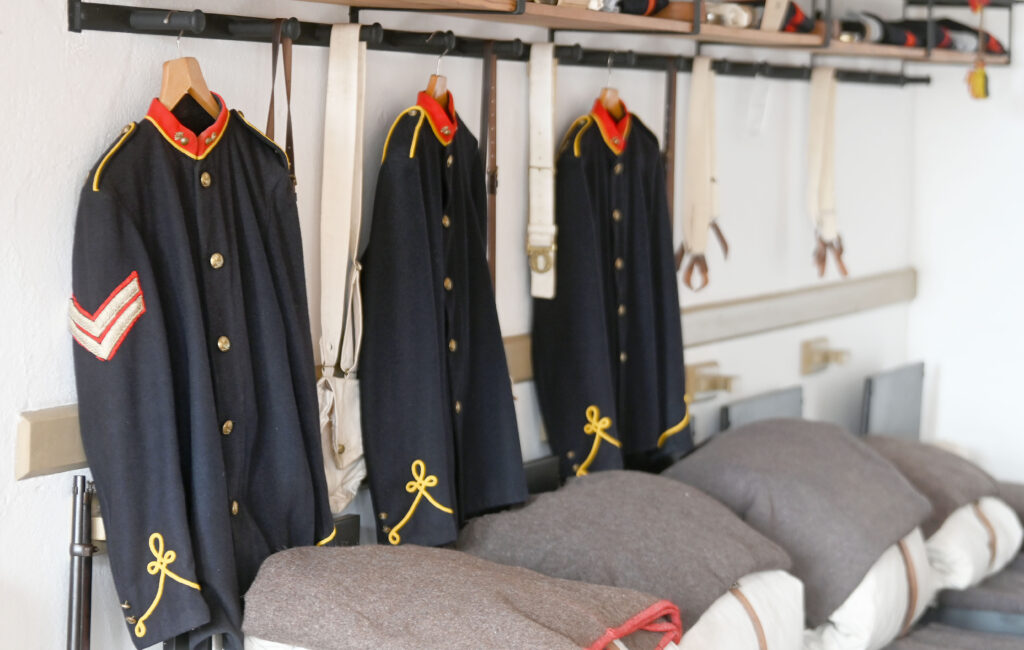
The fort also had its own magazines and stores, meaning ammunition and supplies could be kept securely within the protected complex.
The deep ditch surrounding the fort was itself part of the defensive system.
Six defensive structures known as caponiers projected into the ditch. From these positions, soldiers could fire along the ditch to prevent an attacking force from using it as cover.
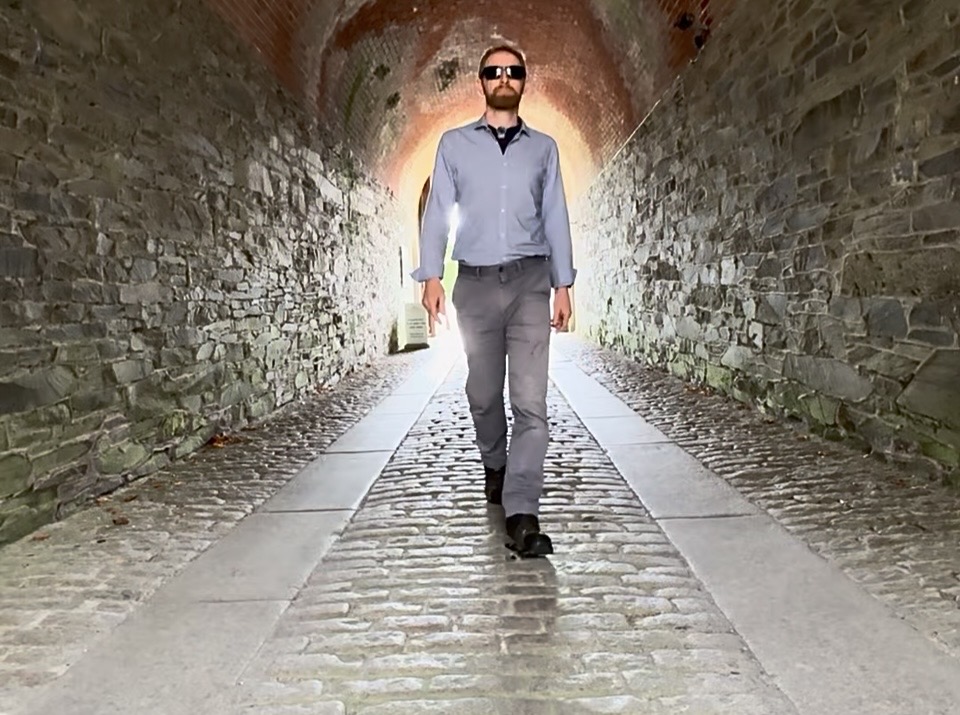
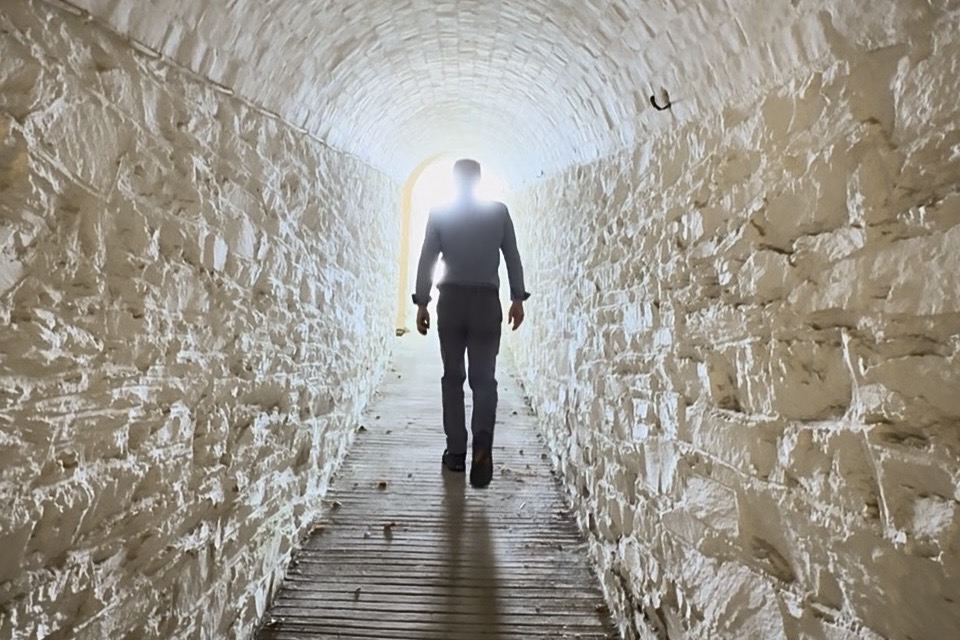
There were also underground passages and covered routes throughout the fort.
For a Victorian soldier, much of Crownhill would have been a world of dark tunnels, heavy doors, stone walls, gun positions and earth-covered buildings.
As the French threat diminished, Crownhill’s role changed.
Rather than simply waiting for an enemy attack, it increasingly became a place associated with training and military activity.
The fort continued to be occupied while warfare underwent another technological revolution.
By the end of the 19th century, artillery was becoming more powerful and sophisticated, and the great Victorian fortifications were themselves being adapted to keep pace.
Crownhill survived where many other military sites eventually became obsolete.
When Britain entered the First World War in 1914, Crownhill took on a new importance.
The fort was used as a recruitment and mobilisation depot.
Thousands of men passed through the Plymouth area as Britain expanded its armed forces and prepared troops for service overseas.
Among those connected with Crownhill during this period were men destined for campaigns including Gallipoli.
The old fortress, originally designed to stop an invading army reaching Plymouth, was now helping Britain send its own soldiers to war.
Crownhill’s military story took another turn in 1922 with the establishment of the Royal Corps of Signals.
The fort became associated with the Signals, reflecting the changing nature of warfare.
Communication had become an essential part of modern military operations.
The fort was no longer simply about guns and physical defence. It was becoming part of a military world increasingly dependent upon communications and technology.
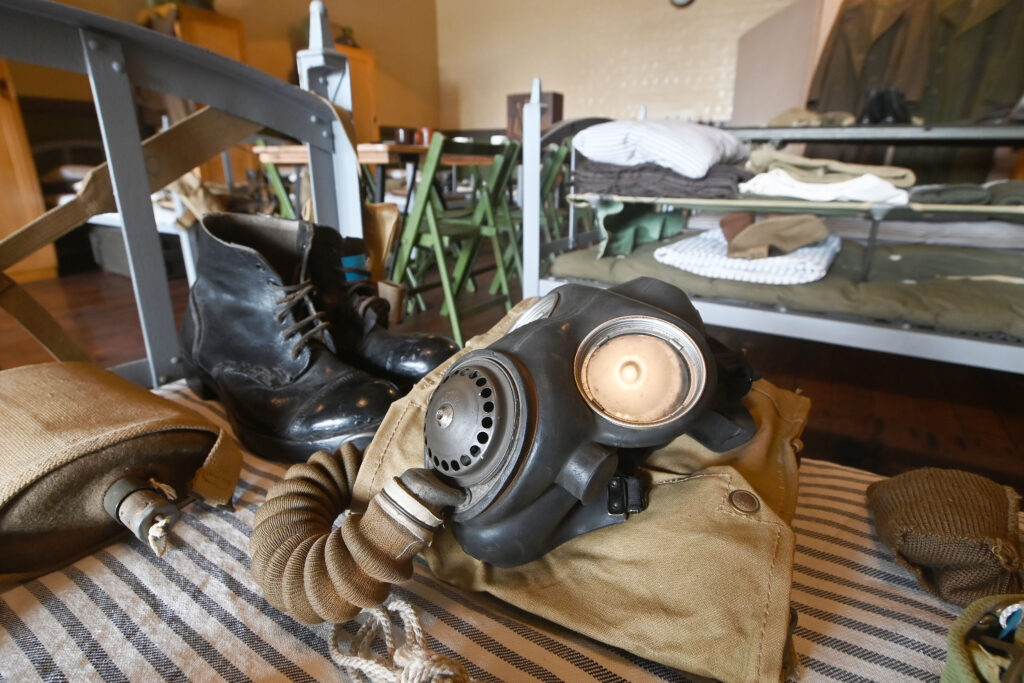
When the Second World War began, Crownhill was more than 70 years old.
Yet once again it was adapted for a new conflict.
The fort was refortified and used as a Point of Resistance.
Some of the old artillery positions were replaced or supplemented by machine-gun defences, while trenches and foxholes were dug into the earthworks.
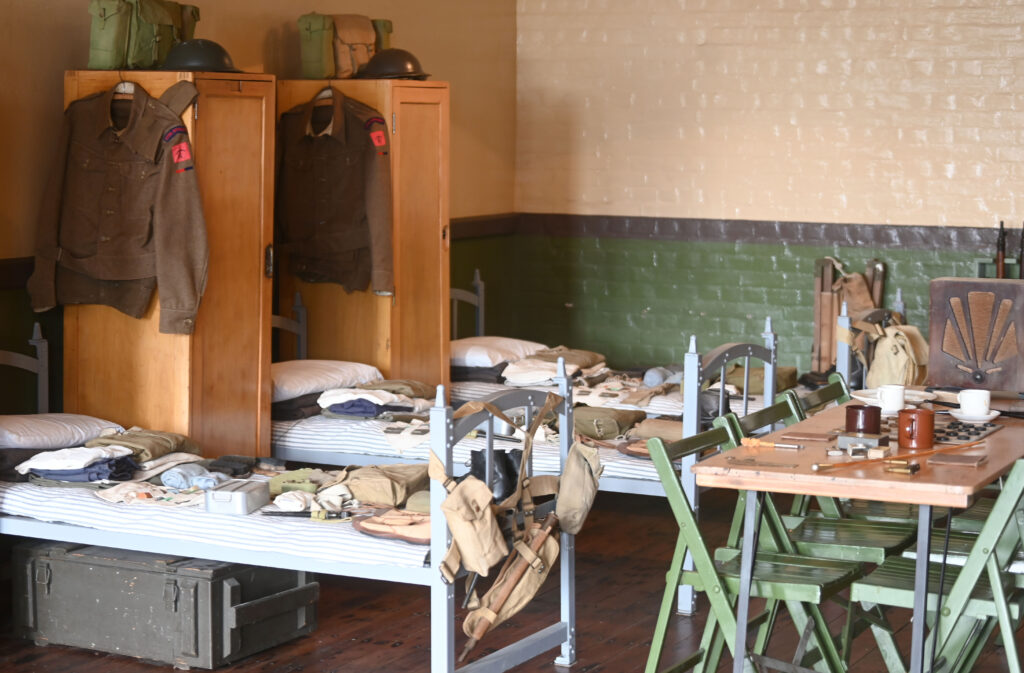
Many of these wartime features survive today.
The fort also played a role in preparing and storing equipment for the D-Day landings of 1944.
There is something remarkable about that change of purpose.
Crownhill had been built to defend Plymouth against an enemy coming across the Channel.
During the Second World War, the old fortress became part of the preparations for an Allied army travelling in the opposite direction across the Channel towards Normandy.
Crownhill’s military career did not end with the Second World War.
During the 1970s and early 1980s, the fort was occupied by 59 Independent Commando Squadron Royal Engineers.
Then, in 1982, Britain went to war in the Falklands.
Crownhill was used in connection with the logistical support for the campaign, with the fort becoming an assembly point for personnel and equipment.
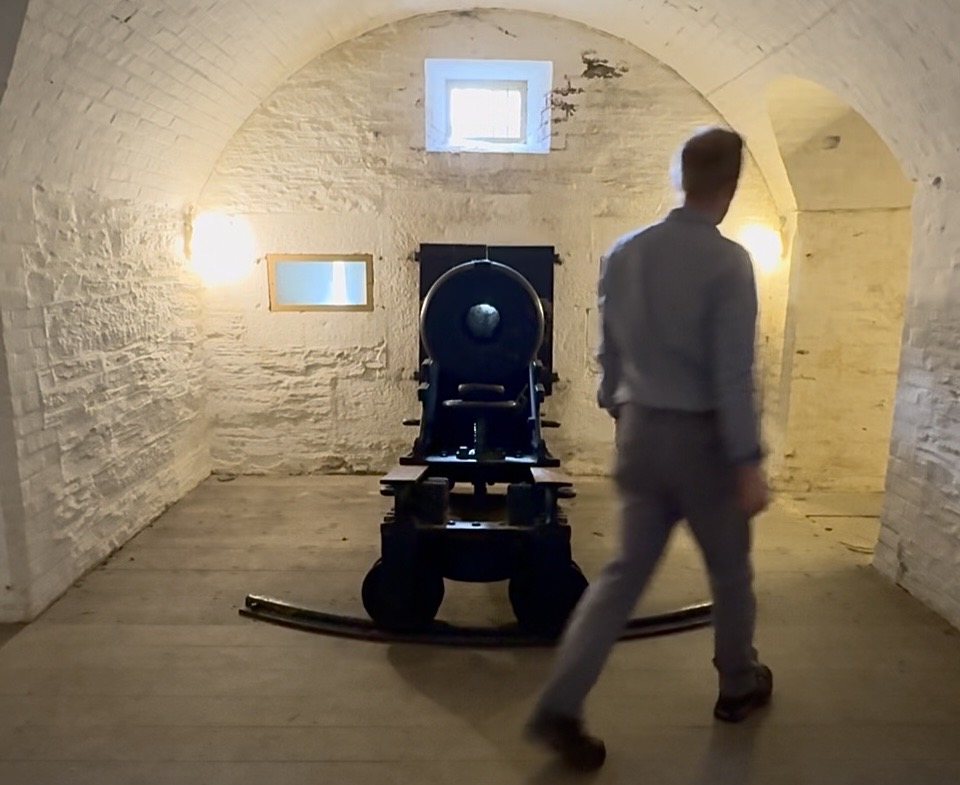
It is a remarkable final chapter in the site’s military history.
A fortress conceived during a Victorian invasion scare was still being used to support British military operations more than a century after construction began.
After more than 120 years of military occupation, Crownhill’s time as an active military establishment finally came to an end.
The fort was declared surplus to Ministry of Defence requirements in 1986.
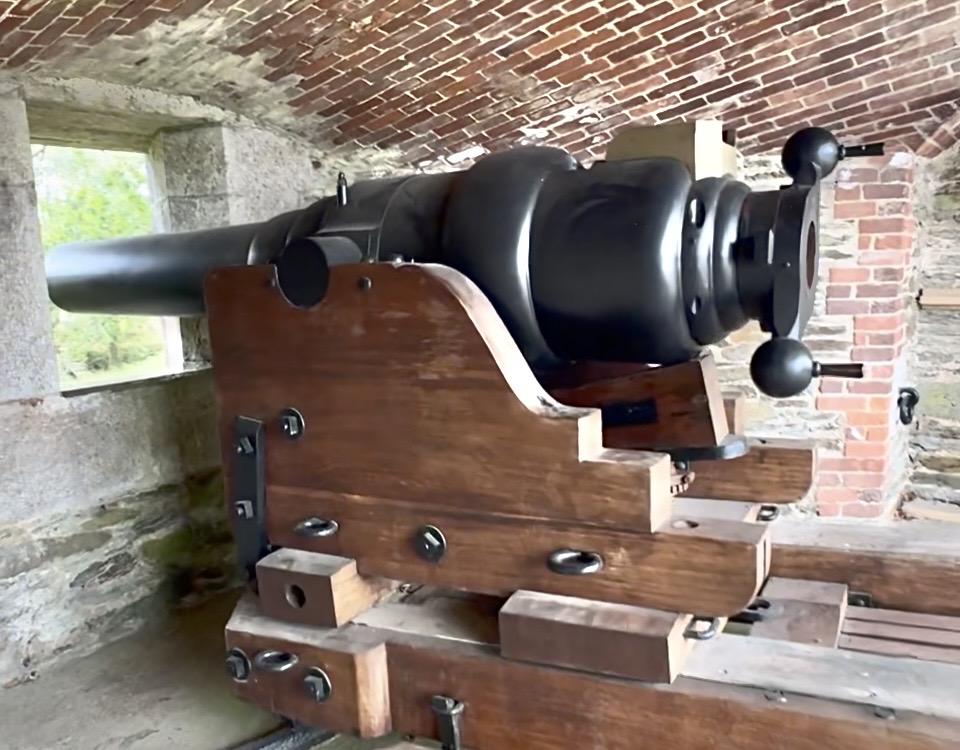
For the first time since construction began in 1863, there were no longer soldiers occupying Crownhill as part of Britain’s defence system.
That could easily have been the end of its story.
Instead, a new chapter was about to begin.
In 1987, the Landmark Trust acquired Crownhill Fort from the Ministry of Defence.
The Trust recognised the importance of preserving one of Britain’s finest surviving Victorian forts.
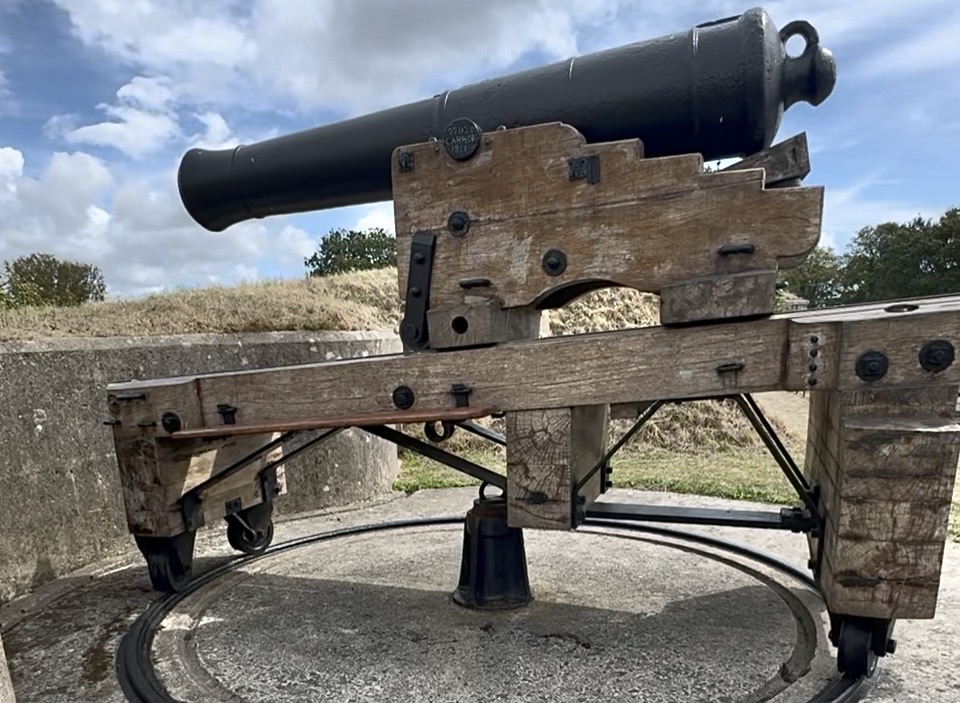
Restoration work began, with the aim of bringing back much of the historic character of the site while finding new uses for its buildings.
Overgrown paths and tunnels were reopened, parts of the defensive system were restored and the fort’s historic character was carefully preserved.
Some of the former military buildings have since been used by businesses and other organisations.
An apartment has also been created within the former Officers’ Quarters.
Crownhill is now one of the best-preserved examples of the great Victorian fortifications built during the 19th century.
The fort opened to the public in 1995.
Visitors can explore parts of the parade ground, ramparts, tunnels and defensive structures and see displays explaining the fort’s military history.
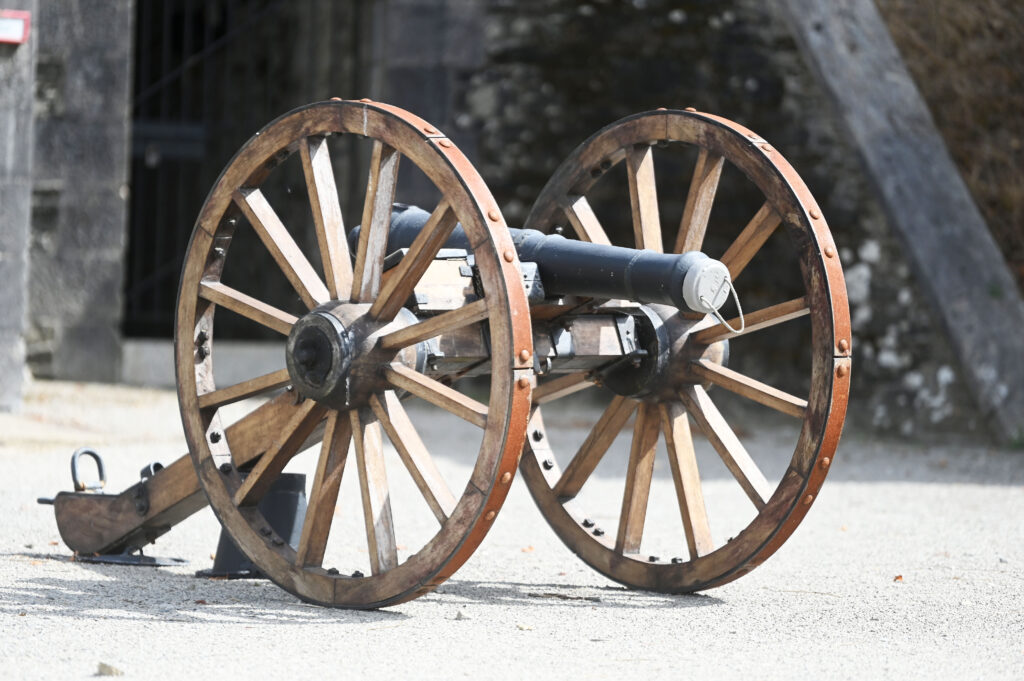
Historic artillery is also on display.
In 1998, the fort was armed once again with a Moncrieff disappearing gun a rare surviving example of a type of weapon that formed part of the history of Britain’s Victorian fortifications.
Today, the guns of Crownhill are no longer required to defend Plymouth.
Instead, the fort has a different role.
It preserves the story of the men who built it, the soldiers who lived there and the changing technology that transformed warfare during its long military life.
Perhaps the most fascinating thing about Crownhill Fort is that it never had to fight the battle for which it was built.
The French invasion never came.
But that does not make its history any less important.
For more than a century, Crownhill adapted to the changing needs of the British military.
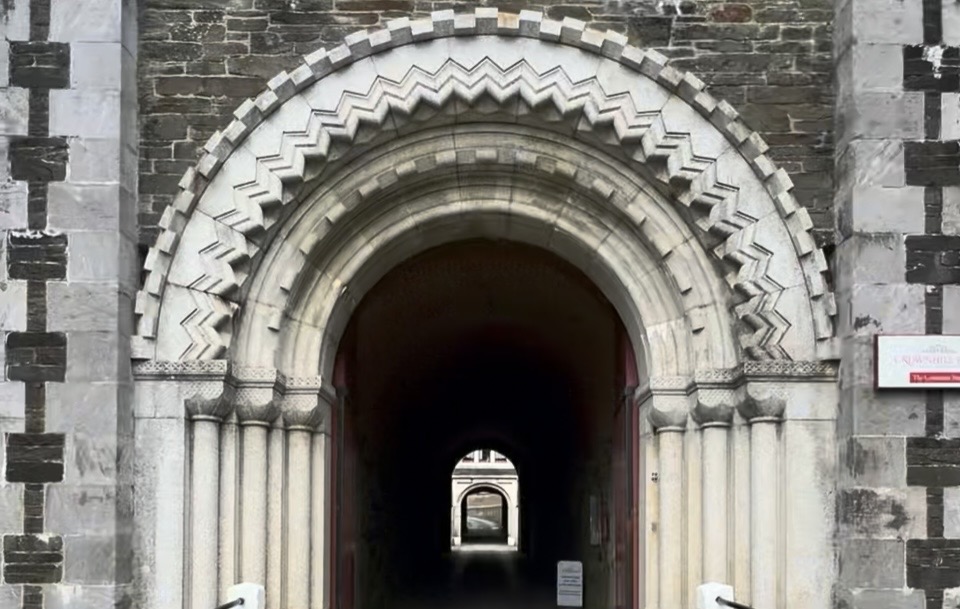
It began as a Victorian answer to the threat of invasion, became a training establishment, helped mobilise troops during the First World War, was connected with the Royal Corps of Signals, played a role in Britain’s Second World War preparations and later became associated with the Falklands campaign.
Today, the soldiers have gone and the guns are silent.
But the massive earth ramparts, deep ditch, tunnels and buildings remain.
And hidden within those walls is the story of more than 160 years of Plymouth’s military history.
Crownhill Fort was built to protect Plymouth.
Today, it helps Plymouth remember.
Photographs © Wayne Perry / Plymouth Post