Plymouth’s Hidden Statues Are Slowly Crumbling Away But Their Greatest Secret Remains Unsolved
Hidden behind the walls of an elegant Georgian townhouse is one of Plymouth’s most extraordinary and least known historic treasures.
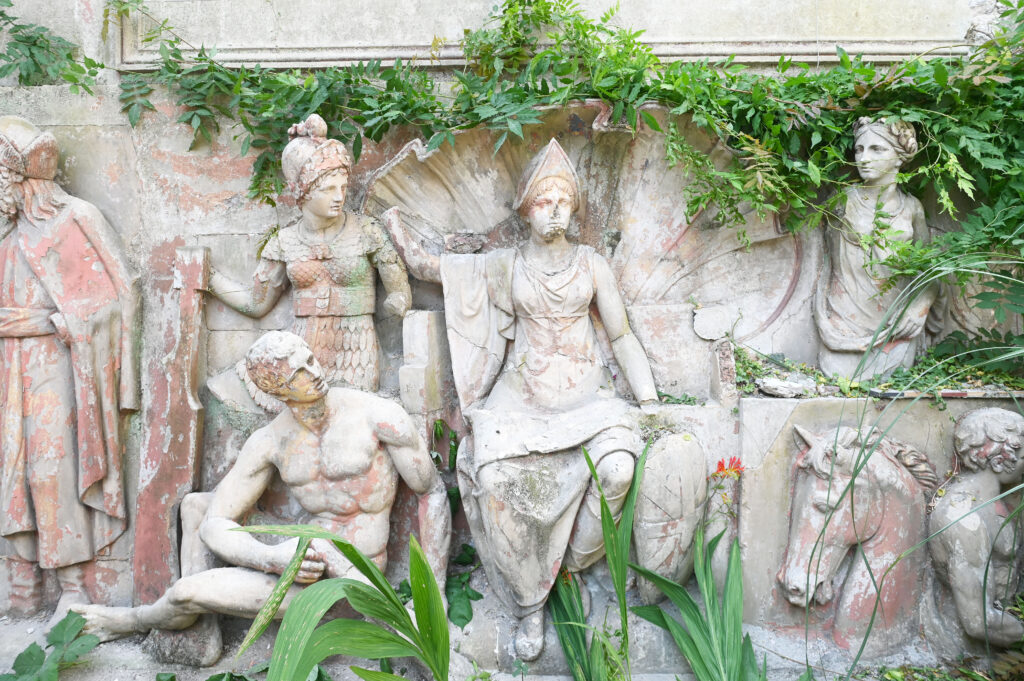
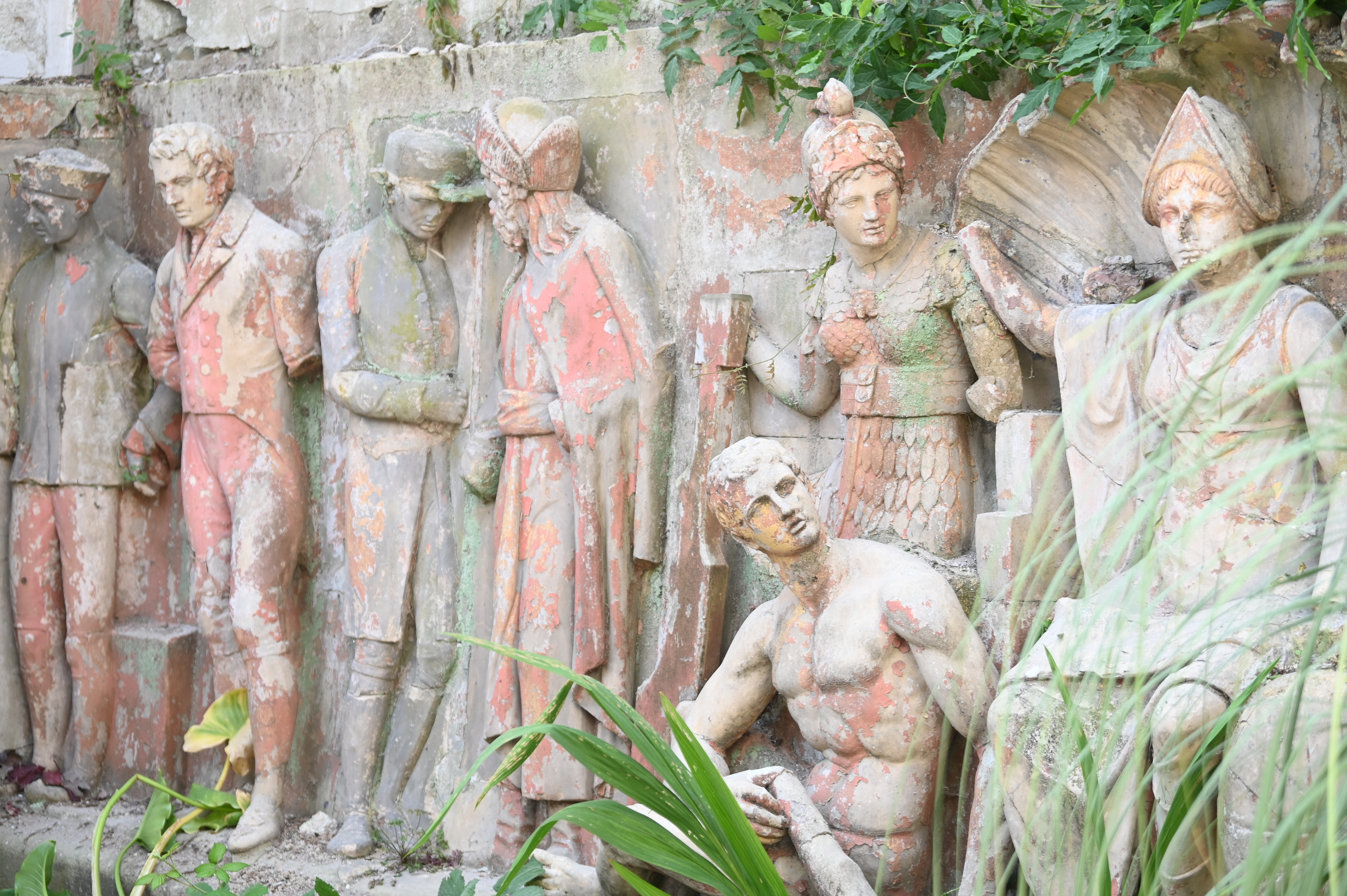
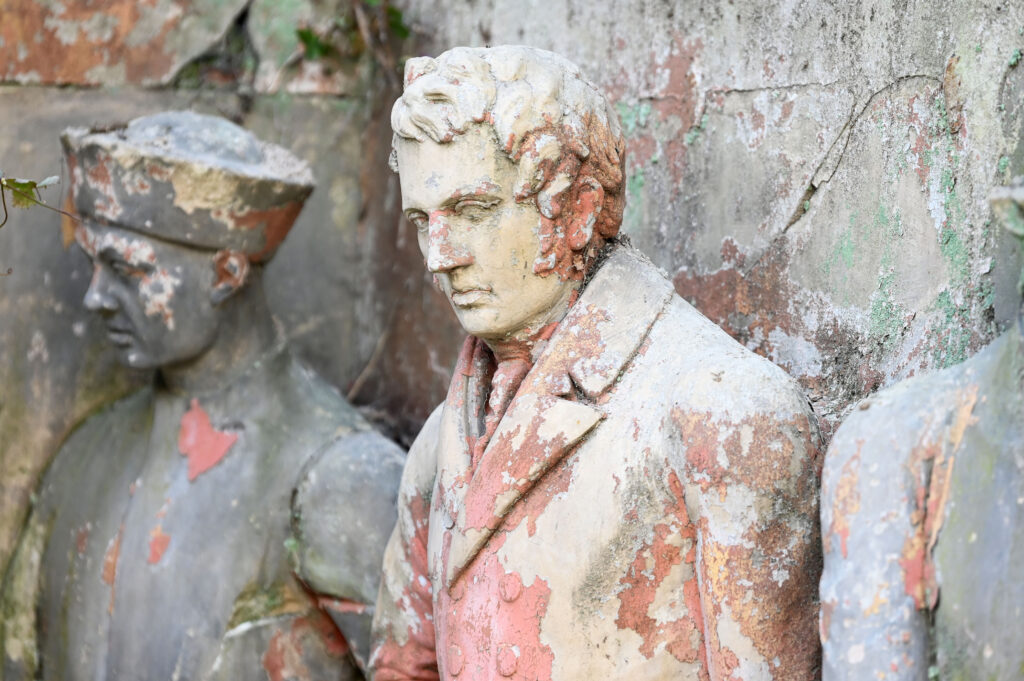
Tucked away in the rear courtyard of a house in Gascoyne Place is an astonishing collection of life sized sculptural figures that few people even know exists. Arranged along the courtyard walls are an eclectic mix of characters from different cultures and periods, including a Roman soldier, Egyptian, Classical and Biblical figures, an Albanian warrior, English and American gentlemen, together with animals such as a deer and a camel.
The house itself dates from the early 19th century, probably the 1820s, and is Grade II listed. Historic records associated with the property show that the sculptures were already recorded in deeds dating from 1834, making them considerably older than one of the stories long associated with the site.
For many years, local folklore suggested the statues were created during the time the Italian Vice Consulate occupied the building in the late 19th century. It is an appealing tale, but the documentary evidence points elsewhere. As the sculptures were already recorded decades earlier, they almost certainly pre-date the Italian Consulate.
Who commissioned them, however, remains one of Plymouth’s enduring historical mysteries.
Having visited the property today, it is impossible not to be impressed by what survives. Hidden behind walls and largely out of public view, the sculptures transform what would otherwise be an ordinary courtyard into something altogether unexpected. They have an almost theatrical quality, creating a scene unlike anywhere else in the city.
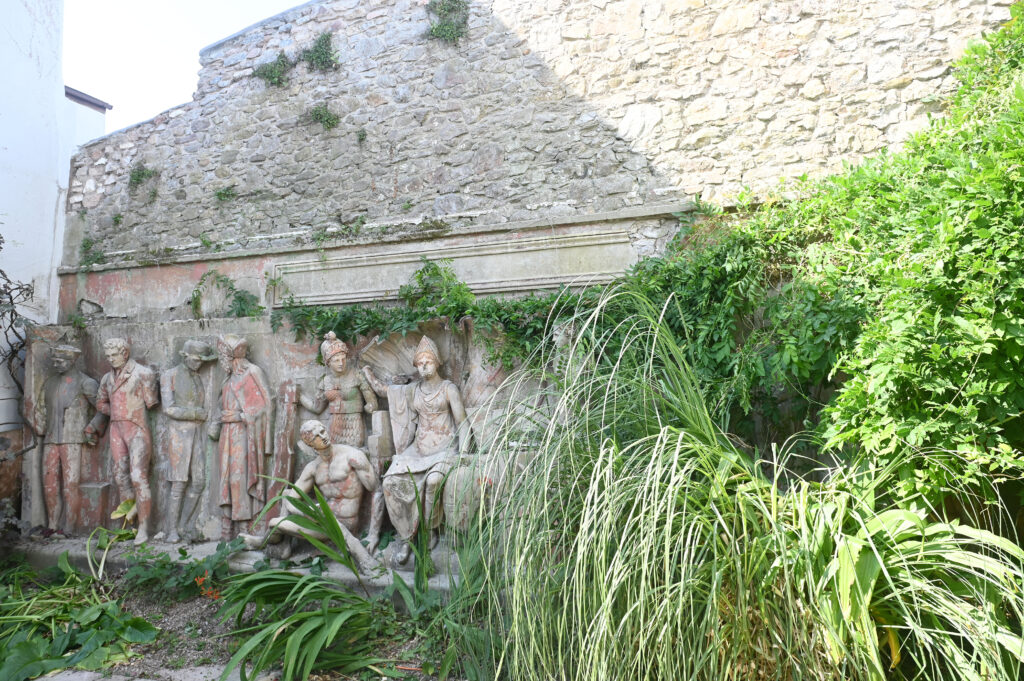
Sadly, time has not been kind to them.
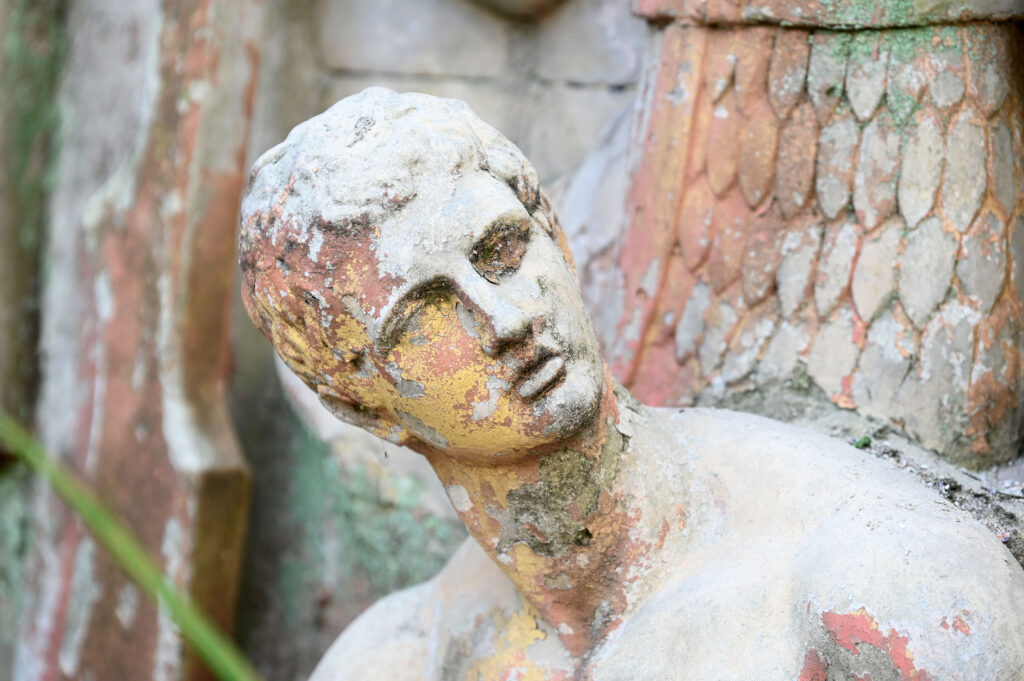
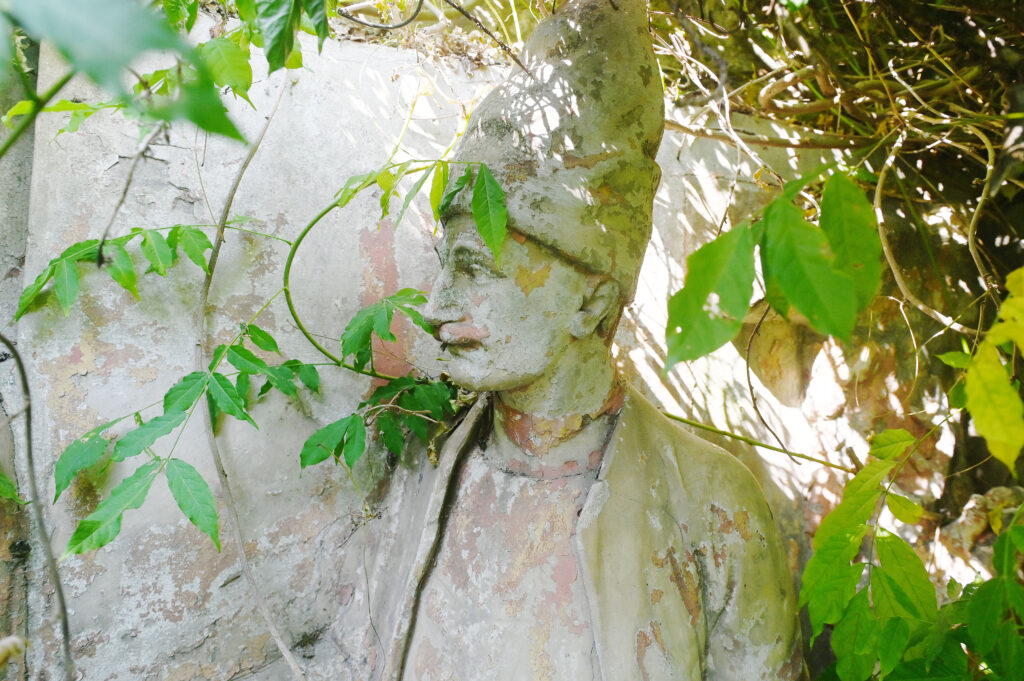
Many of the figures are now partially obscured by vegetation, while years of exposure to the elements have taken their toll. Cracks have appeared in places, sections of the cement have broken away, and some of the intricate detail has gradually been lost.
Their deterioration is largely due to the way they were made. Rather than being carved from solid stone, the sculptures were formed using cement reinforced with internal iron armatures. Although an innovative construction method for its day, moisture gradually penetrates the cement over time, causing the iron inside to rust and expand. As the metal swells, it forces the outer surface to crack and flake away, slowly damaging the sculptures from within.
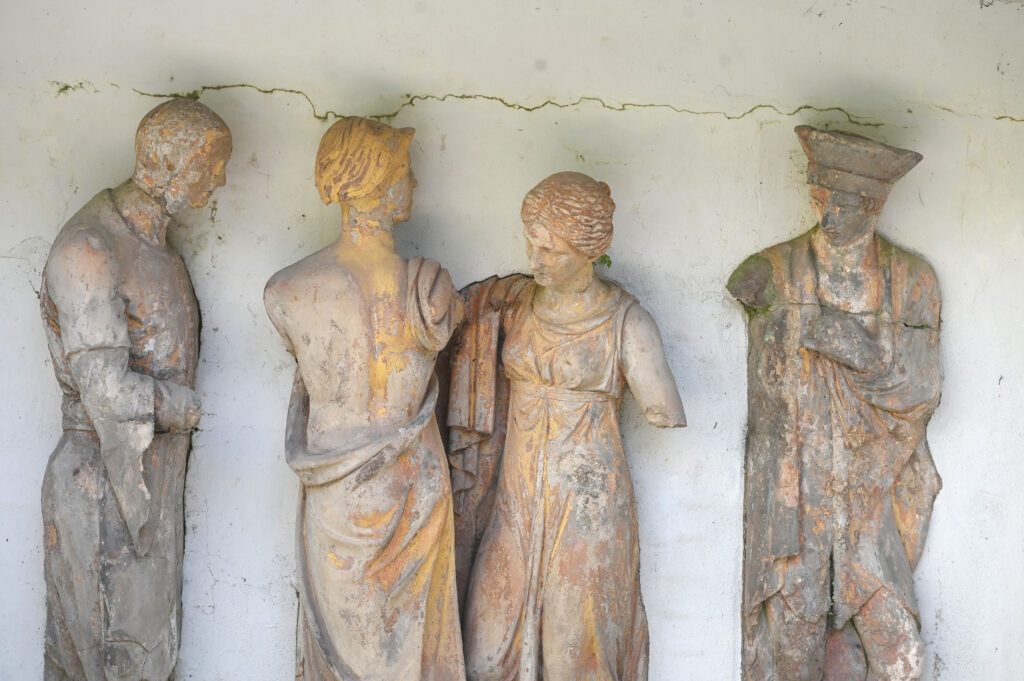
Even in their present condition, they remain one of Plymouth’s most unusual surviving works of historic garden art.
The property has recently been purchased by new owners after standing empty for some time. As the sculptures form part of a Grade II listed building, any significant repairs or restoration would require the appropriate listed building consent and specialist conservation work. In the meantime, simply clearing back the overgrown vegetation and maintaining the courtyard would help reveal these remarkable figures and improve their setting.
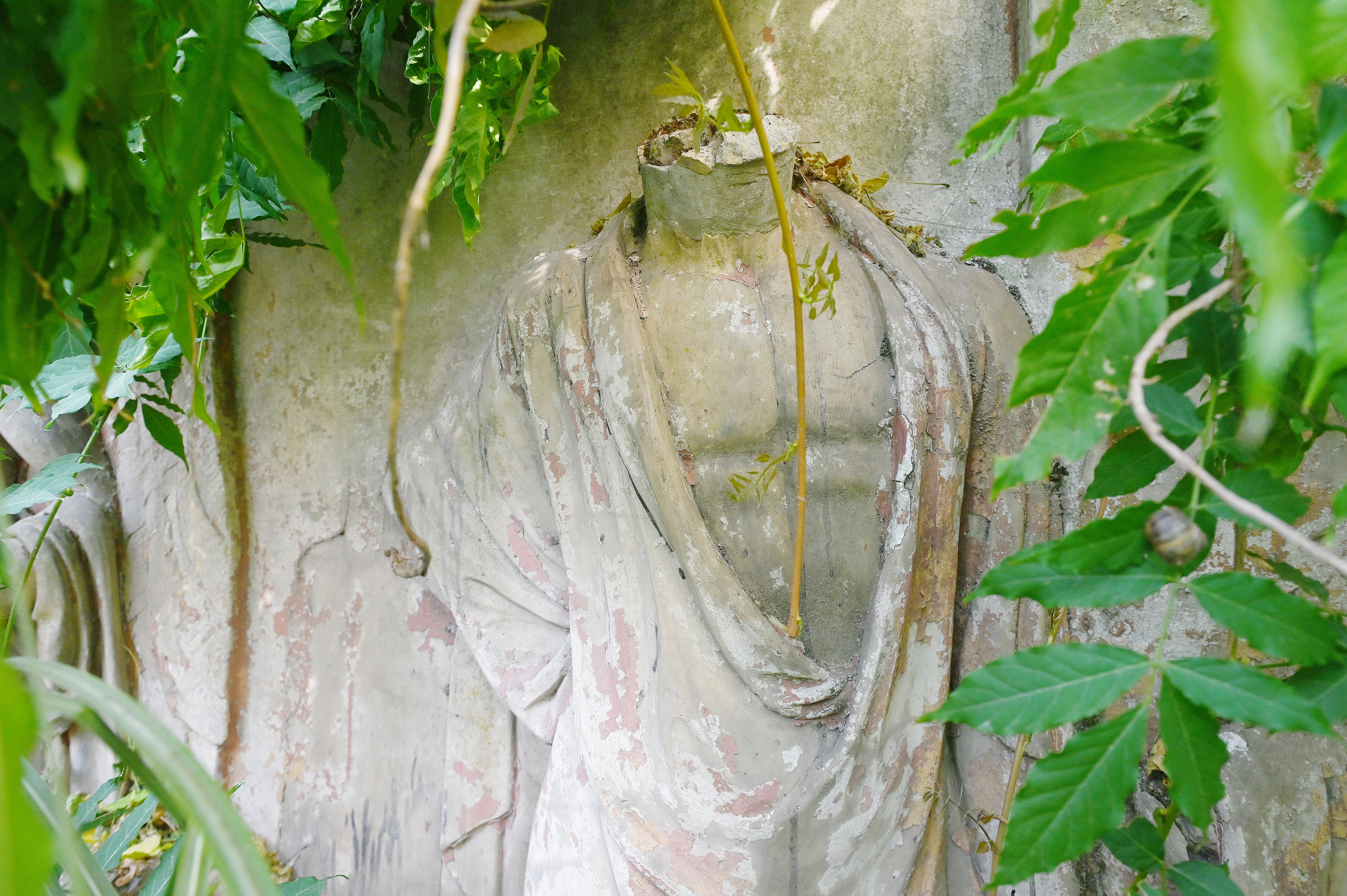
Given their rarity and historical significance, many local people will hope that Historic England, Plymouth City Council and other heritage organisations can work alongside the owners to explore ways of conserving these extraordinary sculptures before any more of their detail is lost. They are one of Plymouth’s most unusual and least known historic treasures, and it would be a great loss if they were allowed to deteriorate beyond repair.
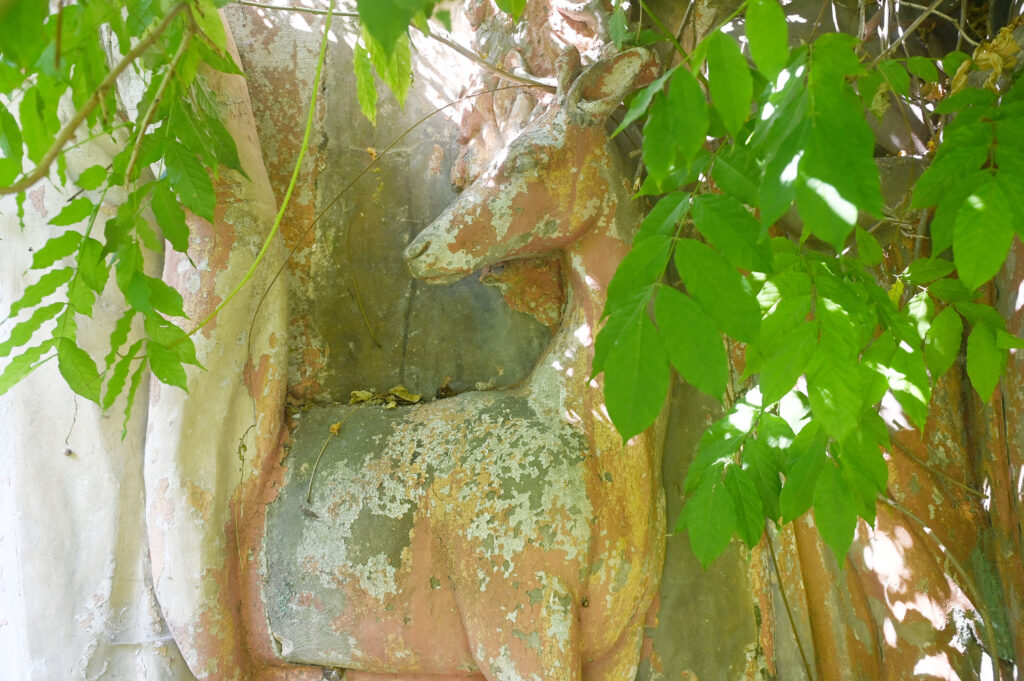
Yet perhaps the greatest mystery is not their condition, but their origin.
If these remarkable sculptures were already standing here in 1834, who commissioned them? Was it the original owner of the newly built house, one of its earliest occupants, or someone whose fascination with history, mythology and the wider world inspired them to create this remarkable private gallery?
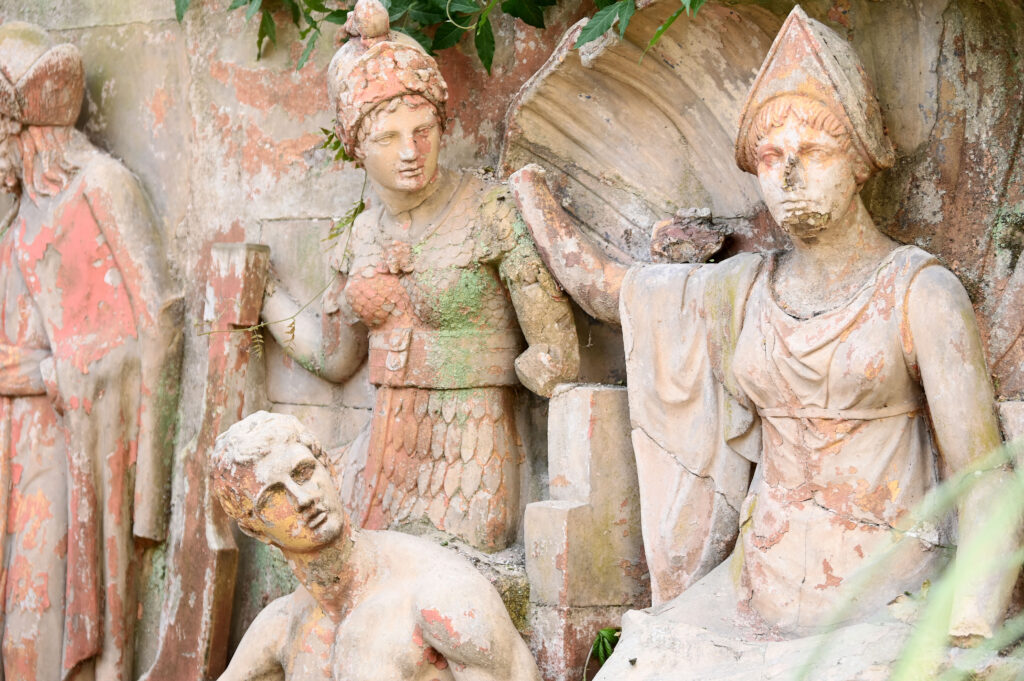
Our research has led us to a fascinating theory, that these remarkable garden statues were commissioned by wealthy Plymouth surgeon Nathaniel Seacombe, who was living at the house by 1822. According to Pigot’s Directory of 1822–23, he practised from the property, with patients likely entering the ground floor surgery. It’s easy to imagine them looking out onto this peaceful garden, where the statues would have provided a calming and impressive setting, perhaps helping to put anxious patients at ease before treatment.
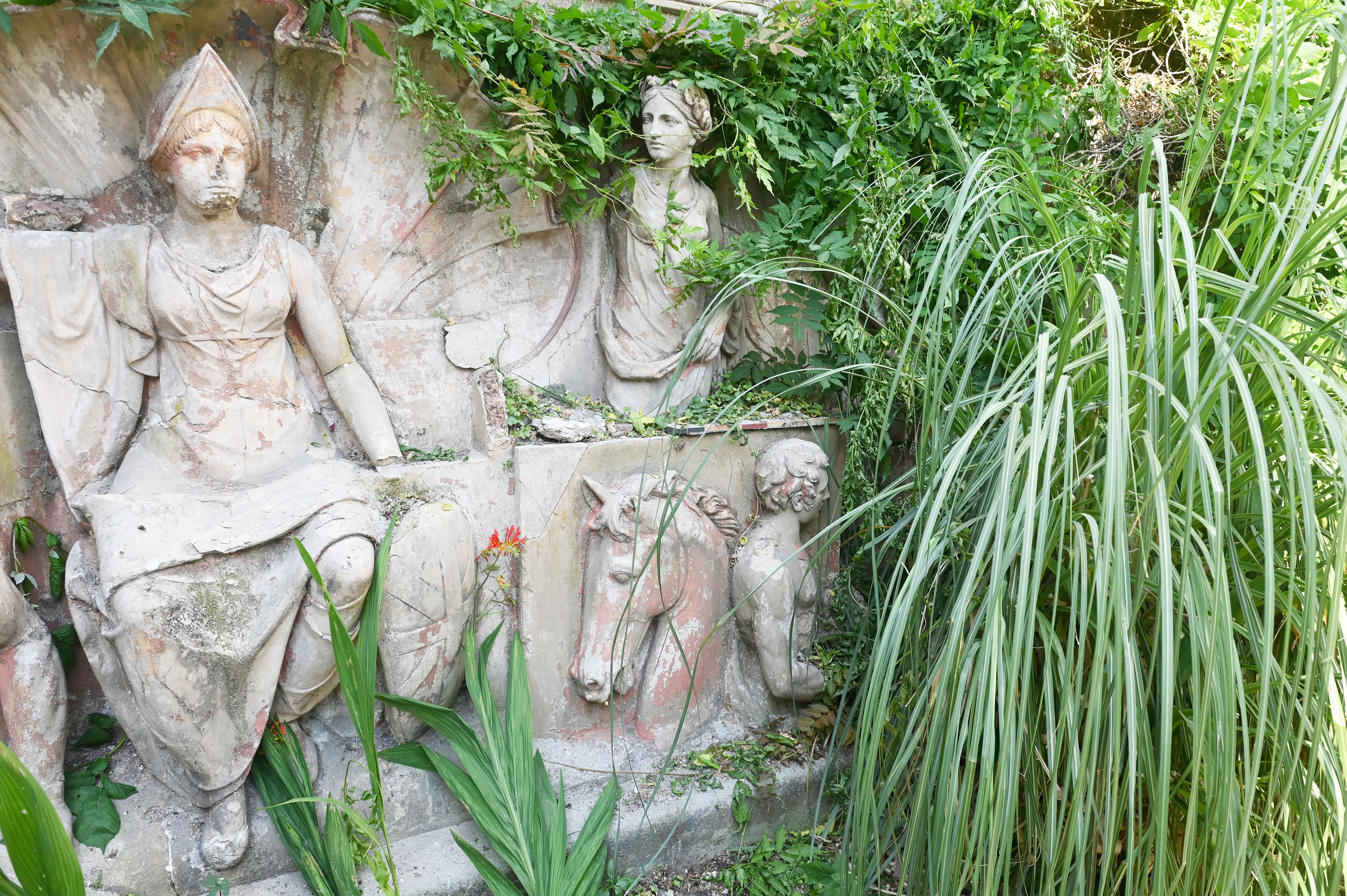
While there’s no definitive proof yet, the evidence suggests Seacombe had both the means and the opportunity to create such a setting, making him a compelling candidate in the story behind the garden’s mysterious statues.
The answer almost certainly still exists, hidden away in old property deeds, rate books or land records waiting to be rediscovered.
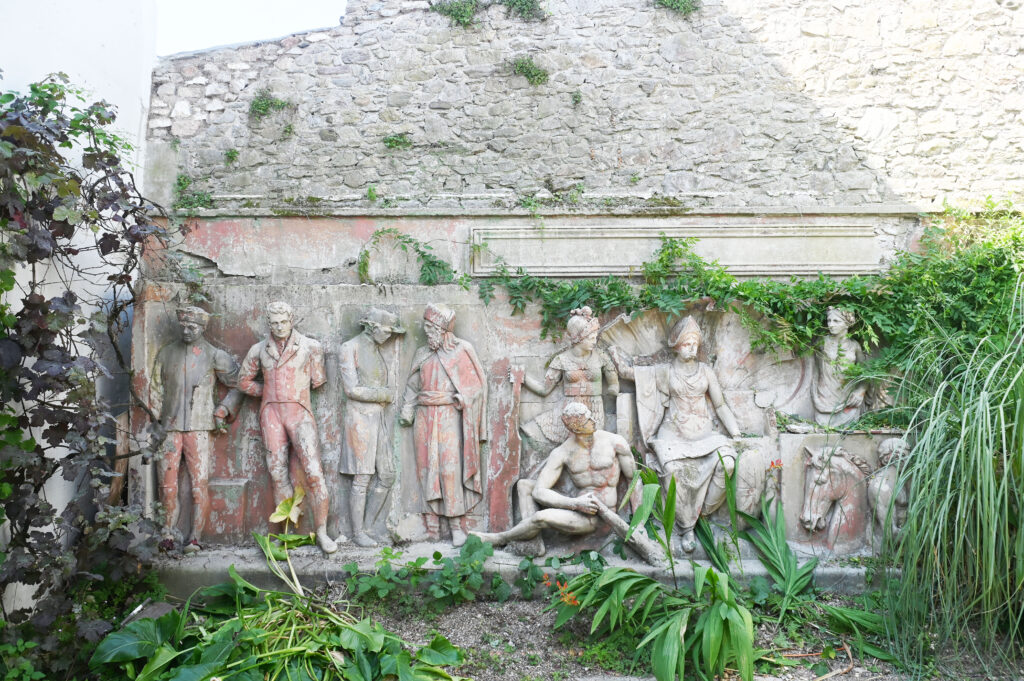
Until that day comes, the statues of Gascoyne Place remain one of Plymouth’s greatest unsolved historical mysteries an extraordinary piece of the city’s heritage that has survived for nearly two centuries in almost complete obscurity. They have watched generations come and go, endured wars, changing ownership and the passage of time. Now, as age and the elements continue to take their toll, the hope must be that their story is finally uncovered and that these remarkable figures are given the recognition and the careful conservation they so richly deserve before any more of this unique chapter of Plymouth’s history is lost forever.
Photographs © Wayne Perry / Plymouth Post