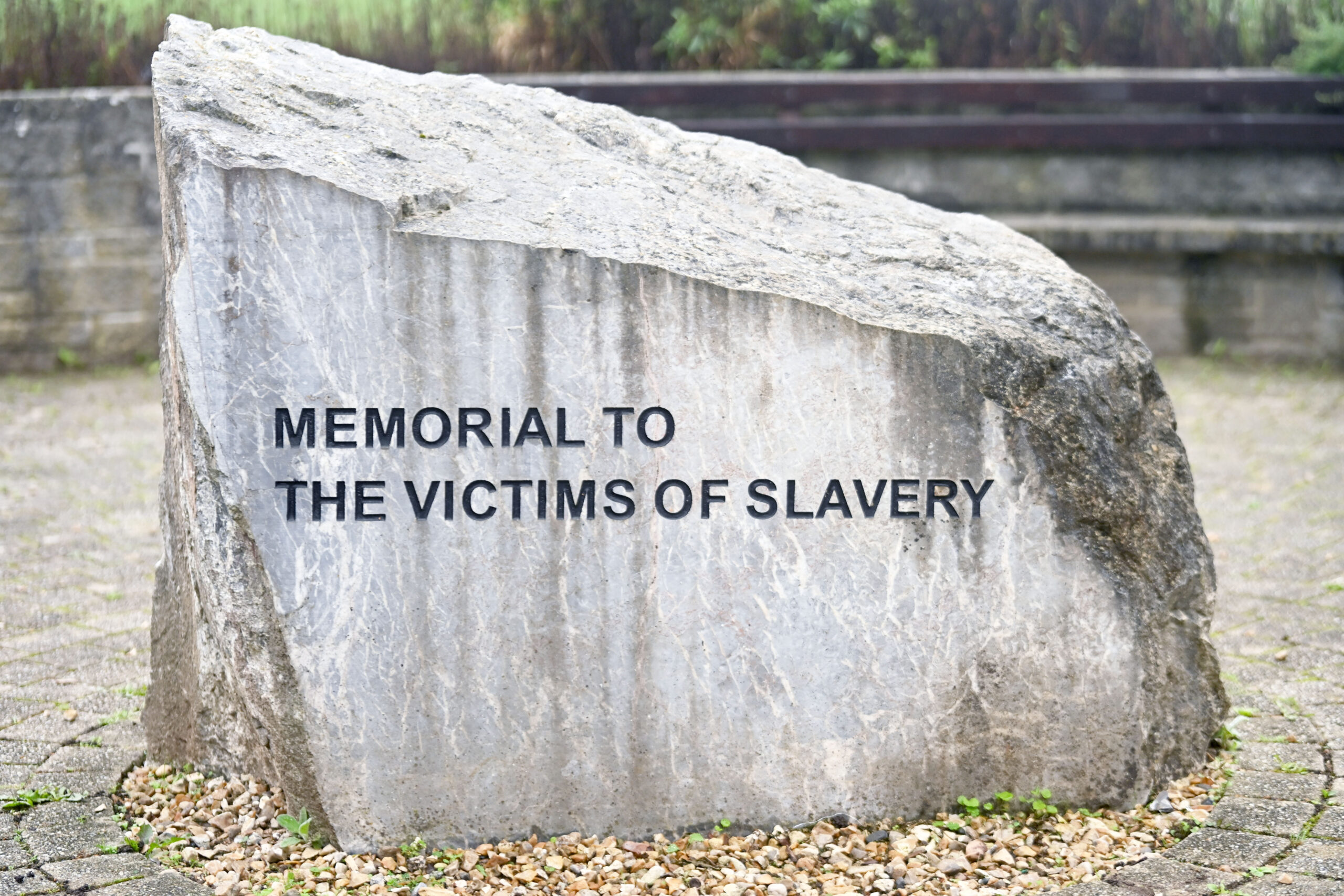
Plymouth’s connection with the transatlantic slave trade is one of the darkest chapters in the city’s long maritime history
.Remarkably, evidence of almost every part of that story can still be found around Plymouth today.
Sir John Hawkins and the beginning of the English slave trade
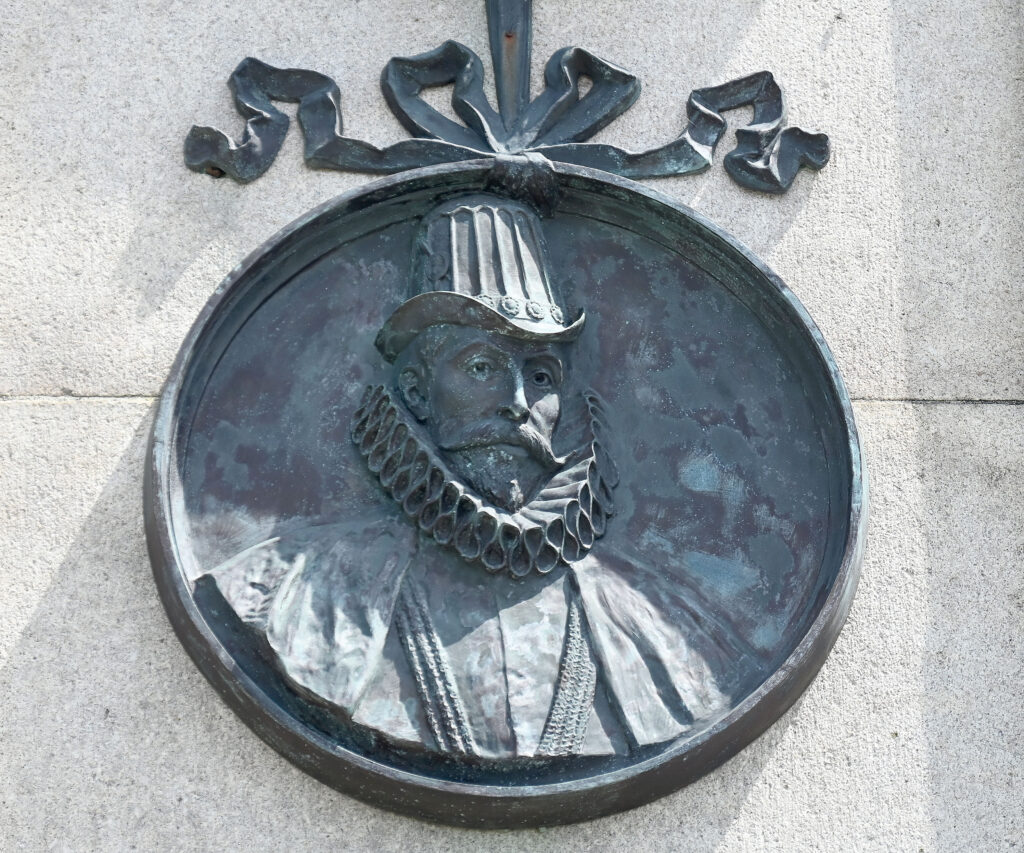
At the centre of the earliest part of the story is Sir John Hawkins.
Born in Plymouth in 1532, he became one of the most important seafarers of Elizabethan England and later played a significant role in the Royal Navy and the campaign against the Spanish Armada.
But Hawkins also occupies a much darker place in British history. In the 1560s he organised three major voyages trafficking enslaved Africans across the Atlantic.
Although English involvement with enslaved Africans existed before him, Historic England describes the Plymouth sailor as the pioneer of the English transatlantic slave trade.
His first voyage began in 1562. Hawkins travelled to the West African coast, obtained hundreds of African people through capture and trading, transported them across the Atlantic and sold them in the Spanish Americas. The venture was profitable, and further voyages followed.
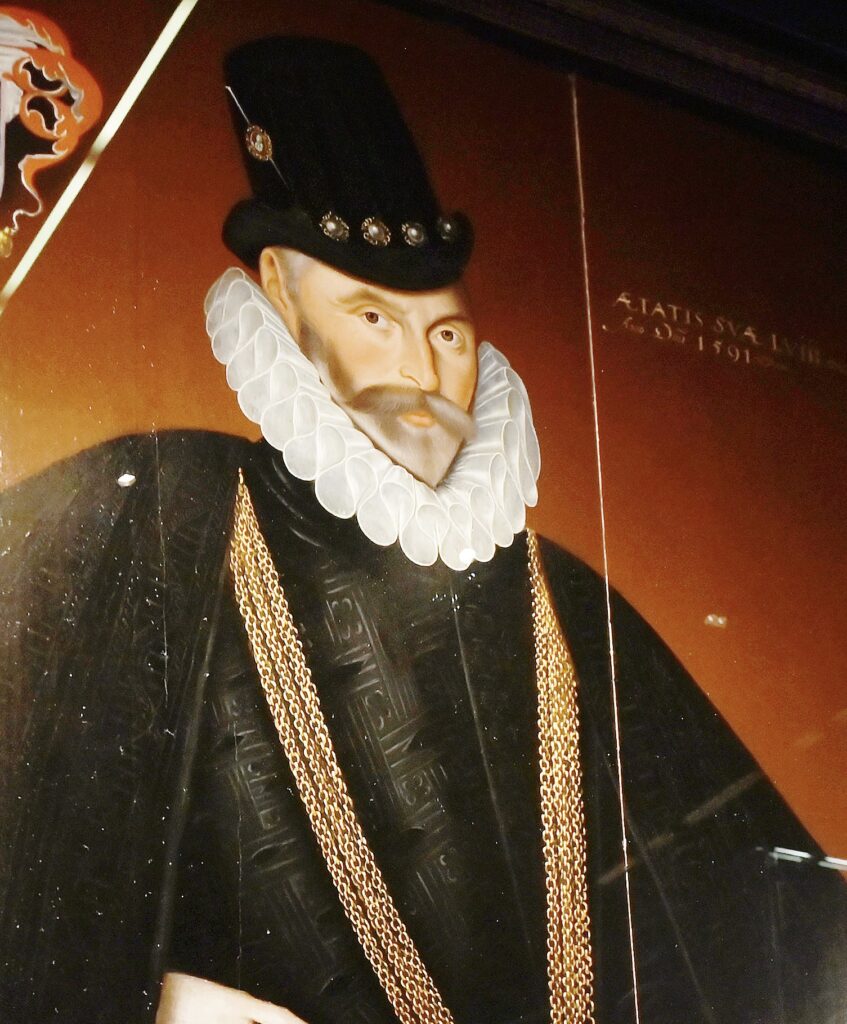
Plymouth therefore has an uncomfortable distinction in this history. The Box states that the first English ship to transport what was then described as human cargo from Africa across the Atlantic left from Plymouth.
Hawkins became wealthy and powerful. Even his coat of arms eventually contained the image of a bound African man.
For generations he was principally remembered in Plymouth as an Elizabethan naval hero. Today his involvement in slavery forms an essential part of the story too.
Sir Francis Drake
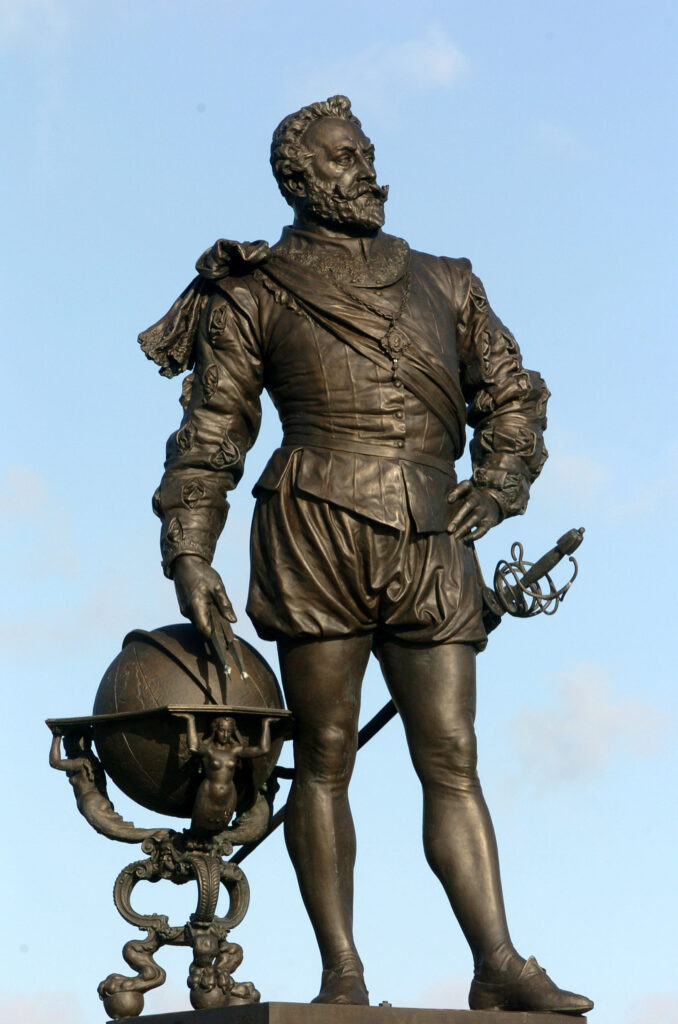
Sir Francis Drake is even more closely woven into Plymouth’s identity.
His statue has stood on the Hoe since 1884, and generations have grown up with stories of Drake, the Armada and his voyage around the world.
But Drake was also involved in early English slaving voyages. In 1567 he sailed from Plymouth as part of the expedition commanded by his relative John Hawkins.
The fleet left in October and travelled to the African coast before crossing the Atlantic. It ended disastrously at San Juan de Ulúa in present day Mexico, where the fleet was attacked by the Spanish. Only two English ships escaped, one commanded by Hawkins and the other by Drake.
Drake would later become famous for circumnavigating the globe and for his role against the Armada in 1588. Those achievements explain why he became one of the most celebrated figures in Plymouth history, but they exist alongside his part in the early development of England’s slave trade.
Plymouth changes sides
More than two centuries after Hawkins sailed from Plymouth, another movement was gathering strength in the town, this time aiming to destroy the trade in human beings.
Plymouth developed an important abolitionist movement in the late eighteenth century, including members of the city’s Quaker community.
The Religious Society of Friends had established a presence in Plymouth during the seventeenth century, with a meeting house in the old town and strong connections to the area around what later became Bretonside.
The buildings and streets have changed almost beyond recognition, but this part of Plymouth was home to a community that included some of those who helped establish the local campaign against slavery.
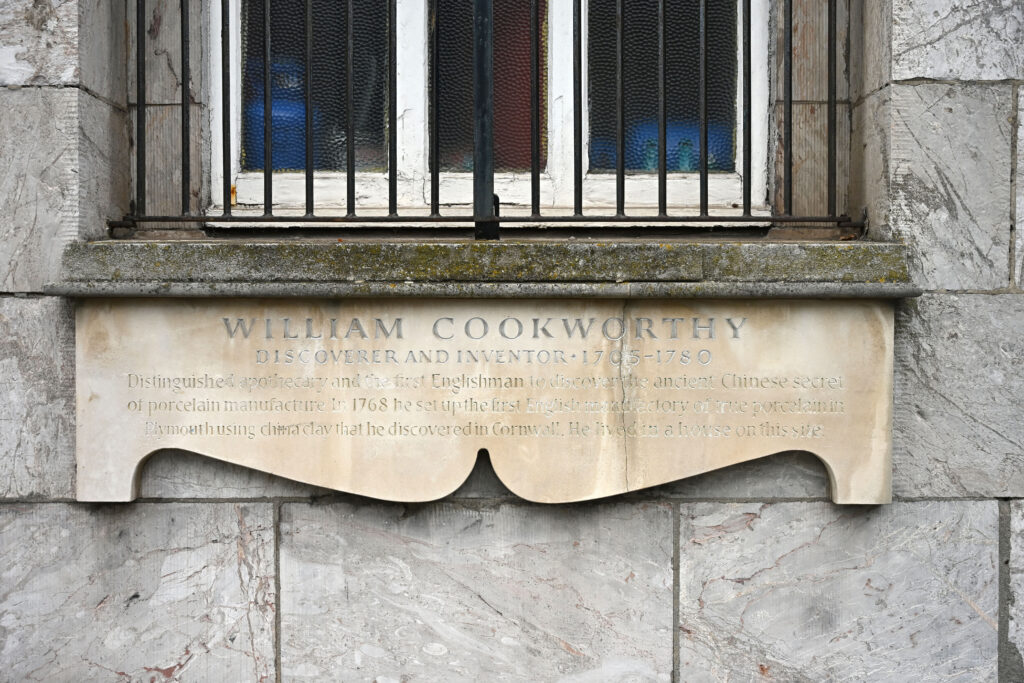
One of the most important was William Cookworthy.
William Cookworthy
Cookworthy is usually remembered in Plymouth for an entirely different reason.
The Quaker chemist and pharmacist became famous for developing hard paste porcelain in Britain after discovering kaolin deposits in the West Country. A relief commemorating him can still be seen on Notte Street, close to the site of his former home.
But Cookworthy was also connected to the emerging campaign against slavery, with an important qualification.
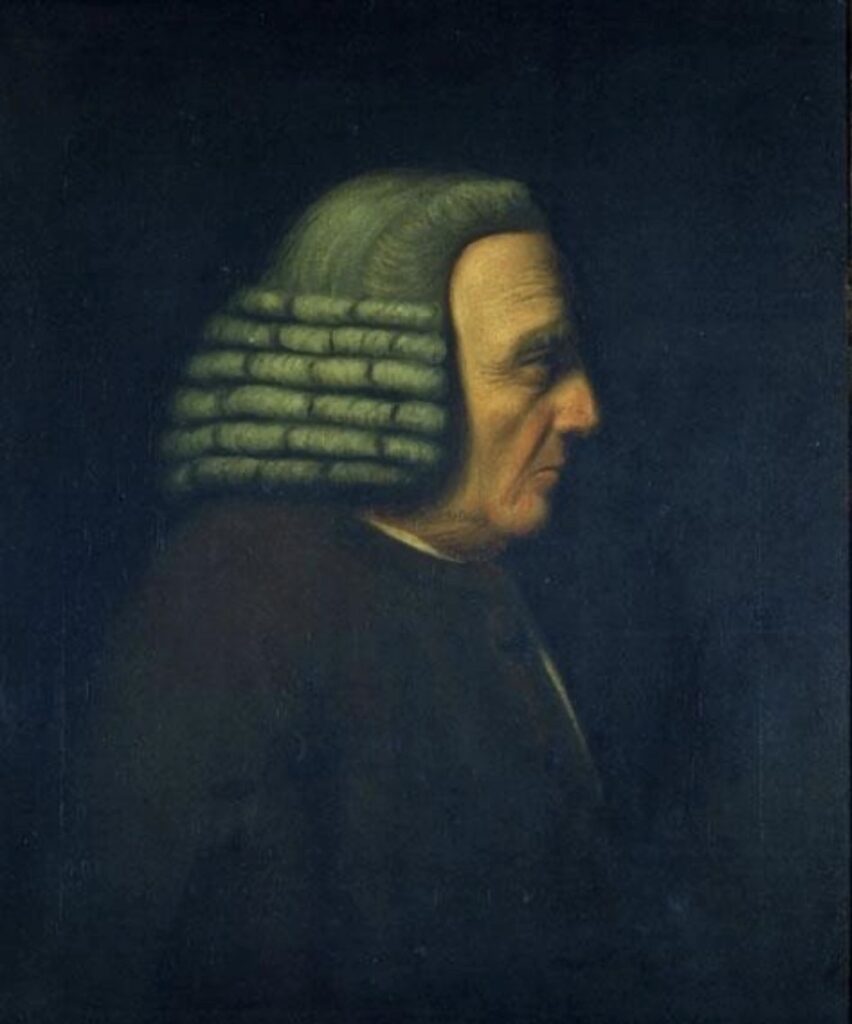
He died in 1780, seven years before the Society for Effecting the Abolition of the Slave Trade was established in London in 1787, and Plymouth’s formal abolition campaign developed only after his death. He therefore could not have sat on the later Plymouth committee.
Nevertheless, his influence appears to have been significant.
Thomas Clarkson, one of the most important figures in the national abolition movement, later wrote about establishing a committee at Plymouth and named the late William Cookworthy among those who had played a principal part in laying its foundations.
Cookworthy’s family and Quaker connections also remained deeply involved in abolitionist circles, which means the modest memorial on Notte Street represents another largely overlooked connection between Plymouth and the struggle against slavery.
Sir William Elford and the image that shocked Britain
Plymouth’s formal abolition movement was led by Sir William Elford, a banker, artist and politician who later represented Plymouth in Parliament and became chairman of the city’s abolition committee.
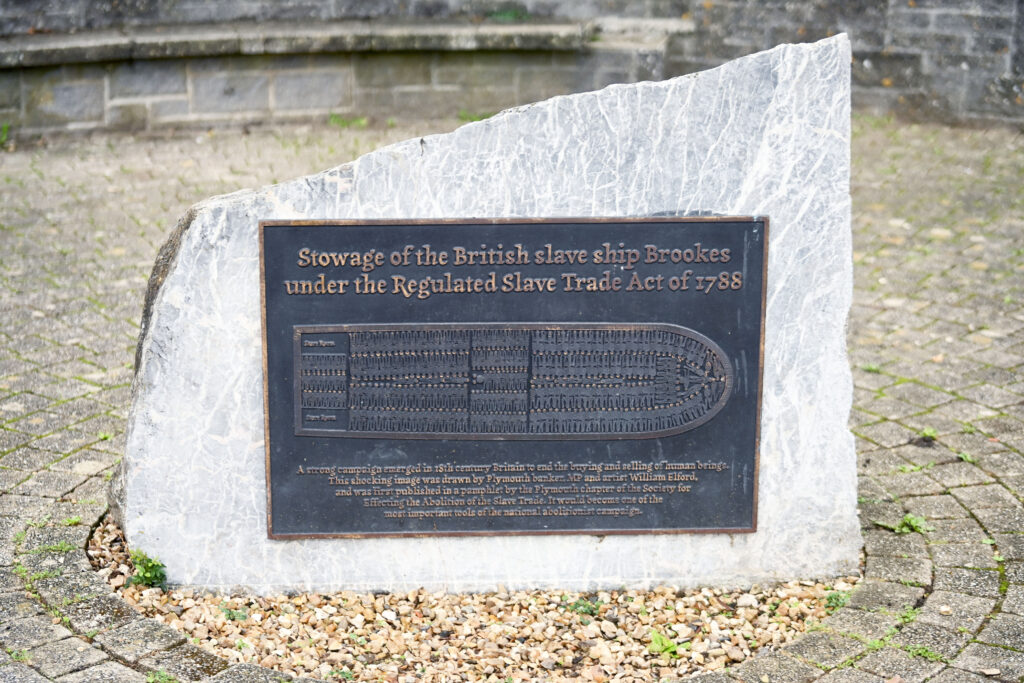
It was through the Plymouth campaign that an image emerged which became one of the most recognisable pieces of abolitionist propaganda in history. It was a diagram of a slave ship packed with human beings, demonstrating in brutally simple visual terms how enslaved Africans were forced into ships for the Middle Passage.
The Plymouth abolitionists printed and circulated an early version of the plan in 1788. The design was subsequently developed by the London society and became associated with the Liverpool slave ship Brookes, with copies distributed widely.
Instead of simply describing the slave trade, campaigners could now show people what transportation across the Atlantic actually meant, with rows of human figures depicted lying tightly together inside the vessel.
The image became one of the defining symbols of the British abolition movement, and more than two centuries later it returned to Plymouth.
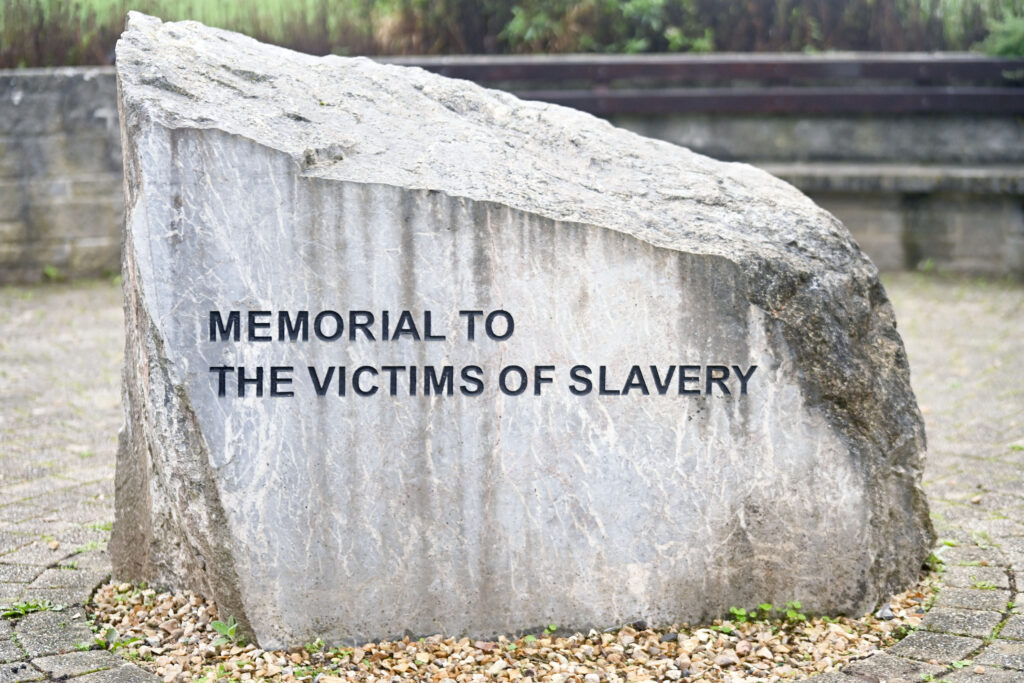
The memorial on Plymouth Hoe
In 2021 a memorial to the victims of slavery and the transatlantic slave trade was unveiled in the Peace Garden on the Hoe.
Its position is significant. Not far away stands the statue of Francis Drake, one of the men involved in England’s early slaving expeditions.
The memorial carries the image of the Brookes associated with the Plymouth campaign and Sir William Elford. It commemorates those who suffered and died through historical slavery, as well as acknowledging that slavery continues in modern forms.
Within a relatively small area of the city it is therefore possible to find reminders both of Plymouth’s involvement in the beginnings of the English slave trade and of the people who later fought to abolish it.
Abolition did not immediately end the trade
Britain abolished the transatlantic slave trade in 1807.
That did not mean slavery suddenly disappeared, nor that slave ships simply stopped sailing. The British Empire itself did not abolish slavery in most of its colonies until legislation passed in 1833 took effect the following year, while illegal trafficking across the Atlantic continued for decades.
Britain increasingly used the Royal Navy to suppress it.
The West Africa Squadron became one of the most extraordinary operations in nineteenth century Royal Navy history, patrolling thousands of miles of African coastline in search of vessels involved in trafficking enslaved people.
When ships were intercepted, boarded and legally condemned as slavers, those found aboard could be liberated. Between 1808 and 1860 the Royal Navy records that the Squadron captured around 1,600 slave ships and liberated approximately 150,000 Africans.
The human cost was also enormous. The Royal Navy estimates that around 17,000 of its personnel died during the long campaign, particularly from disease while serving on the West African coast.
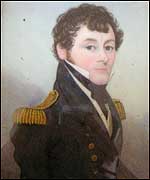
Vice Admiral George Woollcombe
George Woollcombe was born in Plymouth in 1795 and entered the Royal Navy in May 1808, aged 13.
After service during the war with the United States he rose through the ranks and became involved in operations against the slave trade. In 1823 he was appointed to HMS Bann, then HMS Owen Glendower on the African station.
The following year he was promoted to commander and appointed to HMS Victor, employed in the suppression of the slave trade.
Woollcombe and the ships operating off West Africa were part of the enormous effort required to turn the 1807 abolition law into something enforceable at sea.
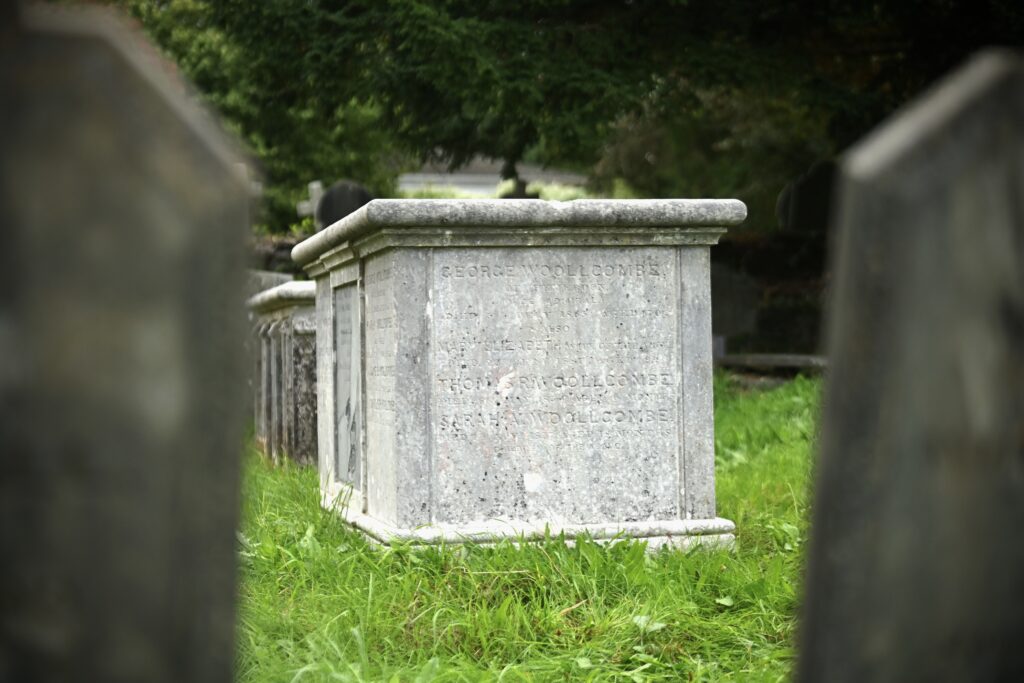
Patrolling the coast was dangerous work. Slave ships could be fast and heavily crewed, while disease presented an even greater danger.
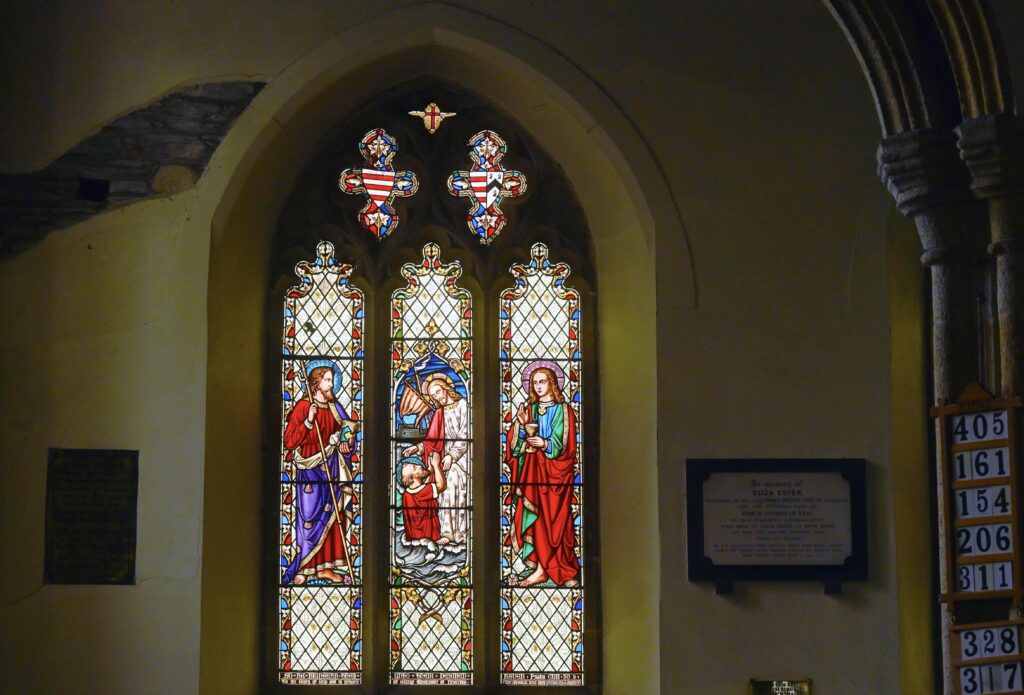
Woollcombe survived, continued to rise through the Navy and eventually became a Vice Admiral. He died at Hemerdon in 1865 and was buried at Plympton St Mary, where his grave and family memorials provide another local connection to the campaign against the slave trade.
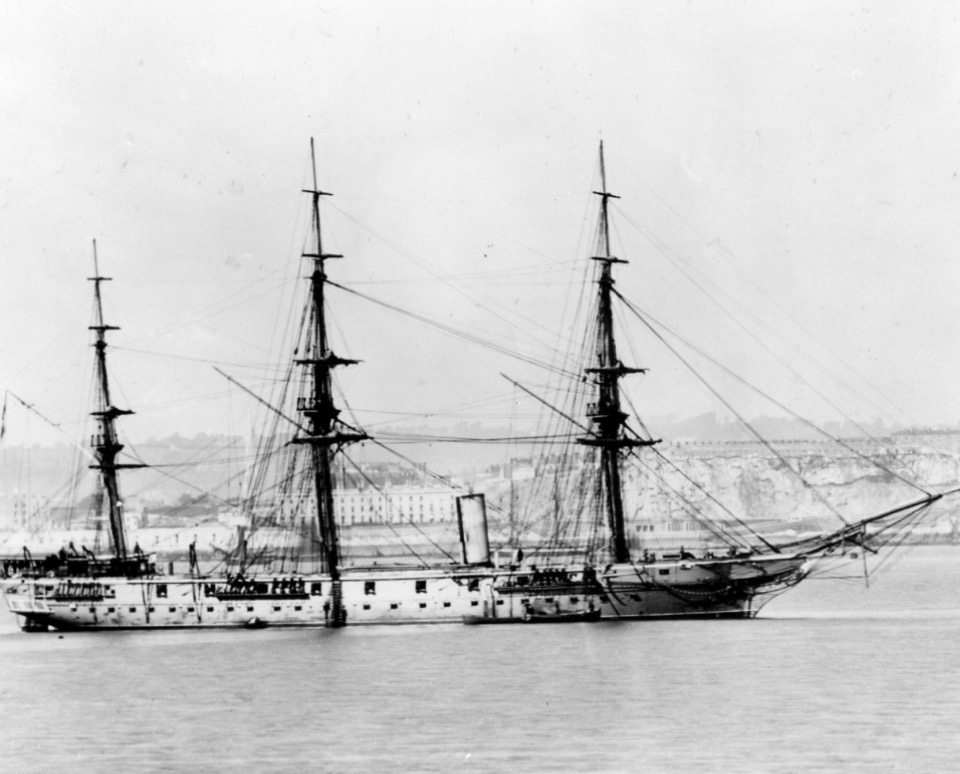
HMS Rattlesnake and the fight against the slave trade
Another reminder survives at Ford Park Cemetery, where a substantial memorial commemorates officers, sailors and Royal Marines of HMS Rattlesnake who died while the ship was serving on the West African Station between 1867 and 1871.
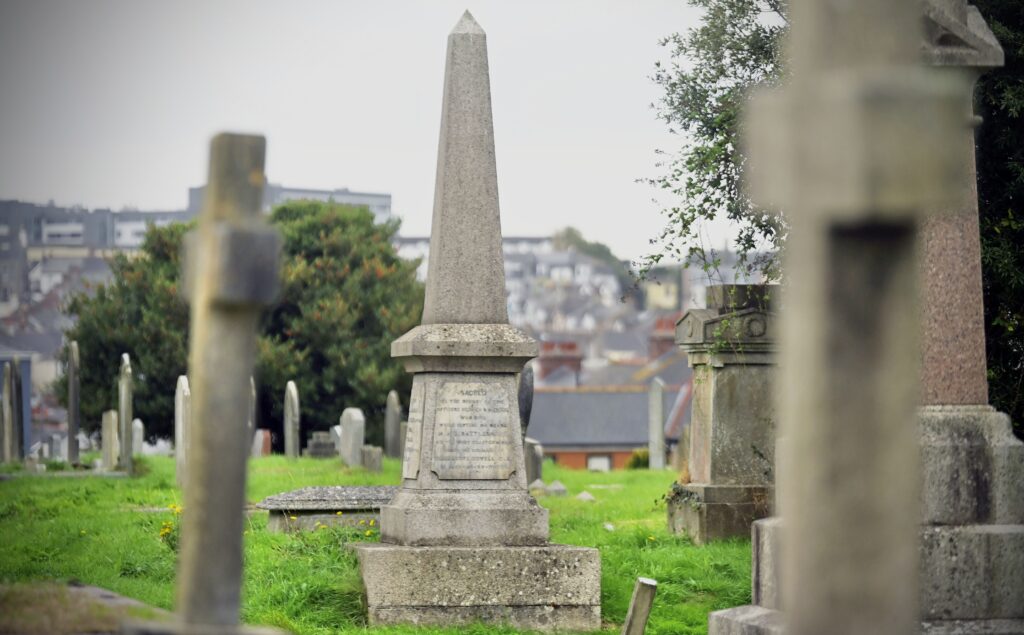
Rattlesnake served during the later years of the Royal Navy campaign to suppress the slave trade, patrolling the coast and intercepting suspected slavers.
Conditions on the station remained notoriously dangerous, and tropical disease claimed many of the men the memorial now names.
It remains a rare Plymouth memorial to Royal Navy personnel who served and died in the region during Britain’s effort to suppress the trade Hawkins himself had helped pioneer three centuries earlier.
The ships that hunted the slavers
The story is also preserved at Devonport Naval Heritage Centre, where models show the type of relatively small, manoeuvrable Royal Navy vessels used during the nineteenth century to intercept slave ships.
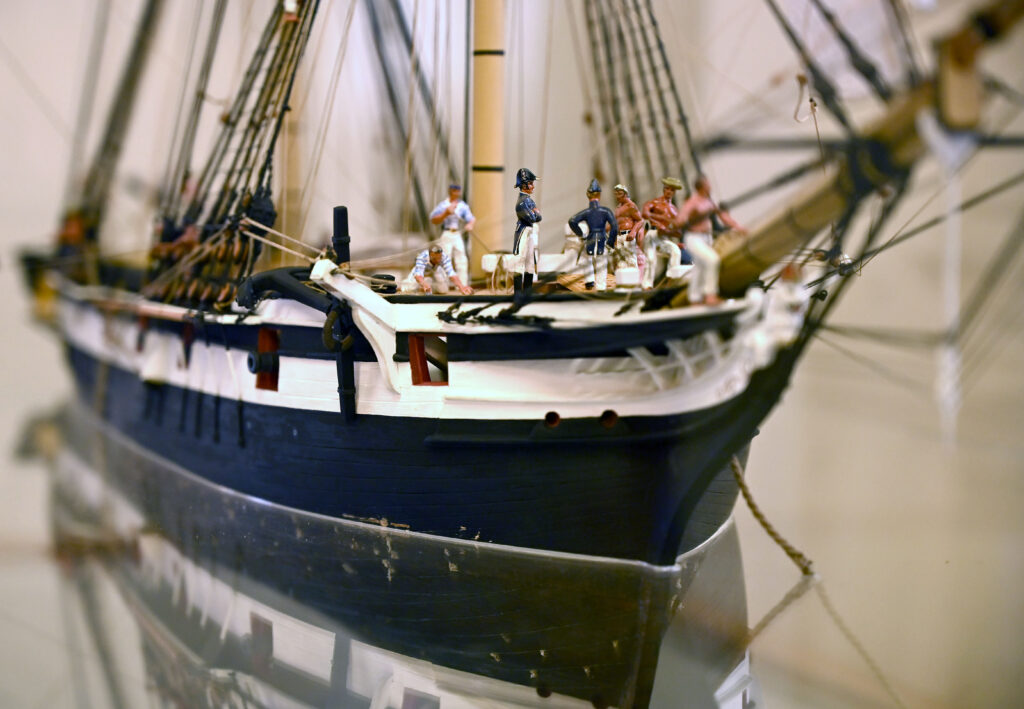
The work could involve long periods of patrolling followed by pursuit, boarding and the discovery of appalling conditions aboard captured vessels.
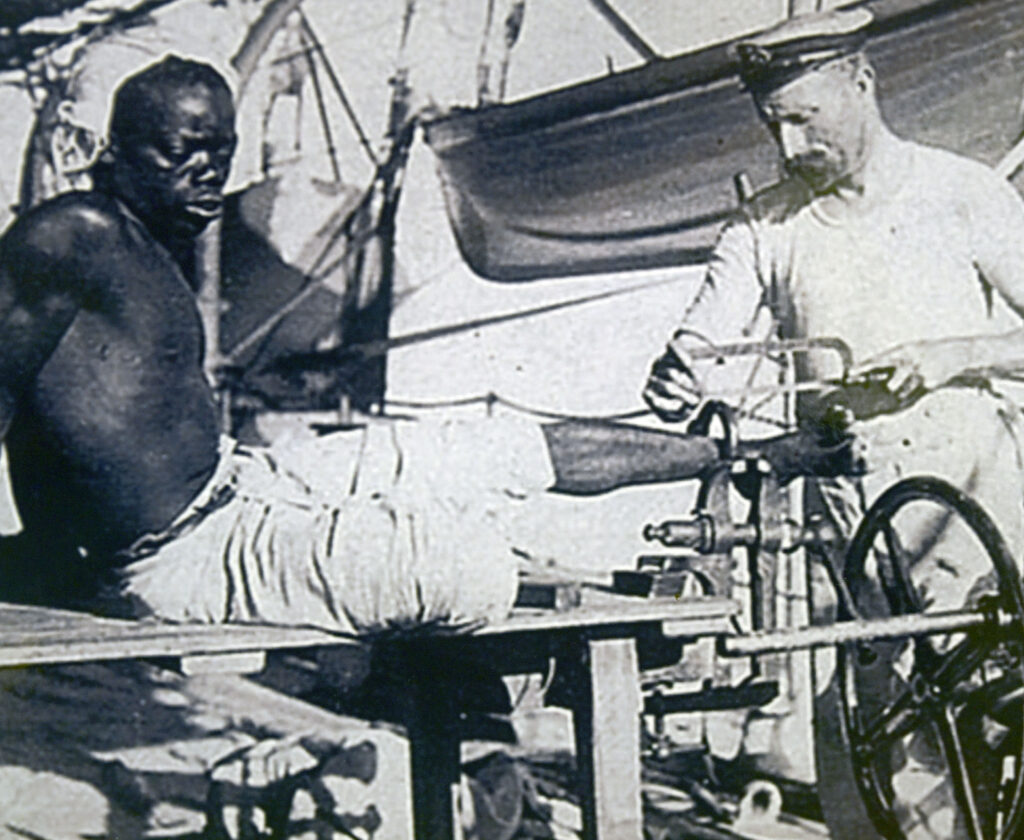
Some of the most powerful evidence comes not from paintings or models but from photography. Slavery and slave trading survived well into the photographic age, and photographs exist showing Africans rescued by Royal Navy operations, including images of people having restraints removed.
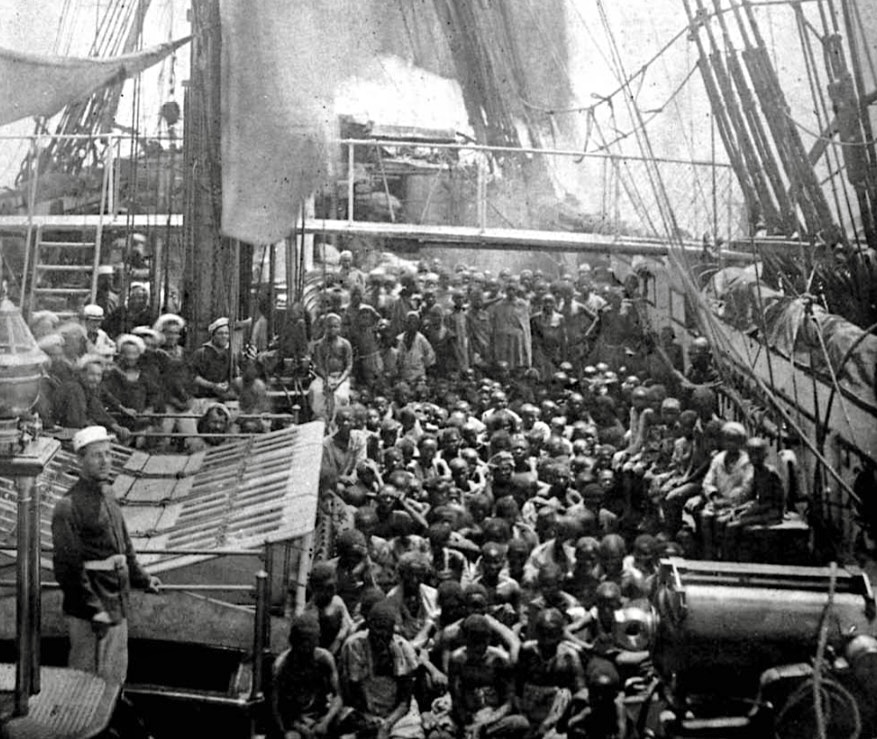
They collapse the historical distance. Hawkins belongs to the world of Elizabeth I and the Armada, but by the later stages of the struggle against slavery, cameras existed to record the people affected by it.
The Atlantic slave trade was not simply something belonging to an almost mythical age of wooden ships and Tudor explorers. Its consequences reached deep into the modern world.
John Williams Coath and the South Sea labour trade
A very different connection with the exploitation of human labour can also be found at Ford Park Cemetery.
John Williams Coath was born in Plymouth in 1839 and became a merchant seaman whose career took him to the islands of the South Pacific.
During the nineteenth century, thousands of Pacific Islanders were recruited to work on plantations, particularly in Queensland and elsewhere in the Pacific. Although some travelled under labour agreements, the system became notorious for deception, coercion and kidnapping, practices which became known as blackbirding.
Coath became captain of the schooner Jason and was involved in the South Sea labour trade.
In 1871 he was prosecuted in Queensland over the treatment of Pacific Islanders and convicted of kidnapping, receiving a five year prison sentence and a fine.
He challenged the conviction, and his case was later reconsidered following evidence from Polynesian witnesses. He was pardoned in January 1874 after the authorities concluded he had been wrongly convicted.
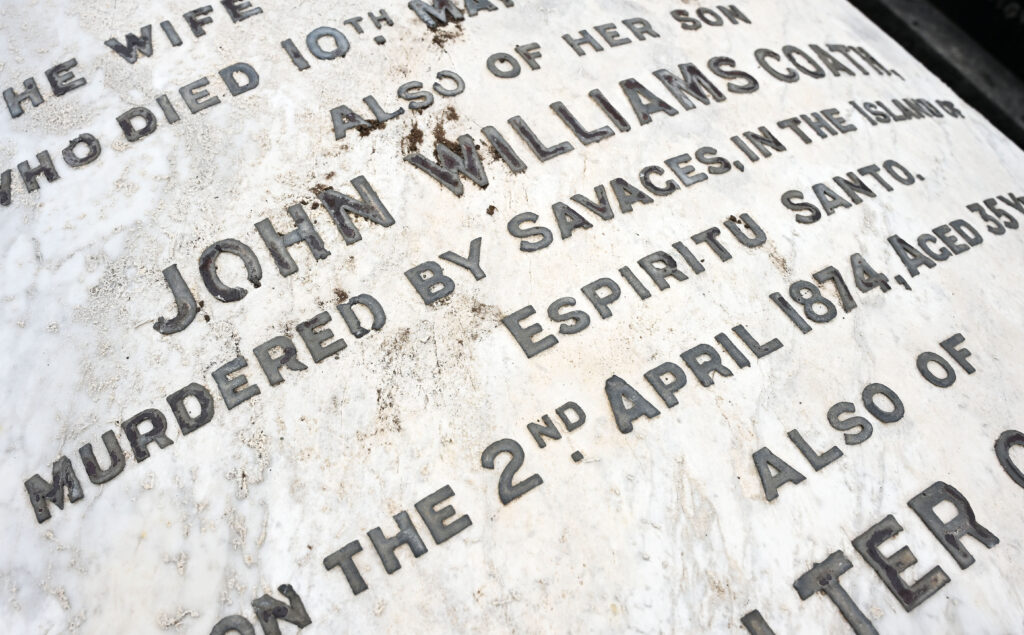
Only months later, Coath was on the island of Espiritu Santo, now part of Vanuatu, when he was attacked and fatally wounded. He died on 2 April 1874, aged 35.
His family memorial can still be found at Ford Park Cemetery. Its inscription uses the language of the Victorian period, recording that Coath was murdered by what it describes as “savages”.
Coath cannot accurately be described as a convicted slave trader, since his kidnapping conviction was subsequently overturned. His story does, however, provide a fascinating Plymouth connection with blackbirding and the controversial nineteenth century trade in Pacific Island labour.
The proximity of the two memorials at Ford Park provides a striking contrast. Rattlesnake represents the Royal Navy’s campaign against slave trafficking off Africa, while Coath’s grave marks a Plymouth connection with the controversial movement of Pacific Islanders for plantation labour later in the nineteenth century.
A Plymouth history
There is no simple version of Plymouth’s relationship with slavery.
The city cannot be described only as a place that helped establish the English trade, nor can its history be presented simply as a story of abolition. It contains both.
There is no single monument that can explain Plymouth’s full story. Instead the evidence is scattered across the city in statues, graves, plaques, church windows, old streets, naval artefacts and the memorial on the Hoe.
Together they reveal a history in which people from Plymouth participated in the trafficking of human beings, others campaigned to end it, and still others went to sea to enforce abolition.
More than four centuries after Hawkins sailed from Plymouth, those traces remain all around us.
Photographs © Wayne Perry / Plymouth Post