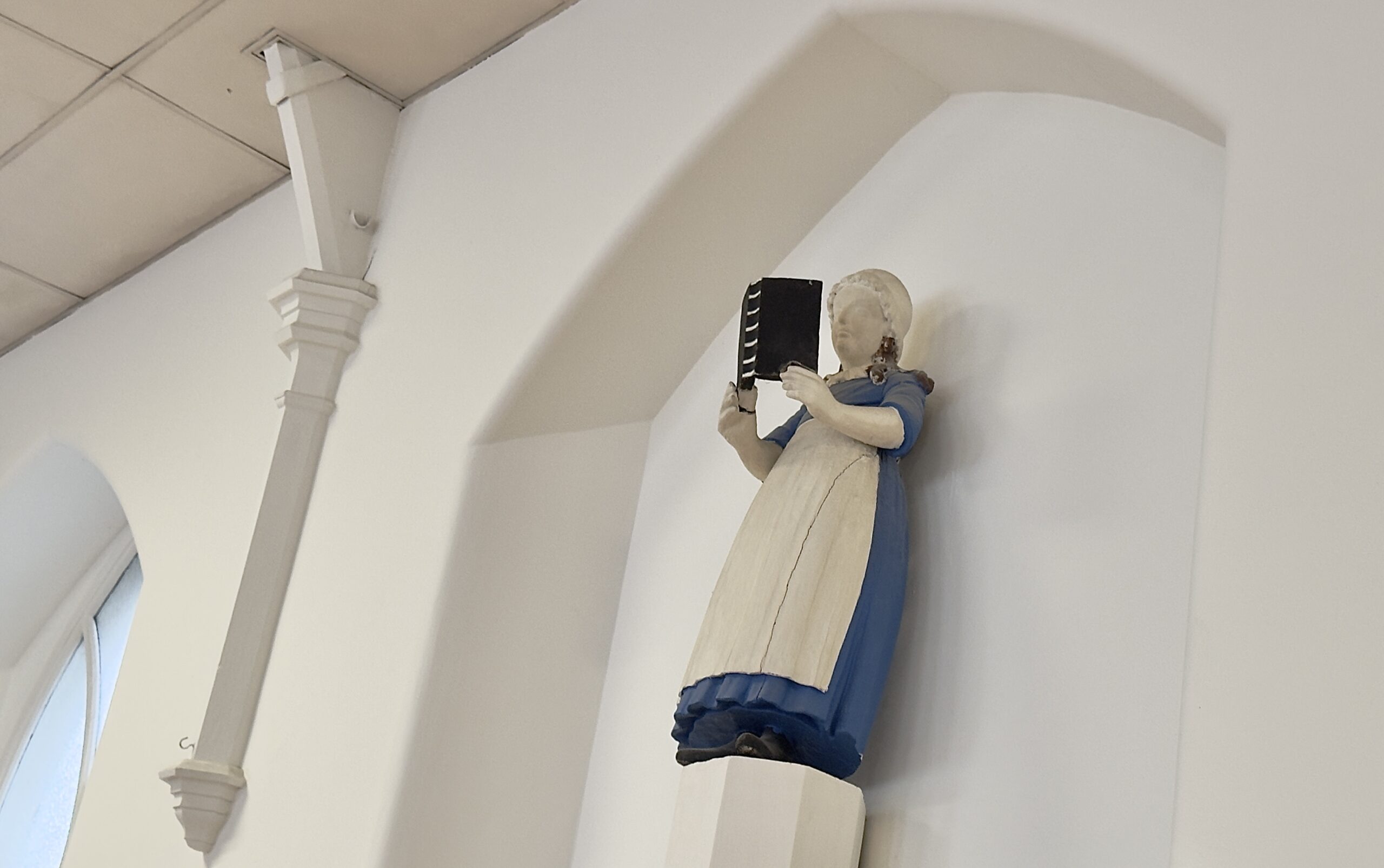
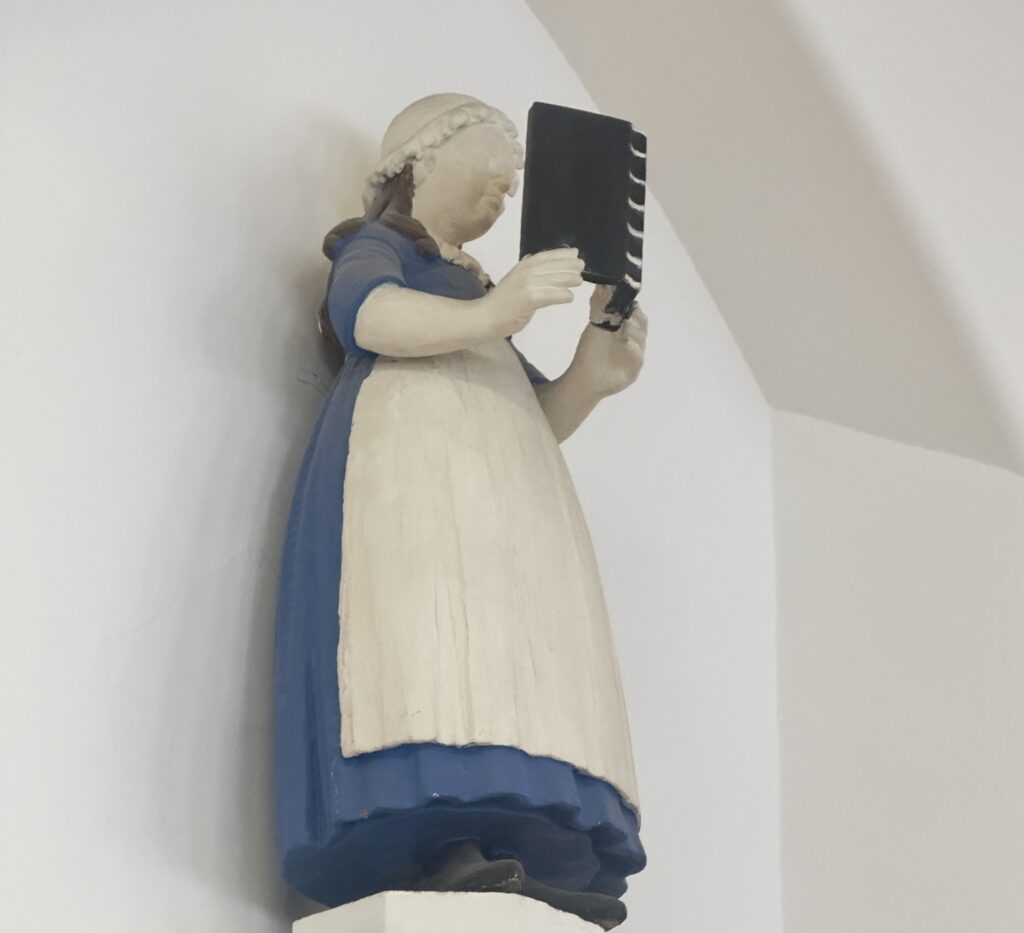
A small statue which once looked down over generations of Plymouth children is one of the few surviving reminders of a remarkable building which disappeared from the city almost 70 years ago.
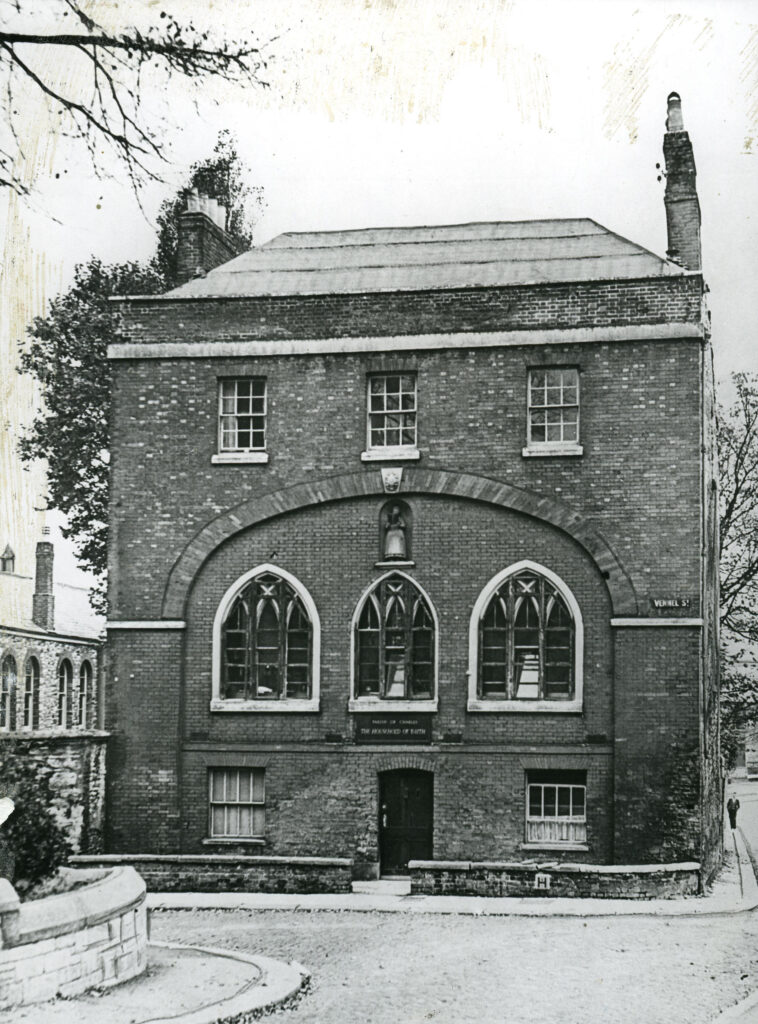
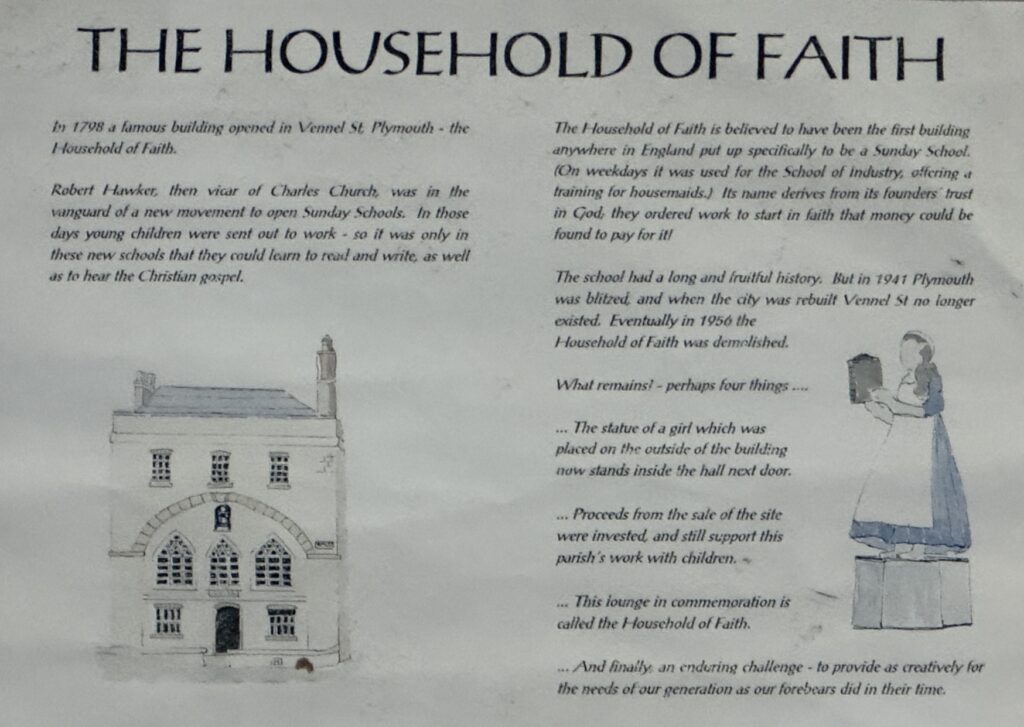
The Household of Faith stood in Vennel Street, close to Charles Church, and had its origins in the earliest days of the Sunday School movement.
Its story was closely connected with the Reverend Robert Hawker, the celebrated Plymouth clergyman who became vicar of Charles Church in 1784.
At a time when many children from poorer families worked for most of the week and had little opportunity for formal education, Hawker became involved in providing schooling for them.
There is some variation in surviving records over the precise date at which his Sunday School began. Plymouth’s own archive catalogue dates the Household of Faith Sunday School to 1787, while other historical records place Hawker’s first Sunday School work a few years earlier.
What is certain is that it developed rapidly.
The children originally met at Friary Court before the school moved to the Old Mitre. A School of Industry was also established, giving children practical instruction during the working week.
Eventually a permanent home was needed.
In 1798 the Household of Faith opened in Vennel Street.
The new building was an imposing structure, quite unlike the image many people might have of an early Sunday School.
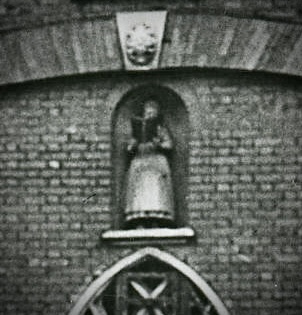
Its brick frontage was dominated by three tall Gothic style windows beneath a large arch. Above them, set into the centre of the building, was the small figure of a girl.
She would become one of its most distinctive features.
Historical accounts suggest the Vennel Street building was among the earliest purpose built Sunday School buildings in the country. There have even been claims that it was the first of its kind, although the surviving evidence is not strong enough to state that with certainty.
The name Household of Faith appears to have reflected the religious principles behind the institution.
It was nevertheless providing something very practical.
An early 19th century description records around 180 girls at the school, where they were taught reading and writing alongside religious instruction and practical skills.
The institution was supported through private subscriptions, charitable gifts and collections associated with Charles Church.
It continued serving Plymouth for generations.
Then the city around it changed beyond recognition.
The bombing of the Second World War devastated this part of Plymouth. Charles Church was burnt out during the Blitz and large areas of the old streets surrounding it were destroyed.
The Household of Faith survived the bombing.
Its eventual fate came not from enemy action, but from the rebuilding of Plymouth which followed the war.
Vennel Street disappeared beneath the new city centre and road layout, and in 1956 the Household of Faith was demolished.
After more than a century and a half, the building was gone.
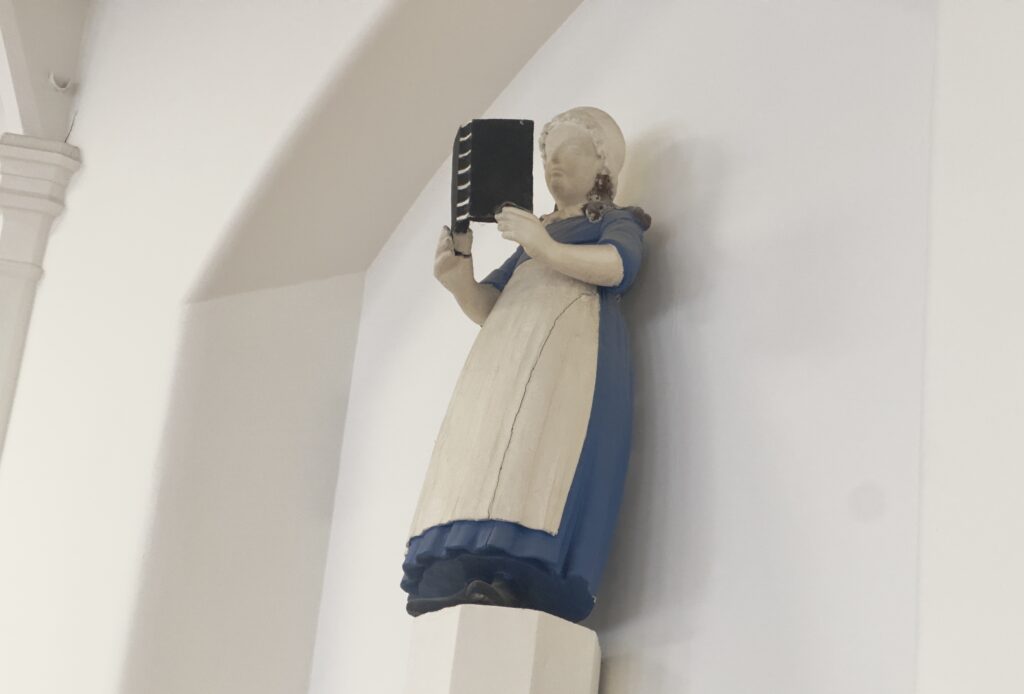
But the little girl from its frontage was saved.
The statue was removed and preserved, leaving Plymouth with a tangible survivor from a building, a street and a way of life which have otherwise disappeared.
Today she can still be found in the city.
It is easy to walk past the statue without realising what she once represented.
But place her alongside an old photograph of the Household of Faith and suddenly a small piece of lost Plymouth falls back into place.

More than 200 years later, the little girl who once watched over them is still here, preserved inside the hall at St Matthias Church on North Hill.
Photographs © Wayne Perry / Plymouth Post