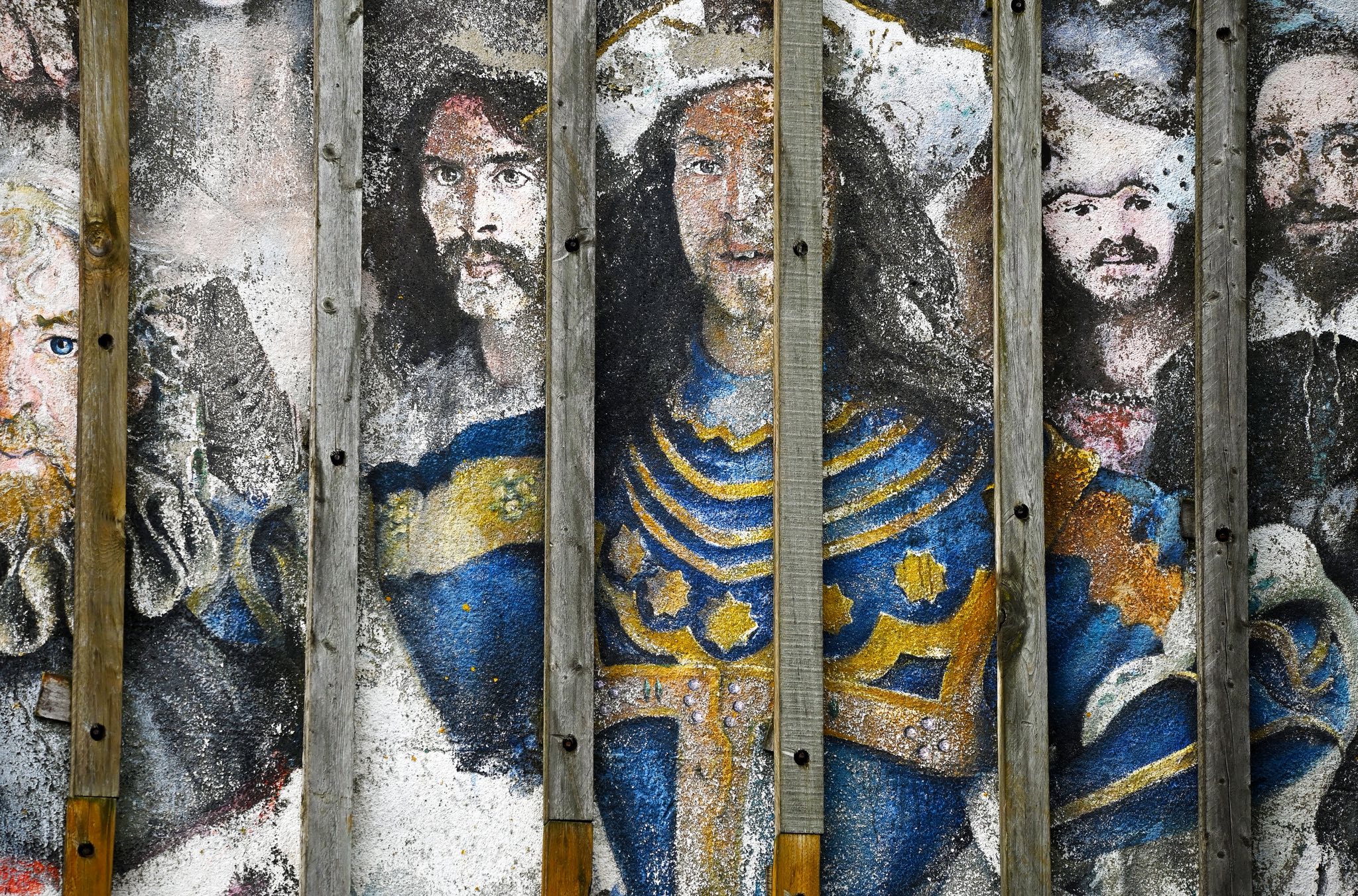
A cultural tragedy in plain sight?” The fading Lenkiewicz mural on the Barbican
Hidden just behind Southside Street on Plymouth’s Barbican, there is a scene many people walk past without ever truly seeing, but once noticed, it’s impossible to ignore.
On the back of Robert Lenkiewicz’s former workshop, a large mural is slowly slipping into decline.
What was once a bold, detailed and expressive work has now faded heavily with time. The surface is weathered and worn, sections are obscured, and wooden battens fixed across the wall create a fractured, almost caged appearance. In places, vegetation has begun to grow into the structure itself, adding to the sense of slow and steady decay.
This is part of the wider Barbican legacy of Robert Lenkiewicz, one of Plymouth’s most recognisable and controversial artistic figures, who lived and worked in the area for decades until his death in 2002. His work is strongly associated with large-scale portraiture and social commentary, much of it created from this very base.
But today, what remains is no longer a finished artwork in any traditional sense, it is a fragment of that history, exposed to time and the elements.
And for some, it raises a difficult comparison.
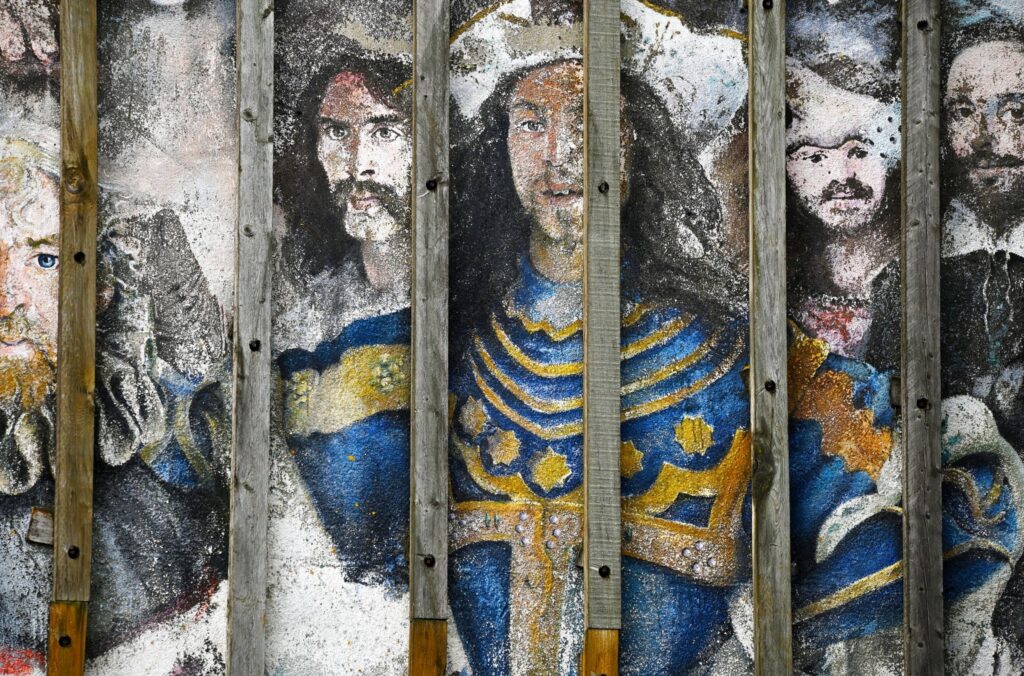
Lenkiewicz is often described locally as Plymouth’s Leonardo or Michelangelo, a personal interpretation of his influence rather than a formal comparison, but one that reflects how strongly his presence still resonates in the city’s cultural identity.
Yet that legacy now sits in a fragile state.
To be clear, responsibility for the building and its maintenance is complex, and this is not about blaming current owners. But culturally, this mural forms part of the Barbican’s artistic story, whether formally protected or not.
At present, there are no widely confirmed plans for restoration, and the future of the work remains uncertain.
What is left is a striking contrast: a city proud of its heritage and creativity, yet a visible example of how easily cultural landmarks can drift into decline when they exist outside formal preservation.
So the question becomes simple, but uncomfortable.
Is this acceptable?
Should this be left as it is, allowed to naturally fade with time?
Or should Plymouth take a closer look at what it is losing in plain sight?
Photographs & Video © Wayne Perry / Plymouth Post