It wasn’t stored with anything else. It wasn’t framed or labelled.
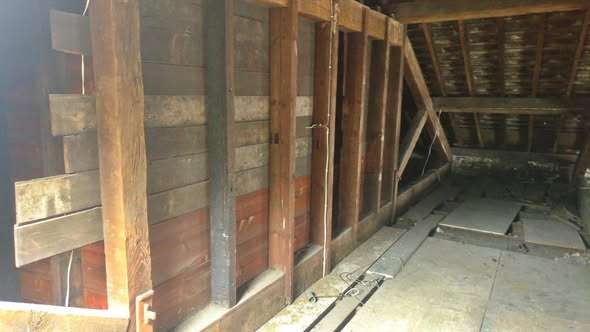
It was hidden, placed behind a timber panel in a roof space that, at the time, could only be accessed by ladder. When it was uncovered during building work in 2019, inside a property once used as the studio and living space of Robert Lenkiewicz, it raised a simple but lingering question: who is the woman in the image?
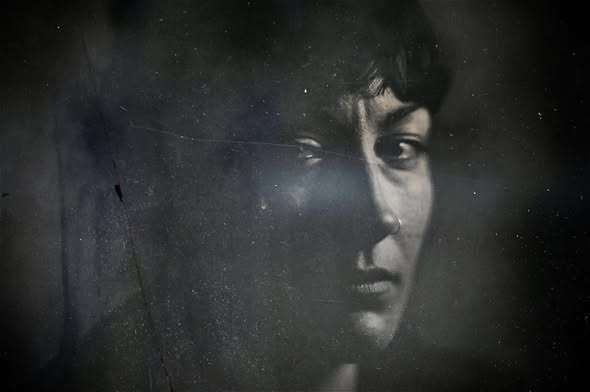
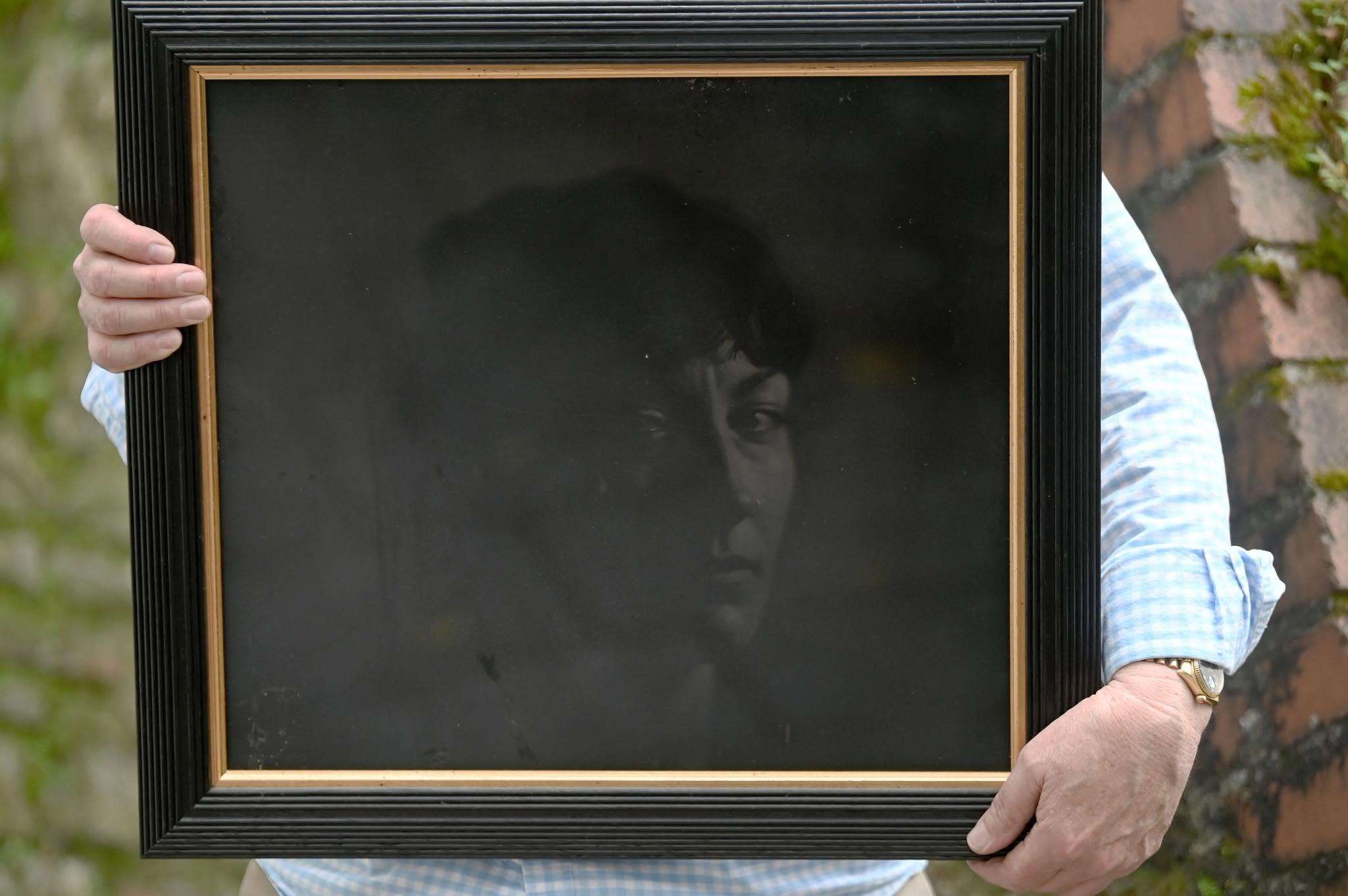
The piece itself is striking, and unusual. Roughly 18 inches square, it’s a positive image on glass, not a conventional photograph on paper. That immediately opens up a number of possibilities about how and why it was made.
One suggestion is that it could resemble an early photographic process, such as an ambrotype, where the image exists directly on glass as a unique object. Others have pointed out a different possibility: that it may instead be a lithographic image transferred onto glass, something occasionally produced for display, reproduction, or artistic study. In that scenario, the image wouldn’t be a one-off photograph, but a carefully created print designed to mimic tonal depth and detail.
At this stage, there’s no confirmed identification, only informed ideas based on its appearance and material.
What is clear is the presence of the woman herself.
Her face emerges softly from shadow, calm but unreadable. There’s no obvious pose, no theatrical expression, just a quiet, steady gaze. The surface carries the marks of time: scratches, speckling, and wear that give it a slightly ghosted quality, as though the image has aged in place rather than been preserved.
Given where it was found, it’s difficult not to consider a connection to Lenkiewicz. He was known for working closely with real people, often creating deeply personal studies that didn’t always become finished or documented works. Some have noted a resemblance to figures within his “Mary” studies, but there is nothing to confirm that link. no signature, no inscription, no record tying it to his known body of work.
And then there is the detail that continues to stand out.
It wasn’t simply left behind. It was partially concealed.
Not thrown away. Not displayed. Just… placed out of sight.
That leaves an open question. Was it overlooked during a clear-out? Temporarily moved and forgotten? Or set aside deliberately, for reasons that are no longer clear?
In a studio environment known for its layers of material, references, and unfinished ideas, it’s possible for objects to slip through the cracks. But something like this, fragile, distinctive, and visually compelling, feels harder to dismiss as accidental.
For now, what remains is a fragment of a larger story.
An unidentified woman.
A glass image without a confirmed process.
Found hidden in a space once filled with art, ideas, and people.
Whether it’s a photograph, a lithographic transfer, or something else entirely, the truth still sits just out of reach.
And perhaps, somewhere, someone will recognise her and bring the rest of the story back into the light.
Photographs © Wayne Perry / Plymouth Post
UPDATE: The mystery was later solved. Read how the woman in Lenkiewicz’s hidden glass portrait was identified.