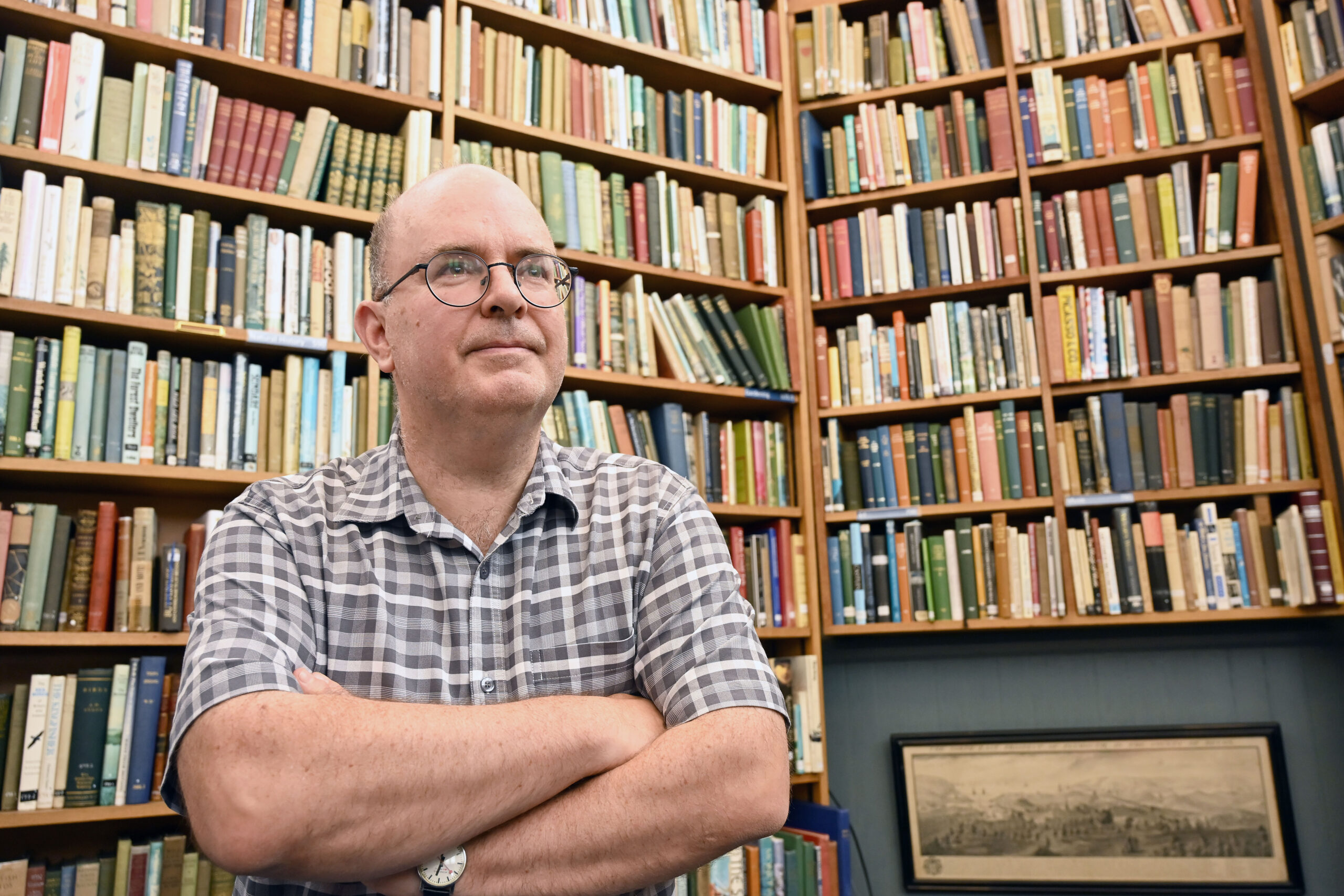
In St Barnabas Terrace is an institution that has survived war, fire and more than two centuries of change.
The Plymouth Proprietary Library was established in 1810, at a time when Plymouth was growing rapidly through shipbuilding, trade and its strategic importance during the Napoleonic Wars.
Originally known as the Plymouth Public Library, it predated the free public library system we recognise today. Back then, “public” simply meant people could join and use the collection for a subscription.
Its founders wanted to encourage the spread of science and literature while gradually building a collection of important works, old and new.
Among those closely involved were George Eastlake, Judge Advocate of the Fleet and Solicitor to the Admiralty, and Henry Woollcombe, a lawyer who became Mayor of Plymouth in 1813.
Other founders included merchant and former mayor John Hawker and Edmund Lockyer, who served as mayor four times and backed the architect John Foulston, who was commissioned to design the library’s home in Cornwall Street.
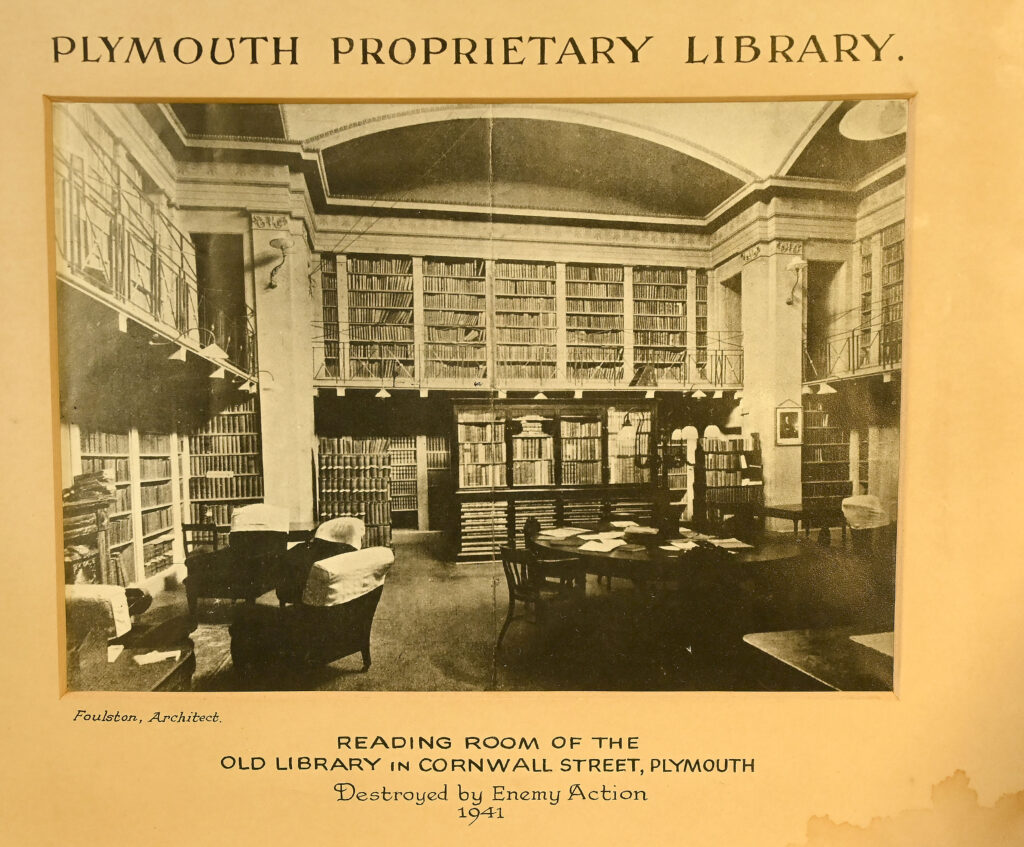
The building resembled an ancient Greek temple, with no conventional windows and natural light pouring in through glass cupolas in the roof. Inside were tiers of bookshelves, decorative columns, reading rooms and a separate newsroom stocked with local and national papers.
The Cornwall Street building was completed and ready for use in August 1813, though its grandeur came at a price, running well over budget and leaving a debt that took until 1833 to clear.
Members were divided between proprietors, who invested in the library, and subscribers who simply paid for access.
Readers came largely from Plymouth’s growing professional classes, doctors, lawyers and clergy among them.
The newsroom proved so popular that some members were accused of hogging the papers, and in 1843 the committee brought in a strict half hour limit for each newspaper, timed with two fifteen minute sand glasses.
By 1824 the collection ran to around 1,500 titles spanning history, biography, politics, religion, poetry, drama and travel, with a particularly strong run of travel writing reflecting the town’s naval and commercial life.
Novels by Walter Scott, Daniel Defoe, Frances Burney, Maria Edgeworth and Ann Radcliffe sat alongside political works and writing on slavery by abolitionists including Thomas Clarkson and James Stephen.
One of the most significant additions came when collector William Cotton offered his remarkable collection of books, drawings, prints, paintings and other works of art.
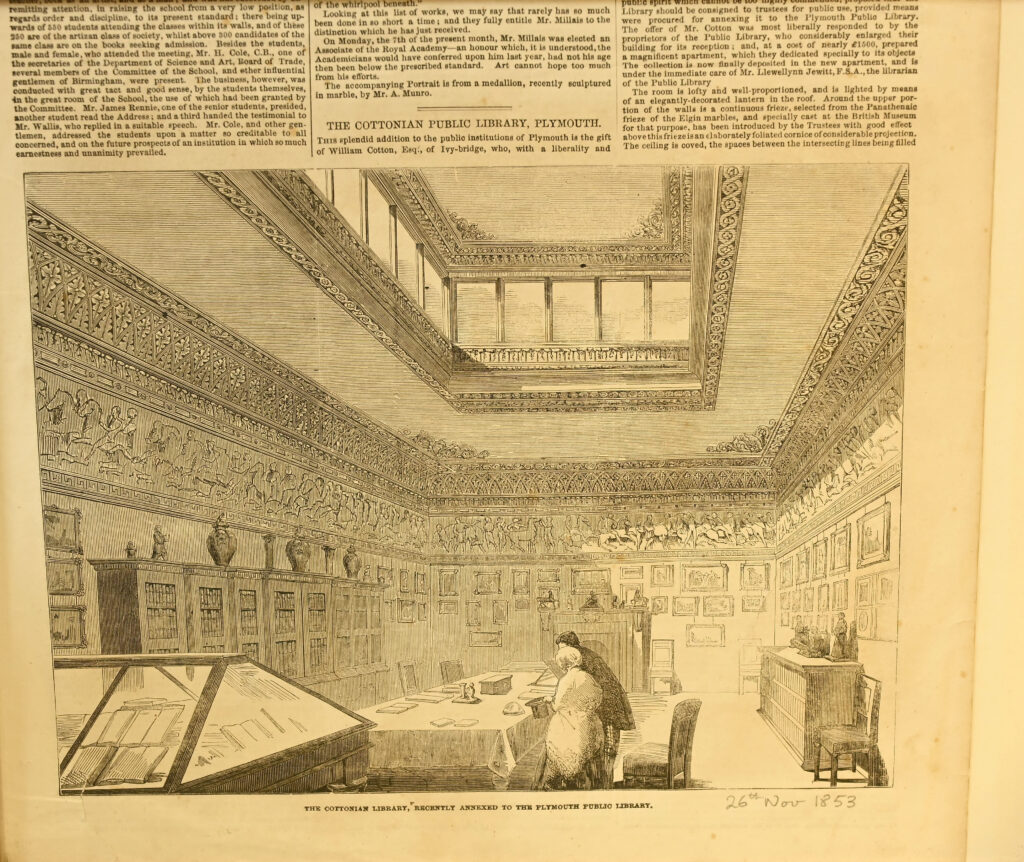
The library built a special room to display it, and the Cottonian Collection opened to the public there in 1853. Its care passed to Plymouth Corporation in 1915, and it can now be found at The Box.
By the turn of the twentieth century the library held around 30,000 volumes and had become far less exclusive, serving a much broader readership.
Then came the Blitz.
On the night of March 21, 1941, an incendiary bomb passed through the glass lantern in the roof and set the Cornwall Street building alight.
Firefighters were already stretched thin across the city, and there was insufficient water pressure to save it. An estimated 35,000 books were destroyed.
A young naval officer made repeated attempts to reach metal boxes containing valuable manuscripts, but was driven back by the heat and smoke.
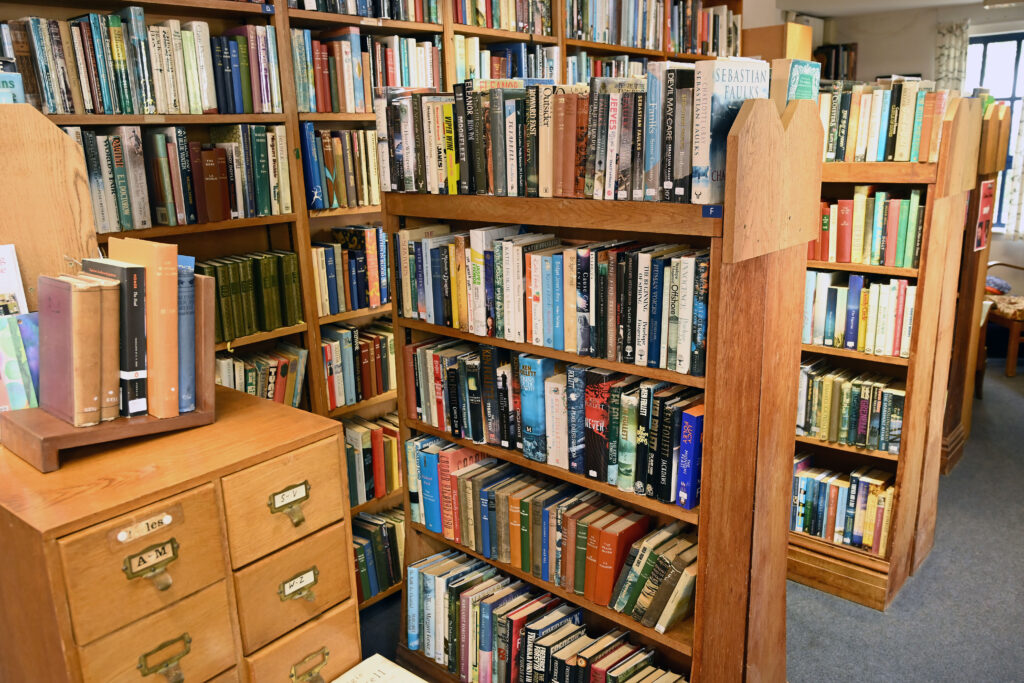
The only books to survive intact were those members happened to have borrowed and taken home; around a dozen remain in the library today, including works by Virginia Woolf, James Joyce, JM Barrie and PG Wodehouse.
Determined not to let the institution disappear, members appealed for donations and set about rebuilding the collection.
The library reopened during the war at 1 Alton Terrace on North Hill. Plans for a purpose built replacement never materialised, and it remained at North Hill for around 75 years, weathering a second setback in August 1969 when lightning struck the chimney stacks, damaging or destroying more than 1,000 books, with the local history collection hit hardest.
In 2018 the library moved into its present home in St Barnabas Terrace, a former church hall, officially opened the following year by Plymouth’s Lord Mayor, Sam Davey.
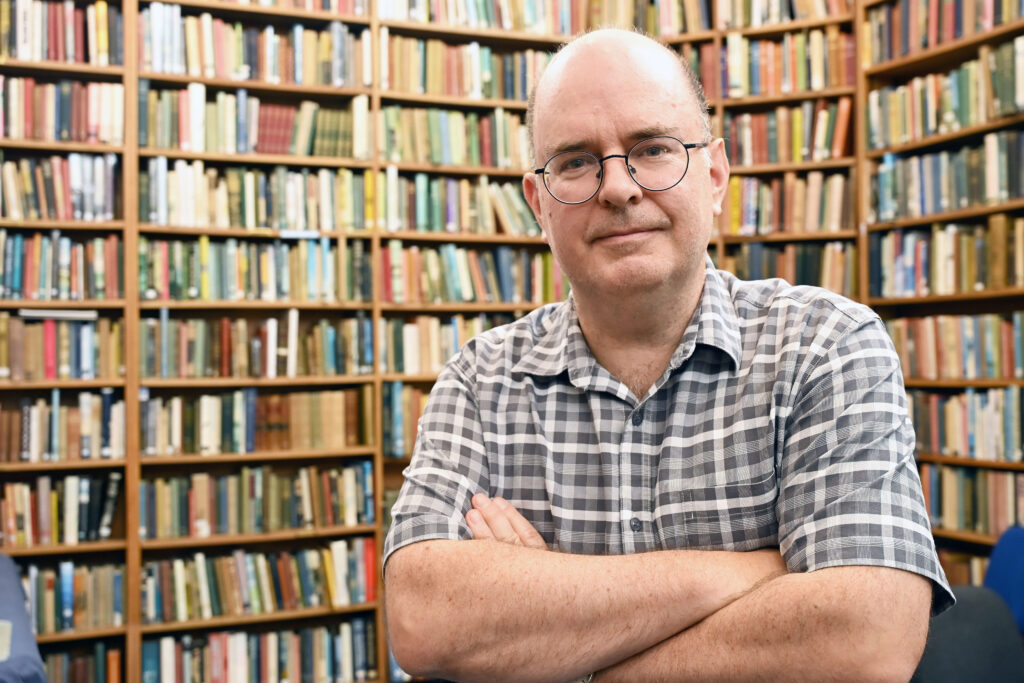
Today, managed by Dr Darren Bevin, it holds more than 18,000 books, with particular strengths in Plymouth and Westcountry history, maritime subjects, poetry, biographies and classic crime.
More than 215 years after it was founded, the Plymouth Proprietary Library remains independent, sustained by membership, donations and the work of its community, and continues hosting talks, coffee mornings, book launches, film showings and regular groups covering reading, art, textiles and Latin.
The Library is currently open on Monday, Wednesday and Saturday from 10am to 2pm.
Photographs © Wayne Perry / Plymouth Post