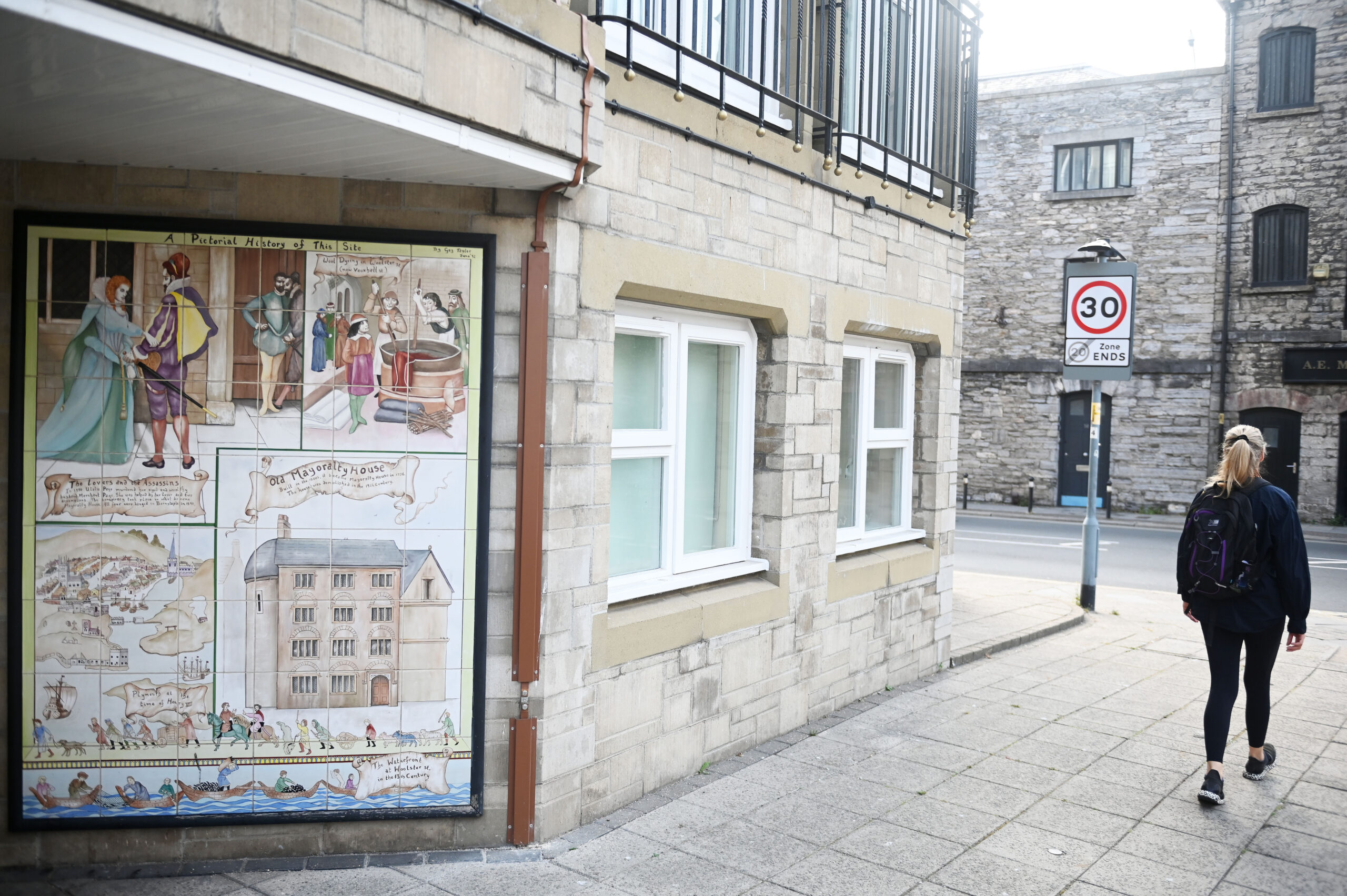
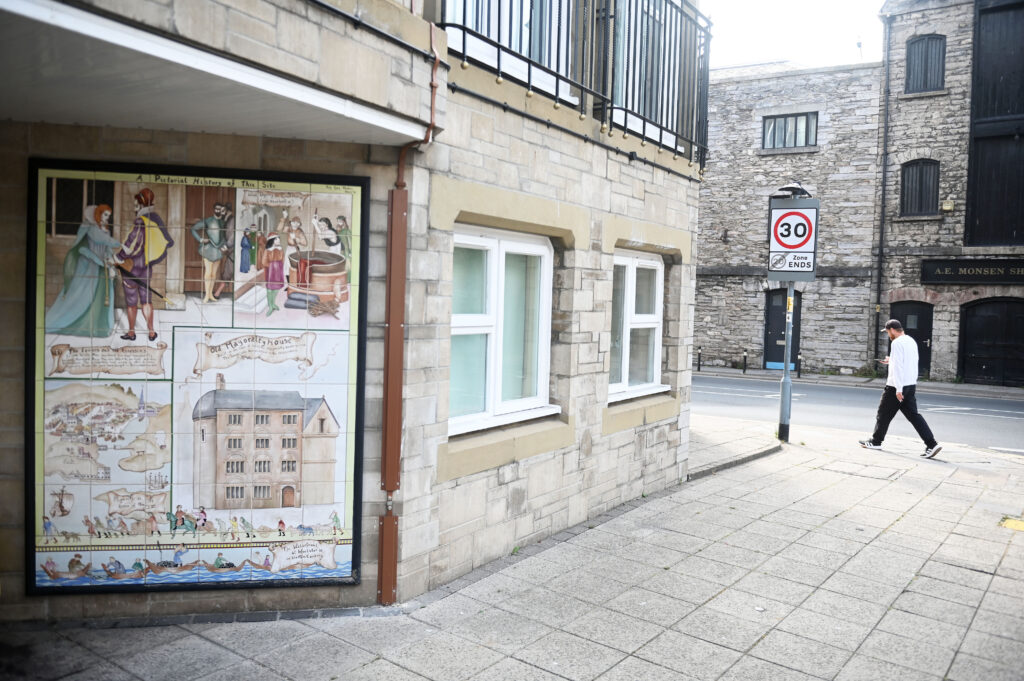
A colourful collection of painted tiles on the front of Brock House in Plymouth tells a remarkable story of the city’s past, including murder, forbidden love, medieval trade and the days when the waterfront looked very different.
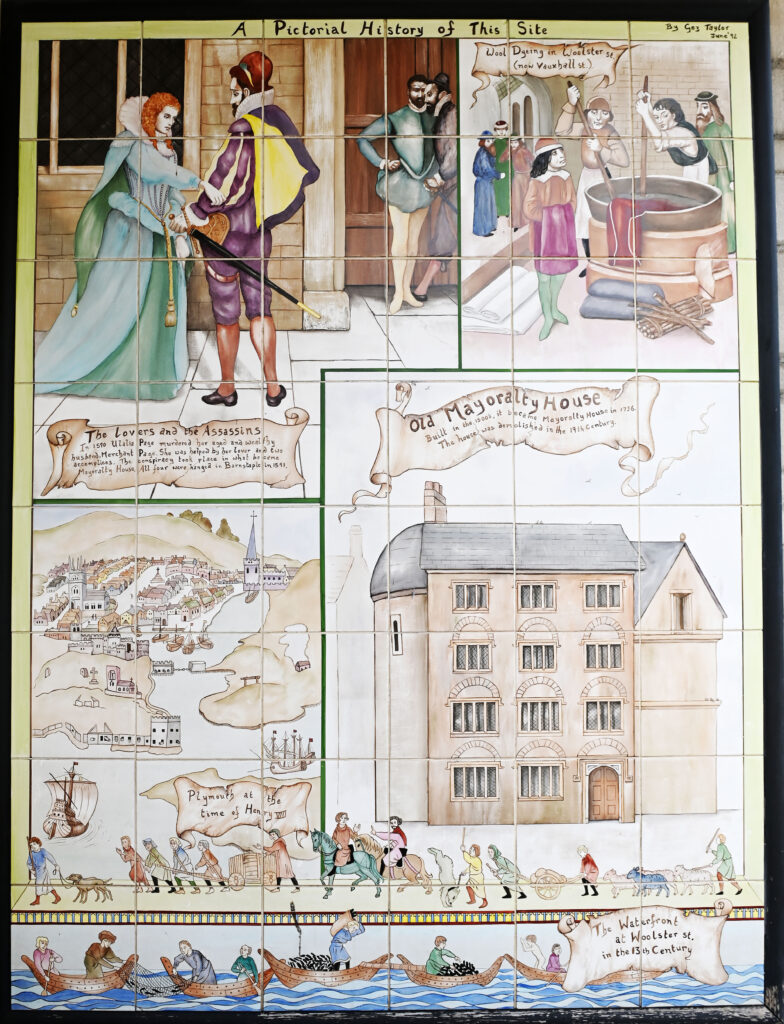
Entitled A Pictorial History of This Site, the artwork was created by Gez Taylor and dated June 2012. Rather than simply decorating the building, the tiles bring together several chapters of local history connected with the surrounding area.
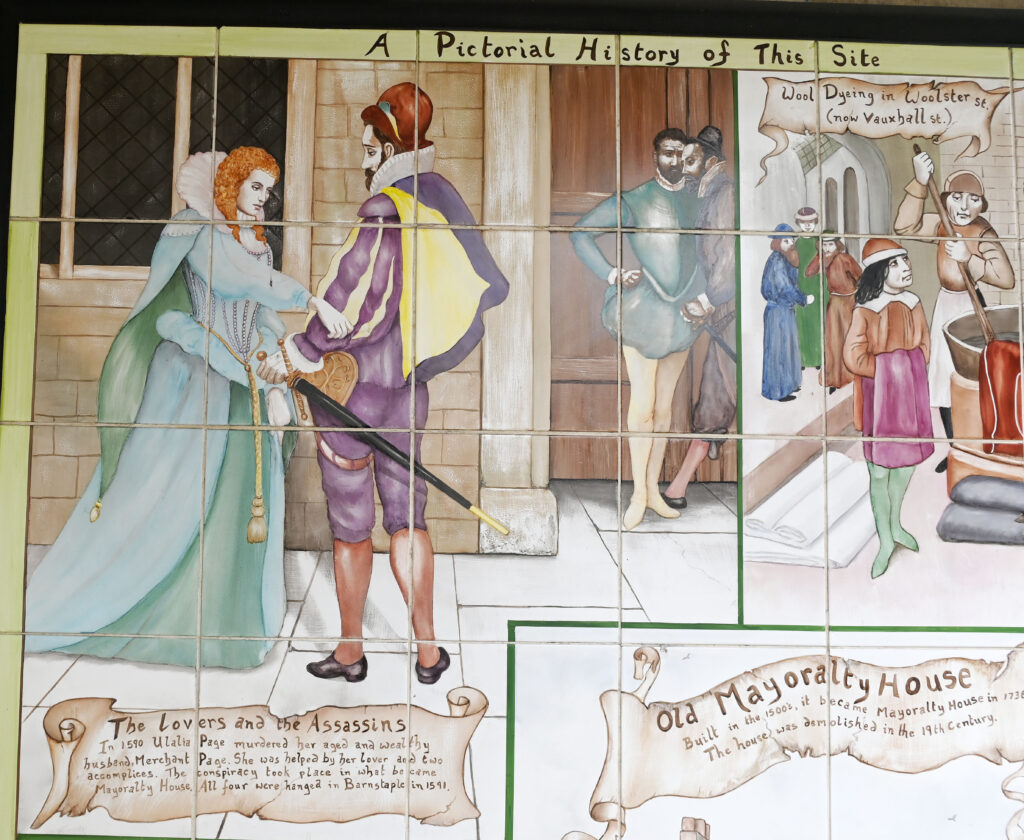
One of the most dramatic scenes depicts a murder dating back to 1570. According to the inscription, William Page murdered his uncle and aunt, Mr and Mrs Husband, while their daughter, Grace, was helping her lover escape. The couple were said to have been conspiring to kill her parents so they could marry.
The inscription records that all four were hanged at Barnstaple in 1571.
Another section of the artwork shows the Old Mayoralty House, built in the 1500s. It became the Mayoralty House in 1736 before being demolished in the 19th century.
The tiles also depict Plymouth during the reign of Henry VIII, with a busy waterfront, sailing ships, narrow streets and buildings clustered around the harbour.
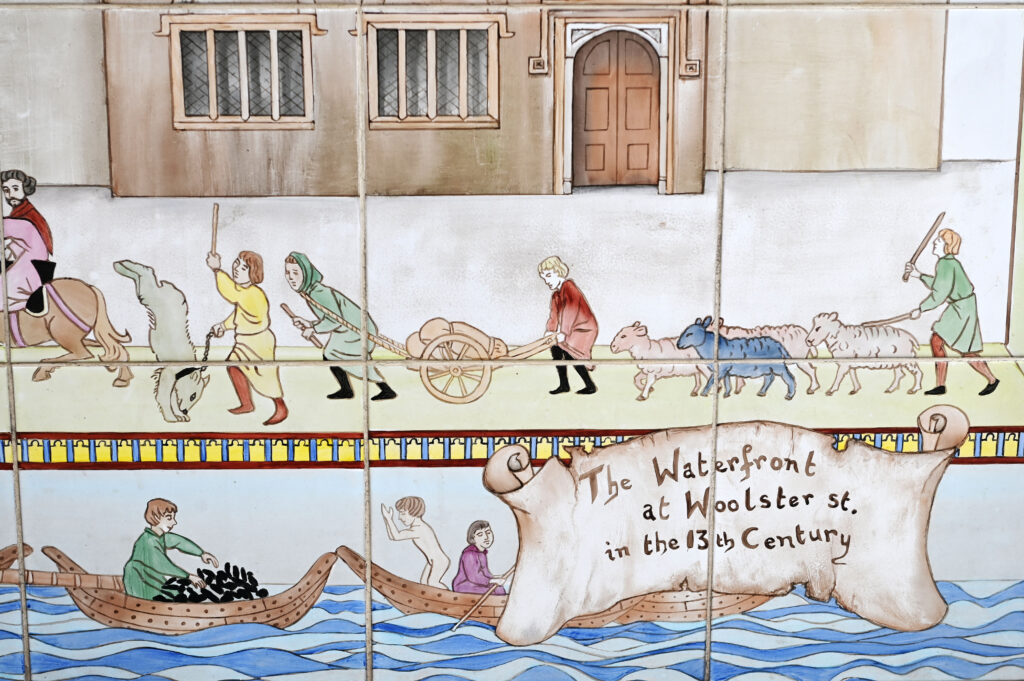
At the bottom of the artwork, fishermen work from small boats, while another scene shows people transporting goods through the streets with horses, carts and livestock.
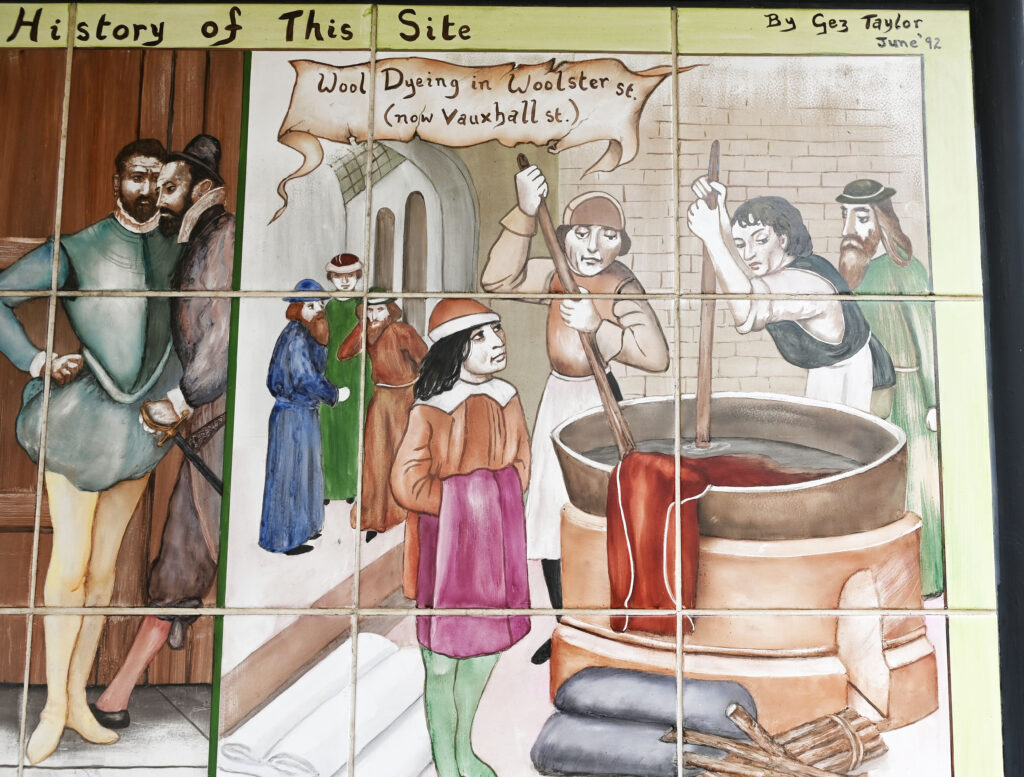
The upper section illustrates wool dyeing in Woolster Street, now Vauxhall Street, recalling an industry that once formed part of everyday life in this area of Plymouth.
Another inscription identifies the waterfront at Woolster Street in the 13th century, a reminder of how much the shoreline and surrounding streets have changed over hundreds of years.
Together, the scenes provide a fascinating glimpse into Plymouth’s history, from medieval waterfront activity to Tudor crime and the buildings that once occupied the site.
For anyone walking past Brock House, the tiles are worth a closer look. What might initially appear to be a decorative mural is actually a collection of stories about the people, trades and events that helped shape old Plymouth.
Photographs © Wayne Perry / Plymouth Post