
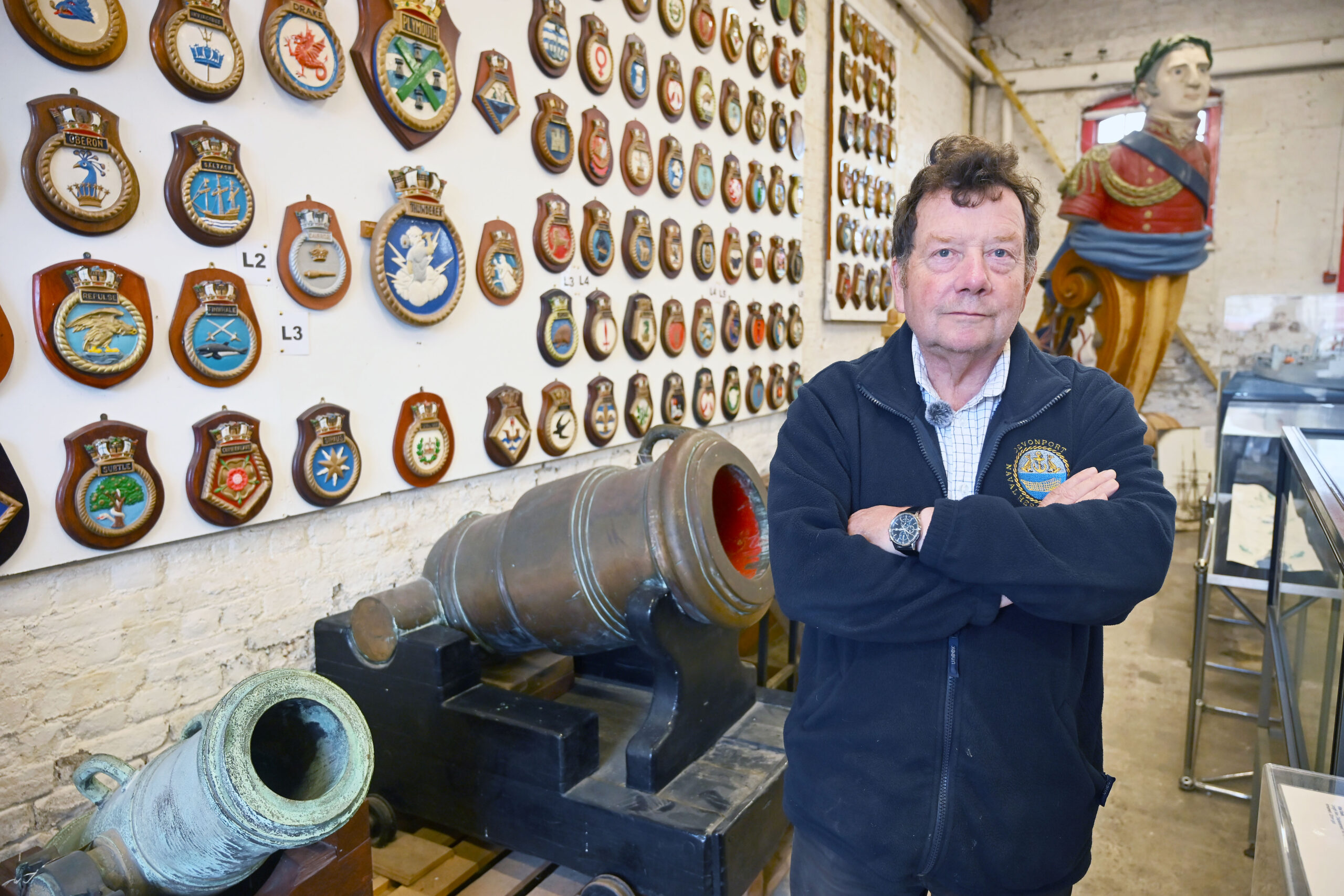
A towering aircraft carrier, two distinctive ship figureheads, a pair of mortars and a lead-lined autopsy table are among the objects featured in the Paul Santillo Gallery at Devonport Naval Heritage Centre.
Lead volunteer Peter Dunlop guides visitors around the collection, sharing the stories behind objects connected with the Royal Navy and Plymouth.
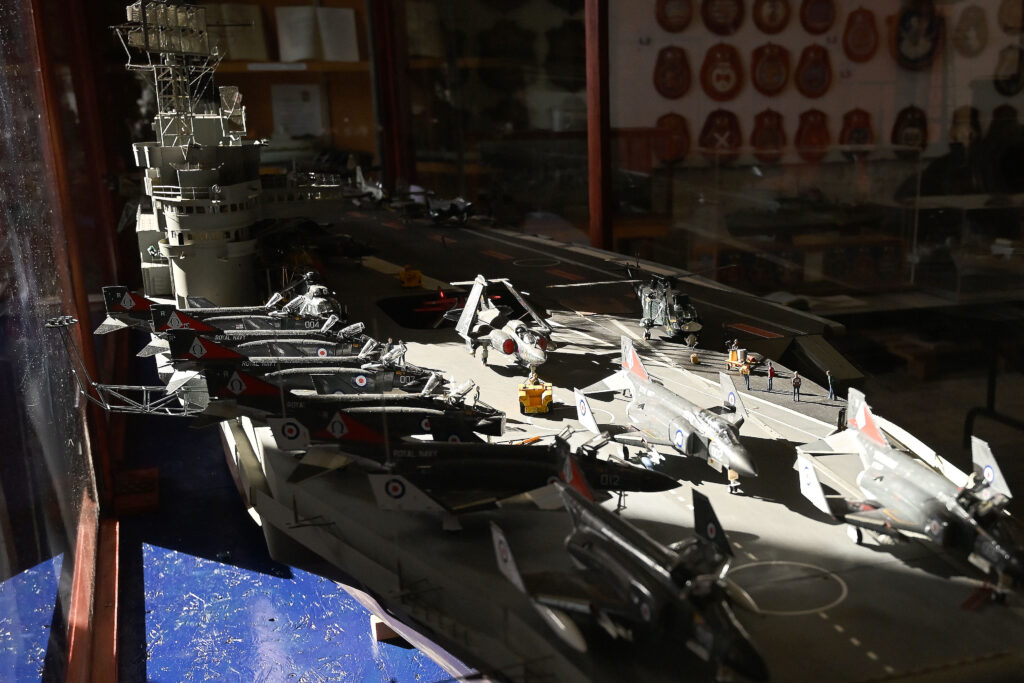
The gallery’s largest exhibit is a model of HMS Ark Royal, built by Dave Fortey over more than 25 years. Around 15 feet long, it brings the carrier’s flight deck and immense scale into view. After being displayed elsewhere, the model returned to Devonport and now has a place in the gallery.
Two very different ships are represented by the gallery’s figureheads: HMS Duke of Wellington and HMS Rattlesnake. Figureheads were mounted at the bows of ships, making them prominent symbols of a vessel’s name and identity. Sailors also attached meaning to them, seeing them as protectors on dangerous voyages.
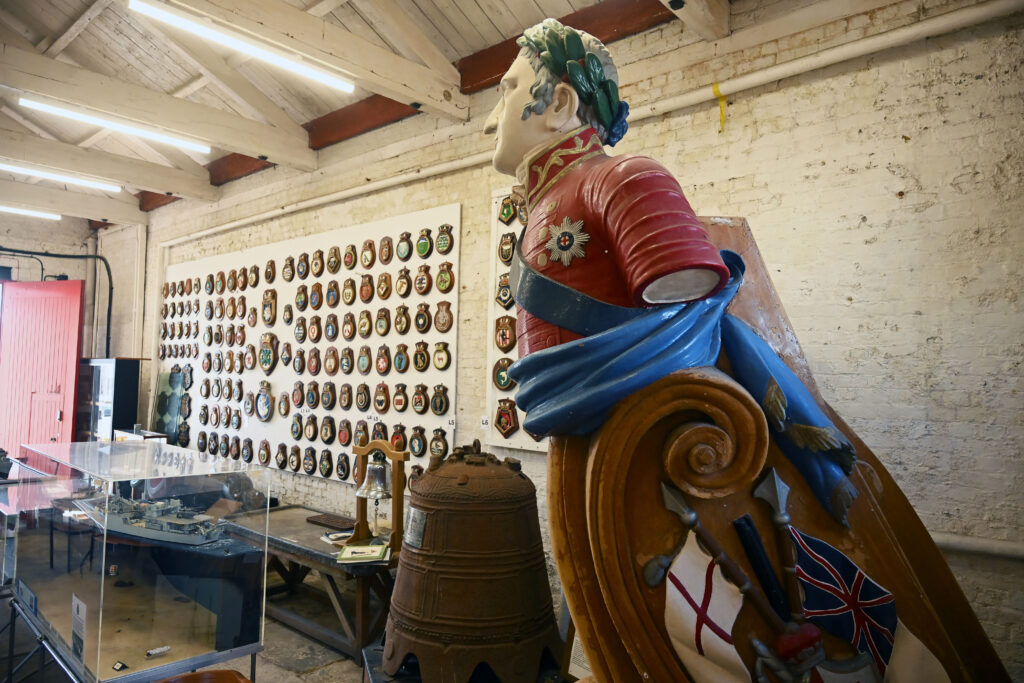
The Duke of Wellington figurehead is linked to a powerful ship from a period of change in the Royal Navy. Launched as HMS Windsor Castle in 1852, the ship was renamed after the Duke of Wellington died on the day of its launch. It was a 131-gun first-rate ship of the line, combining sail with steam power, and later served as the flagship of Admiral Sir Charles Napier.
The Rattlesnake figurehead recalls the Royal Navy ship launched in 1822. It made a celebrated surveying voyage to Australia and New Guinea from 1846 to 1850. Later, the ship was sent north with provisions for vessels searching for Sir John Franklin’s lost Arctic expedition. It spent a winter frozen in the Bering Strait and supplied HMS Enterprise in 1854. Rattlesnake was part of the Arctic relief effort, although the stranded crew of HMS Investigator were rescued by a party from HMS Resolute.
The figurehead itself is striking: it depicts a dark-skinned man wearing a red, white and blue feathered headdress. It gives visitors a chance to consider how ships were represented, as well as the journeys and encounters that shaped their histories.
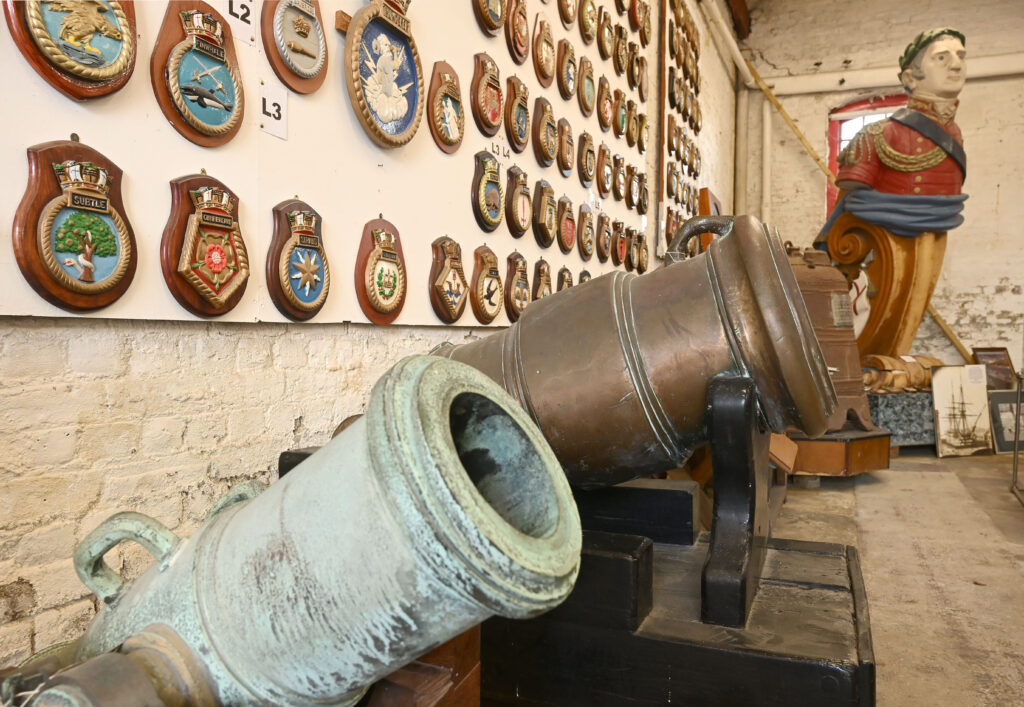
Two mortars in the gallery tell another story of naval firepower. Unlike a conventional gun, which fires more directly, a mortar launches a projectile in a high arc. Their solid brass construction makes them impressive objects even before Peter explains their purpose.
A very different aspect of naval life is represented by a lead-lined autopsy table from Stonehouse Royal Naval Hospital. Used for post-mortem examinations, it brings the history of naval medicine into the gallery and offers a sobering reminder of the work carried out behind the scenes.
The collection ranges from the craftsmanship of a painstakingly built carrier model to objects connected with exploration, combat, medicine and naval tradition. With Peter Dunlop guiding the tour, each exhibit becomes part of a wider story about the Royal Navy and Plymouth’s enduring connection with it.
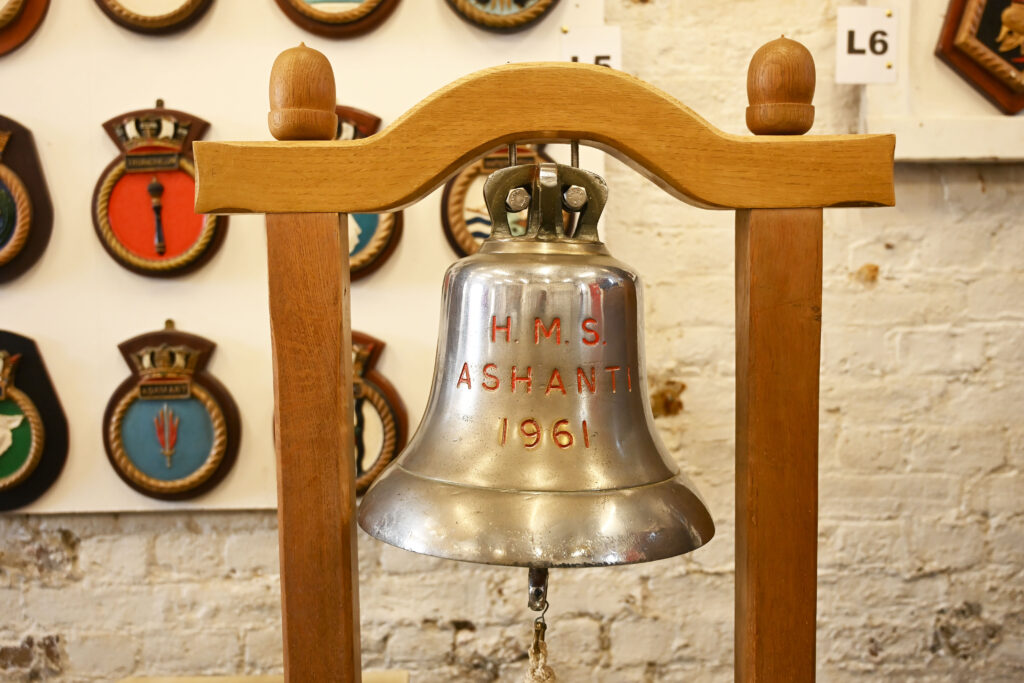
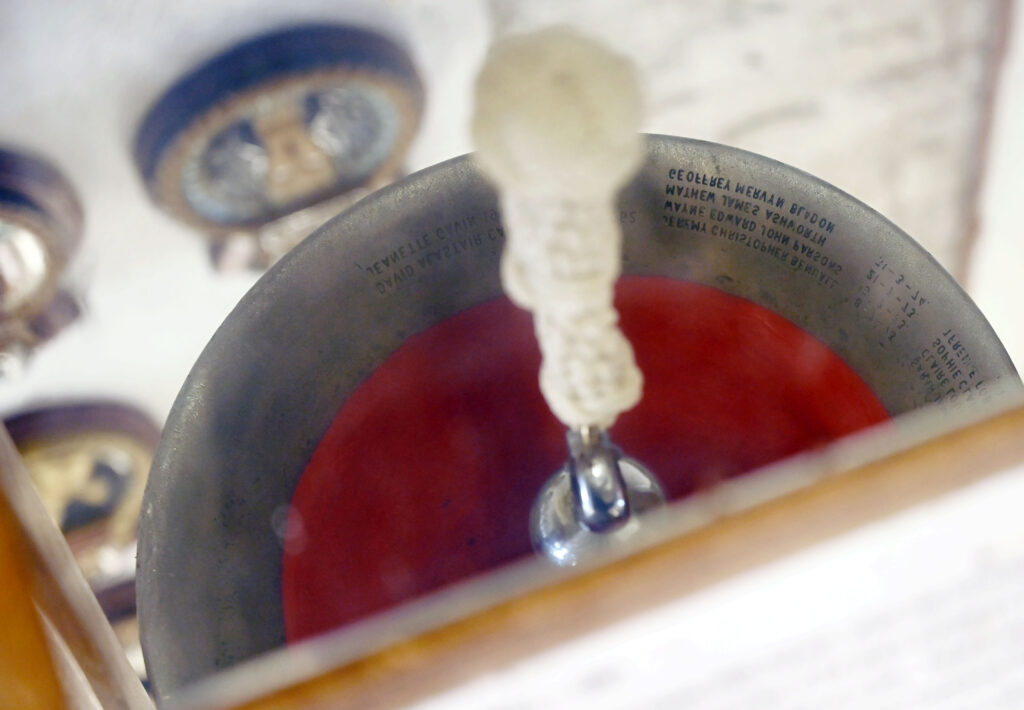
The gallery also includes the bell from HMS Ashanti. Inside are the engraved names of children baptised aboard the ship, making it a personal record of the families connected with life at sea.
Photographs © Wayne Perry / Plymouth Post