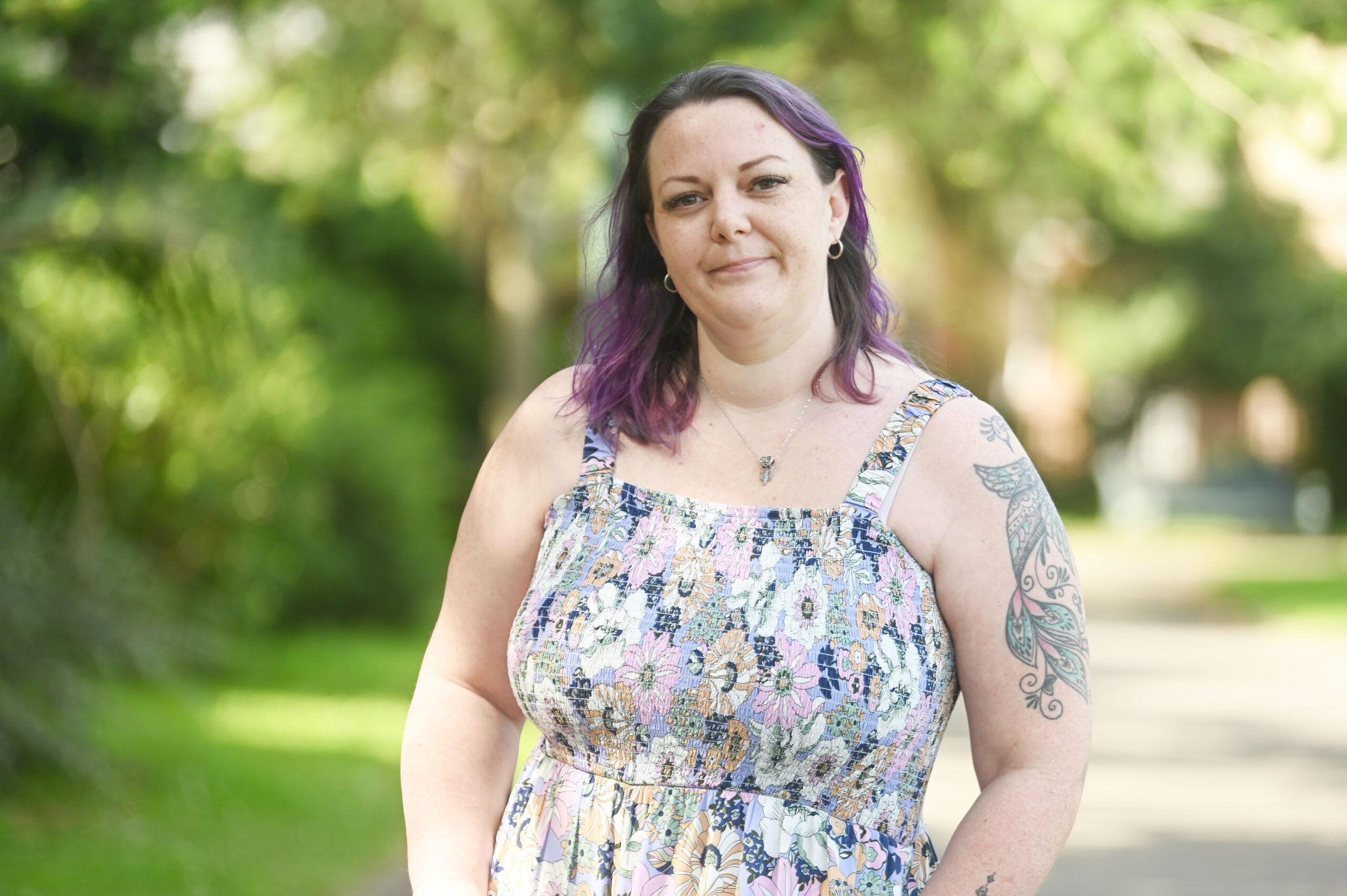
until it became invasive” Claire Hambly shares her breast cancer journey
There are moments in life that divide everything into a “before” and an “after”. For Plymouth’s Claire Hambly, that moment came earlier this year when she was diagnosed with breast cancer at the age of 42.
The diagnosis carried an added emotional weight. Claire was exactly the same age as her great grandmother when she was diagnosed with breast cancer.
The disease has cast a long shadow through her family. Claire’s grandmother died from breast cancer in her early 50s after avoiding medical treatment because of a fear of hospitals, while her mother underwent biopsies and surgery to remove a milk duct in her early 40s.
Because of that family history, Claire was placed on annual mammogram screening two years ago.
In March, one of those routine appointments led to her being called back for further tests.
The diagnosis was intermediate to high grade ductal carcinoma in situ (DCIS), an early form of breast cancer that had not spread beyond the milk ducts.
“I had not felt a lump,” Claire explained. “If it wasn’t for the yearly screening, my cancer would have been unlikely to have been discovered until it had progressed to a more advanced stage and potentially become invasive.”
Less than two weeks later, Claire underwent a wide local excision lumpectomy with breast reshaping surgery.
She says one of the hardest parts of her journey wasn’t the operation itself, but the anxious wait afterwards to discover whether further tests would show the cancer had become invasive.
Fortunately, the pathology results brought welcome news. The cancer had remained in situ and surgeons achieved clear margins, meaning no further surgery was needed.
Claire then completed a course of radiotherapy just two weeks ago.
Alongside her cancer treatment, she has also been managing ME and Long Covid. One of her greatest concerns has been how surgery and radiotherapy might affect those existing conditions, both now and in the years ahead.
She says fatigue and pain have become more noticeable in recent weeks, highlighting one of the lesser-known realities of cancer treatment the uncertainty of how every individual will respond.
Throughout her journey, Claire has found comfort in keeping busy, setting positive goals and accepting support when she needs it.
One organisation that has helped her is Breast Cancer Now. Claire says the charity provided reliable information and reassurance at a time when everything else felt uncertain.
She also believes there is real strength in talking openly about breast cancer.
By sharing her own experience, Claire hopes more people will attend their screening appointments when invited, seek medical advice if they notice any changes and know that support is available.
“It can feel incredibly isolating at times,” she said, “but there is support out there and people who understand what you’re going through.”
Now focusing on her recovery, Claire hopes that by telling her story, something positive can come from her experience whether that’s encouraging someone to attend their mammogram, seek help sooner or simply realise they are not facing breast cancer alone.
That same need to focus on something positive is what led Claire to take action of her own.
“I knew I needed to keep busy and have a positive purpose to support my mental health through this journey,” she said. “I needed to have less time to think of the what ifs, and I knew previously giving back through volunteering and small fundraising helped, so I signed up to have an afternoon tea fundraiser for Breast Cancer Now.”
Photographs © Wayne Perry / Plymouth Post